

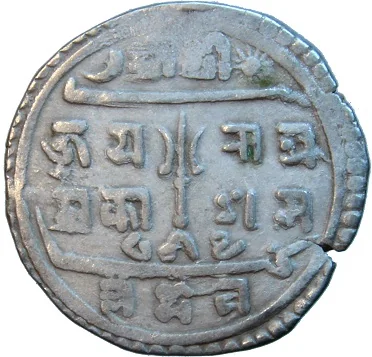
1 Mohar – Kathmandu Kingdom
Nepal
Context
Year: 1745
Nepal Sambat Year: 865
Country: Nepal 
Issuer: Kathmandu Kingdom
Ruler: Jaya Prakash Malla
Currency:
(1546—1932)
Demonetized: Yes
Material
References
KM: #Click to copy to clipboard410
Numista: #76185
Value
Bullion value: $15.33
Obverse
Description:
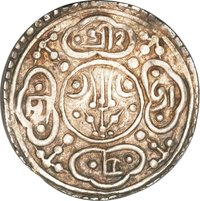
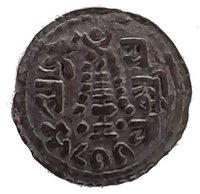
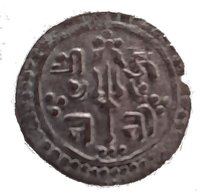
King's Name, NS Date. Central Trishul.
Inscription:
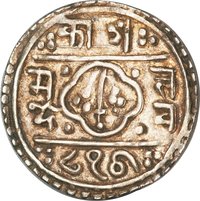
Sri Sri Jaya Prakasha Malla
NS 865
NS 865
Reverse
Edge
Plain
Mintings
| Year | Mint Mark | Mintage | Quality | Collection |
|---|---|---|---|---|
| 1745 | — | — |
Historical background
In 1745, the Kathmandu Valley was not a unified kingdom but a constellation of three rival city-states: Kathmandu, Patan, and Bhaktapur, each ruled by its own Malla king. This political fragmentation was directly reflected in the monetary system. While all three kingdoms minted their own silver coins, known as mahendramalli after King Mahendra Malla who first introduced them in the 16th century, the designs, weight standards, and purity could vary between them. Trade within the valley therefore required careful assessment and often exchange of coins, as the currency of one Malla state was not automatically accepted at face value in another.
The primary currency was the silver dam, a small, hand-struck coin often called a mohar in broader circulation. These coins bore symbols of the issuing kingdom, such as the goddess Kali for Kathmandu or a conch shell for Patan, alongside the name of the reigning king. The economy was fundamentally agrarian and trade-based, with coins essential for paying taxes, land rents, and for the vibrant trans-Himalayan trade. Newari merchants used these coins to finance caravans dealing in Tibetan wool, salt, and Chinese silk, as well as goods from the Indian plains, creating a steady demand for reliable silver currency.
However, the monetary situation was precarious. The supply of silver, sourced largely from mines in northern India and Tibet, was inconsistent and controlled by merchant cartels. Kings frequently debased the coinage by reducing silver content to finance their lavish court lifestyles, temple constructions, and incessant internecine wars. This practice led to inflation, loss of public trust, and complex exchange rates. Consequently, older coins of known purity were often hoarded, and alongside the official coinage, commodity money like rice, copper, and cowrie shells continued to circulate for everyday small transactions, creating a layered and often unstable monetary environment on the eve of the valley's eventual unification by Prithvi Narayan Shah of Gorkha.
The primary currency was the silver dam, a small, hand-struck coin often called a mohar in broader circulation. These coins bore symbols of the issuing kingdom, such as the goddess Kali for Kathmandu or a conch shell for Patan, alongside the name of the reigning king. The economy was fundamentally agrarian and trade-based, with coins essential for paying taxes, land rents, and for the vibrant trans-Himalayan trade. Newari merchants used these coins to finance caravans dealing in Tibetan wool, salt, and Chinese silk, as well as goods from the Indian plains, creating a steady demand for reliable silver currency.
However, the monetary situation was precarious. The supply of silver, sourced largely from mines in northern India and Tibet, was inconsistent and controlled by merchant cartels. Kings frequently debased the coinage by reducing silver content to finance their lavish court lifestyles, temple constructions, and incessant internecine wars. This practice led to inflation, loss of public trust, and complex exchange rates. Consequently, older coins of known purity were often hoarded, and alongside the official coinage, commodity money like rice, copper, and cowrie shells continued to circulate for everyday small transactions, creating a layered and often unstable monetary environment on the eve of the valley's eventual unification by Prithvi Narayan Shah of Gorkha.
✨ Legendary