

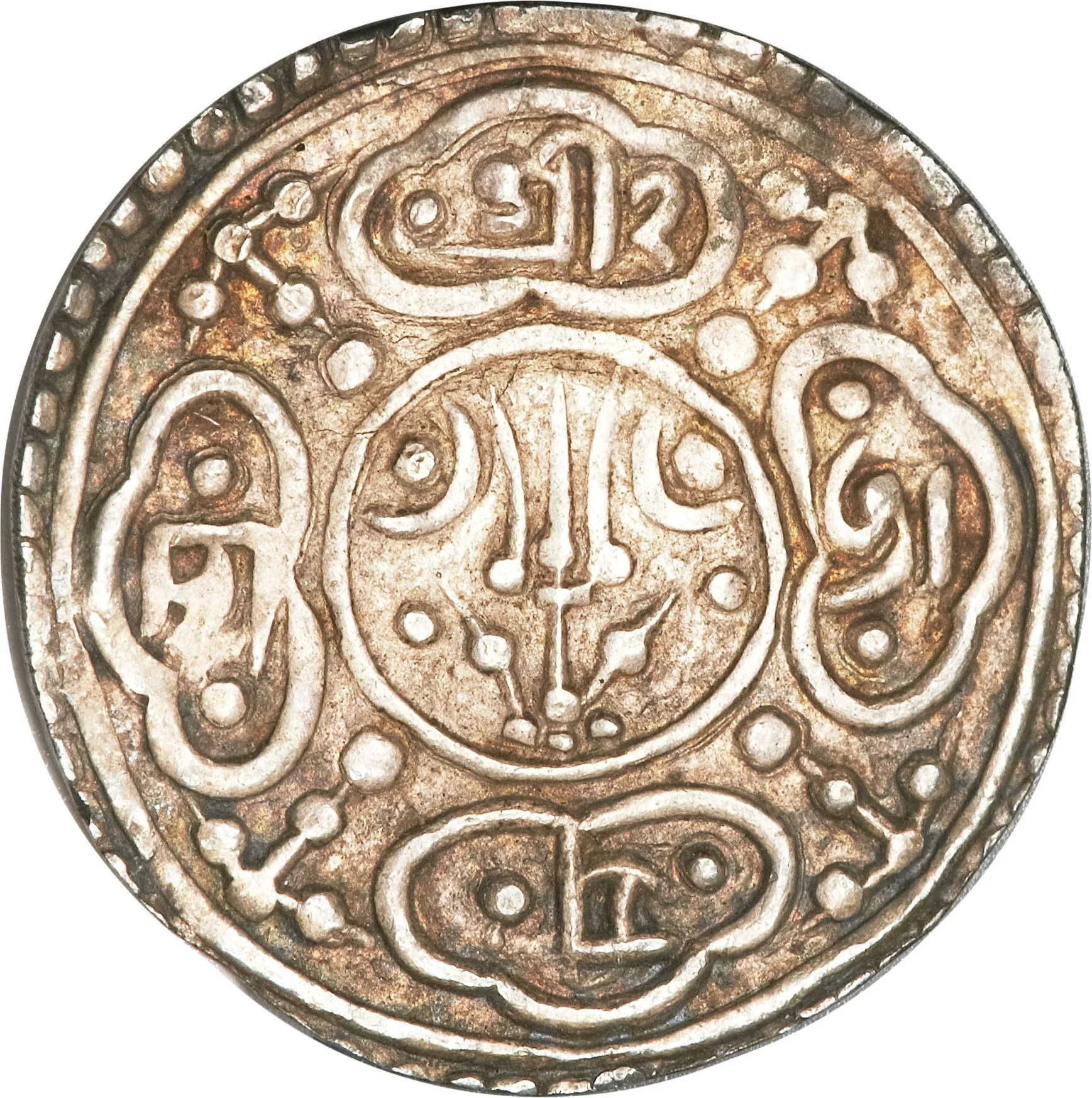
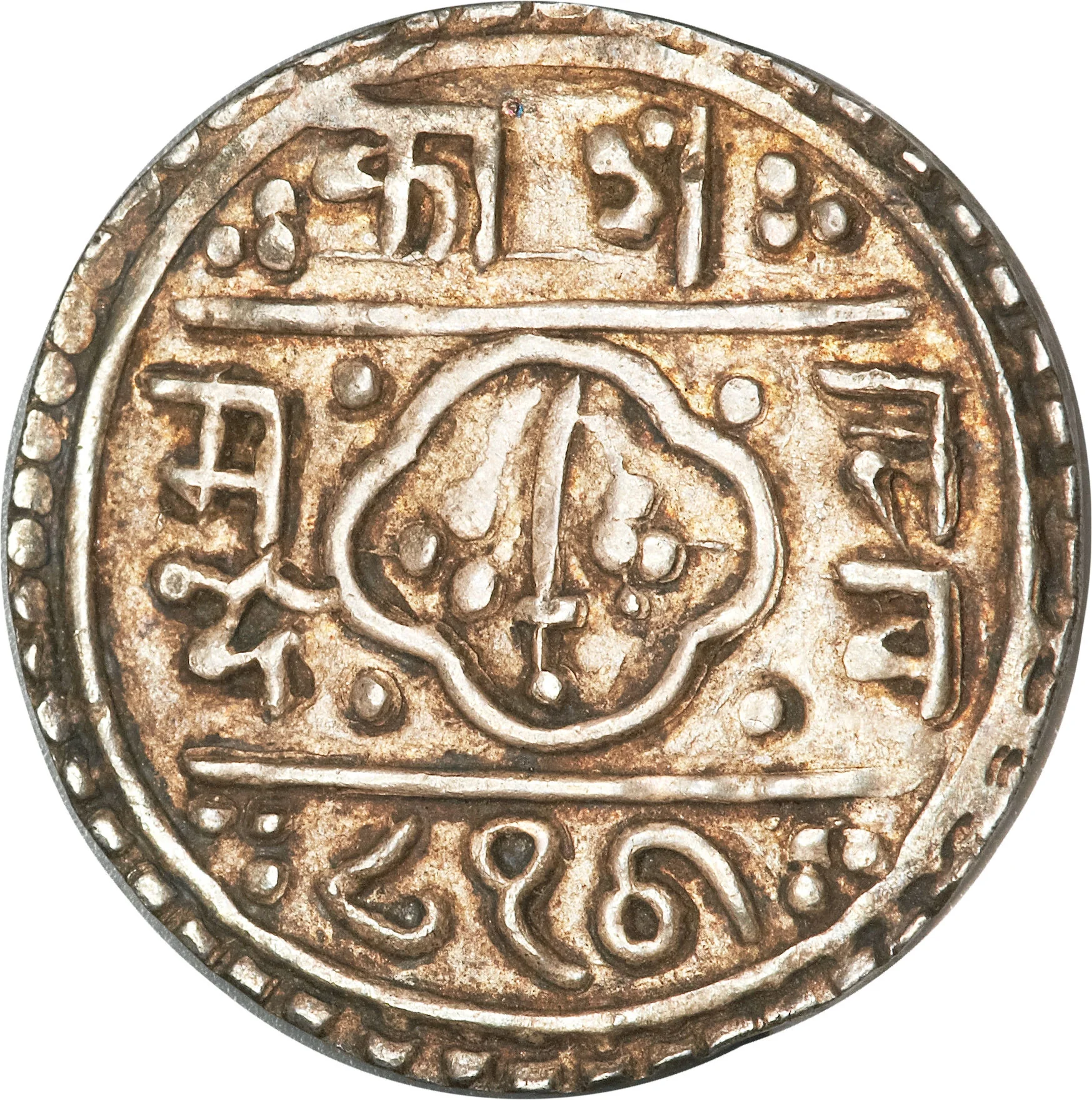
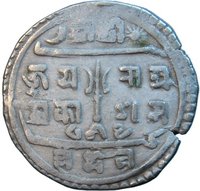
½ Mohar – Kathmandu Kingdom
Nepal
Context
Year: 1736
Nepal Sambat Year: 856
Country: Nepal 
Issuer: Kathmandu Kingdom
Ruler: Jaya Prakash Malla
Currency:
(1546—1932)
Demonetized: Yes
References
KM: #Click to copy to clipboard255
Numista: #26042
Obverse
Reverse
Edge
Mintings
| Year | Mint Mark | Mintage | Quality | Collection |
|---|---|---|---|---|
| 1736 | — | — |
Historical background
In 1736, the Kathmandu Valley was not a single kingdom but a confederation of three rival city-states: Kathmandu, Patan, and Bhaktapur, each ruled by its own Malla king. This period was marked by intense political and artistic competition, which extended directly into the monetary system. There was no unified currency; instead, each kingdom minted its own distinct coins, primarily small silver dam or mohar coins, as statements of sovereignty and prestige. These coins bore the symbols and script of their respective cities, creating a complex monetary environment where multiple currencies circulated simultaneously, often requiring exchange and acceptance across borders that were sometimes just a few miles apart.
The primary currency was silver, though the valley also saw the circulation of debased billon coins (alloys of copper and silver) for smaller transactions, and cowrie shells persisted for the most minor trade. The silver for minting was sourced through two key channels: old Tibetan silver coins melted down and recoined, and, more importantly, silver dust and ingots imported from Tibet in exchange for Valley-produced rice, grain, and manufactured goods like paper and textiles. This trade was vital, making the monetary system heavily dependent on stable relations and trade routes with Tibet.
Economically, this fragmented system reflected both the prosperity and the limitations of the Malla period. The abundance of coinage facilitated a vibrant urban economy, sophisticated artisan workshops, and monumental temple construction. However, the lack of standardization and constant rivalry also led to competitive devaluations and currency manipulations, as kings sometimes reduced silver content to fund their courts or military ventures. This created occasional local inflation and distrust, underscoring how the very coins that symbolized the Valley's cultural zenith were also a point of economic and political contention between its feuding kingdoms.
The primary currency was silver, though the valley also saw the circulation of debased billon coins (alloys of copper and silver) for smaller transactions, and cowrie shells persisted for the most minor trade. The silver for minting was sourced through two key channels: old Tibetan silver coins melted down and recoined, and, more importantly, silver dust and ingots imported from Tibet in exchange for Valley-produced rice, grain, and manufactured goods like paper and textiles. This trade was vital, making the monetary system heavily dependent on stable relations and trade routes with Tibet.
Economically, this fragmented system reflected both the prosperity and the limitations of the Malla period. The abundance of coinage facilitated a vibrant urban economy, sophisticated artisan workshops, and monumental temple construction. However, the lack of standardization and constant rivalry also led to competitive devaluations and currency manipulations, as kings sometimes reduced silver content to fund their courts or military ventures. This created occasional local inflation and distrust, underscoring how the very coins that symbolized the Valley's cultural zenith were also a point of economic and political contention between its feuding kingdoms.

✨ Legendary