

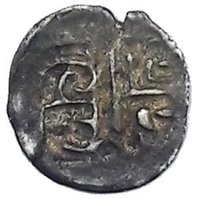
¼ Mohar – Kathmandu Kingdom
Nepal
Context
Year: 1746
Nepal Sambat Year: 866
Country: Nepal 
Issuer: Kathmandu Kingdom
Currency:
(1546—1932)
Demonetized: Yes
Material
References
KM: #Click to copy to clipboard275
Numista: #372655
Value
Bullion value: $3.72
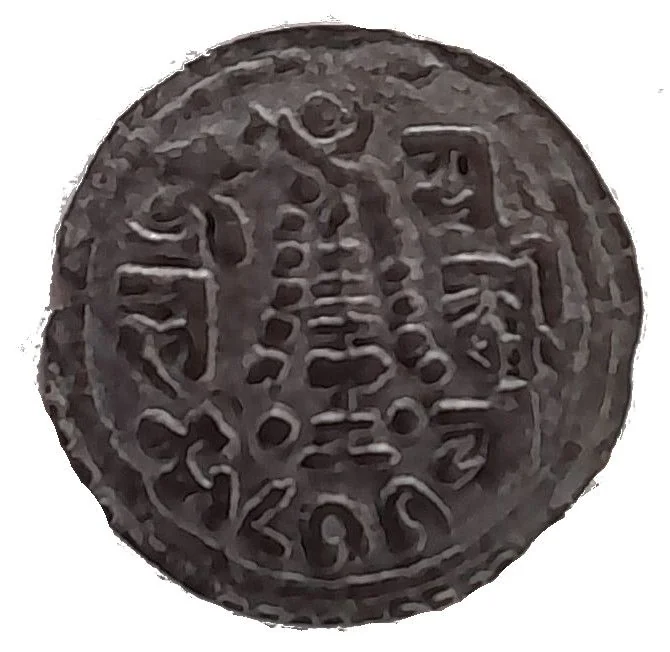
Obverse
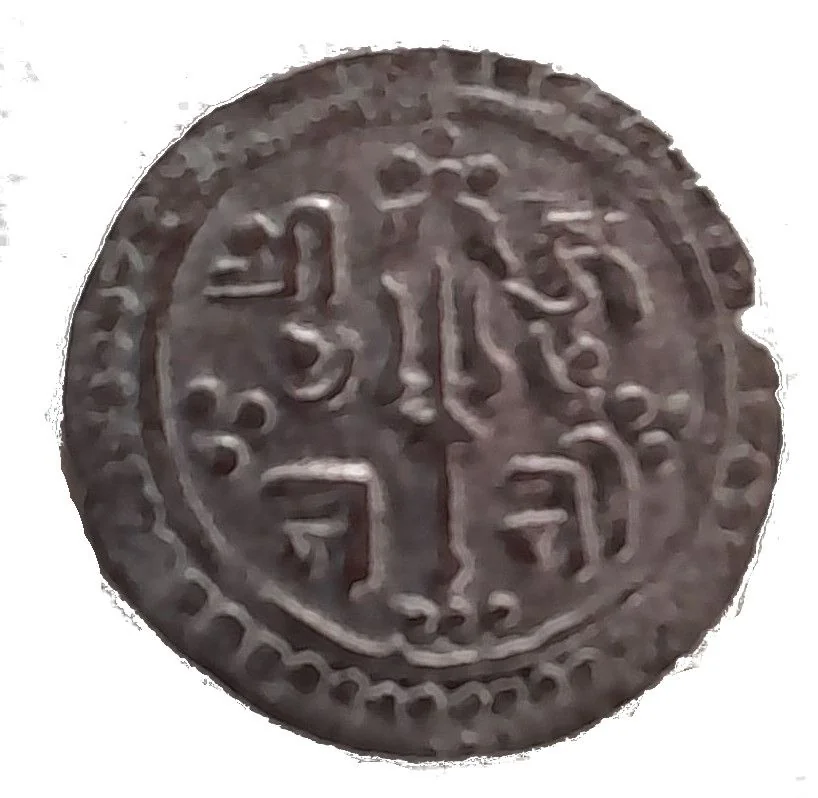
Reverse
Edge
Mintings
| Year | Mint Mark | Mintage | Quality | Collection |
|---|---|---|---|---|
| 1746 | — | — |
Historical background
In 1746, the Kathmandu Valley was not a unified kingdom but a constellation of three rival city-states: Kathmandu, Patan, and Bhaktapur, each ruled by its own Malla king. The currency situation reflected this political fragmentation and the valley's position as a vital hub on the trans-Himalayan trade route. The primary circulating medium was the silver mohar, a coin minted independently by each kingdom. While similar in weight and purity (roughly 5.4 grams of silver), the coins bore distinct symbols and script (often in Nepal lipi) to proclaim their origin, such as the lotus for Kathmandu or the dagger for Patan. This created a complex monetary environment where coins from all three Malla courts, and older issues, circulated side-by-side, their acceptance often relying on the intrinsic value of their silver content.
The economy was fundamentally agrarian, but coinage was essential for taxation, temple donations, and the bustling market squares that serviced long-distance trade. Newar merchants acted as intermediaries between Tibet (to the north) and the Mughal territories (to the south), dealing in wool, salt, spices, and textiles. This trade brought a significant influx of foreign silver, primarily in the form of Tibetan tangkas and Indian rupees, which were often melted down to produce local mohars. The kings tightly controlled minting as a key sovereign right and source of seigniorage revenue, using coin designs to assert their legitimacy and Hindu devotion, frequently featuring deities like Gorakhnath or symbols associated with Taleju, the royal goddess.
Despite the political divisions, the monetary system within the valley demonstrated a degree of pragmatic integration. The similarity in weight standards facilitated exchange, and the coins were generally accepted across city borders for commerce. However, the system was not without strain. Debasement was a constant temptation for rulers needing funds for military fortifications or palace construction, which could lead to temporary instability and loss of public trust. Furthermore, the reliance on imported silver made the valley's currency vulnerable to disruptions in the wider regional trade networks, a vulnerability that would become acute in the coming decades as the rising Gorkha kingdom began its campaign for unification, ultimately conquering the valley by 1769 and imposing a single, new currency system.
The economy was fundamentally agrarian, but coinage was essential for taxation, temple donations, and the bustling market squares that serviced long-distance trade. Newar merchants acted as intermediaries between Tibet (to the north) and the Mughal territories (to the south), dealing in wool, salt, spices, and textiles. This trade brought a significant influx of foreign silver, primarily in the form of Tibetan tangkas and Indian rupees, which were often melted down to produce local mohars. The kings tightly controlled minting as a key sovereign right and source of seigniorage revenue, using coin designs to assert their legitimacy and Hindu devotion, frequently featuring deities like Gorakhnath or symbols associated with Taleju, the royal goddess.
Despite the political divisions, the monetary system within the valley demonstrated a degree of pragmatic integration. The similarity in weight standards facilitated exchange, and the coins were generally accepted across city borders for commerce. However, the system was not without strain. Debasement was a constant temptation for rulers needing funds for military fortifications or palace construction, which could lead to temporary instability and loss of public trust. Furthermore, the reliance on imported silver made the valley's currency vulnerable to disruptions in the wider regional trade networks, a vulnerability that would become acute in the coming decades as the rising Gorkha kingdom began its campaign for unification, ultimately conquering the valley by 1769 and imposing a single, new currency system.

✨ Legendary