

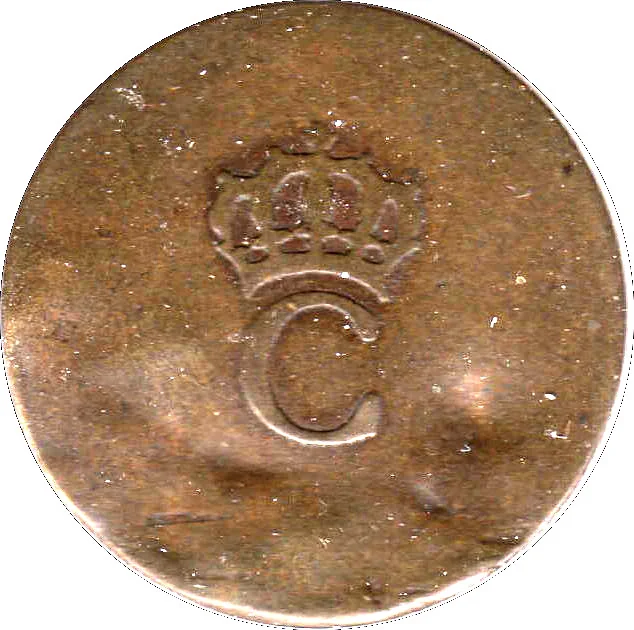
2 sols – French West Indies
Add to wishlist
France
Context
Years: 1779–1797
Country: France
Issuer: French West Indies
Period:
(1792—1804)
Ruler: Louis XVI
Demonetized: Yes
Total mintage: 3,000,000
References
KM: #
Numista: #7571
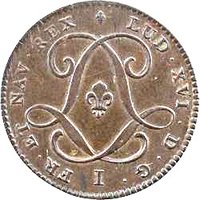
Obverse
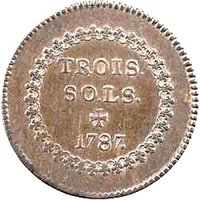
Reverse
Description:
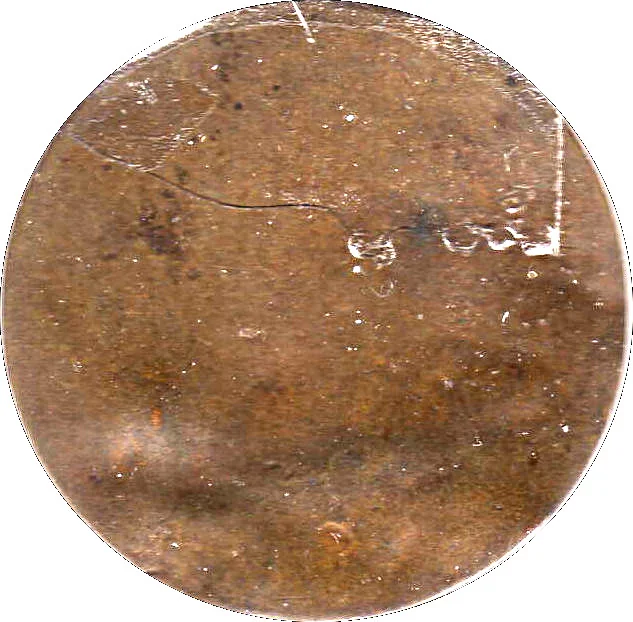
Blank, uniface coins.
Edge
Plain
Mintings
| Year | Mint Mark | Mintage | Quality | Collection |
|---|---|---|---|---|
| — | — | 3,000,000 |
Historical background
In 1779, the currency situation in the French West Indies, particularly the key sugar islands of Saint-Domingue, Martinique, and Guadeloupe, was defined by severe scarcity and chaotic multiplicity. The primary circulating medium was not official French coinage, which was chronically in short supply across the empire, but rather a confusing array of foreign coins. Spanish silver pesos (pieces of eight) and Portuguese gold moedas were the most valued and widely accepted, functioning as the de facto standard for large transactions and external trade. This reliance on foreign specie was a direct result of the colonies' position within the Atlantic trade networks, where these coins arrived through commerce with neighboring Spanish possessions and through the activities of merchants and privateers.
The local economy was further complicated by the widespread use of monnaie de papier—paper money issued by local colonial governments and even by private entities. These notes, often created to finance military expenses or to facilitate plantation operations, were nominally convertible to coin but frequently depreciated due to over-issuance and a lack of public confidence. This created a two-tiered system: hard foreign coin for international trade and savings, and unstable paper for local and daily transactions. The situation was exacerbated by the ongoing American Revolutionary War, in which France was a participant; the war increased military expenditures in the islands, pressured trade routes, and further disrupted the already tenuous flow of metallic currency from Europe.
Consequently, the monetary landscape was one of inherent instability and uncertainty. Planters, merchants, and officials constantly grappled with fluctuating exchange rates between the various coins and between paper and specie. The French crown's attempts to regulate the value of foreign coins through official tarifs (exchange rate decrees) were often ignored in practice, as market forces dictated actual value. This chaotic environment increased transaction costs, fueled inflation for essential imported goods, and created an atmosphere of financial risk that permeated the prosperous yet fragile plantation economy of the French Caribbean on the eve of the 1780s.
The local economy was further complicated by the widespread use of monnaie de papier—paper money issued by local colonial governments and even by private entities. These notes, often created to finance military expenses or to facilitate plantation operations, were nominally convertible to coin but frequently depreciated due to over-issuance and a lack of public confidence. This created a two-tiered system: hard foreign coin for international trade and savings, and unstable paper for local and daily transactions. The situation was exacerbated by the ongoing American Revolutionary War, in which France was a participant; the war increased military expenditures in the islands, pressured trade routes, and further disrupted the already tenuous flow of metallic currency from Europe.
Consequently, the monetary landscape was one of inherent instability and uncertainty. Planters, merchants, and officials constantly grappled with fluctuating exchange rates between the various coins and between paper and specie. The French crown's attempts to regulate the value of foreign coins through official tarifs (exchange rate decrees) were often ignored in practice, as market forces dictated actual value. This chaotic environment increased transaction costs, fueled inflation for essential imported goods, and created an atmosphere of financial risk that permeated the prosperous yet fragile plantation economy of the French Caribbean on the eve of the 1780s.
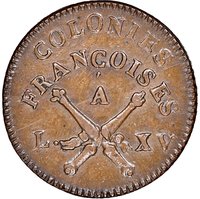
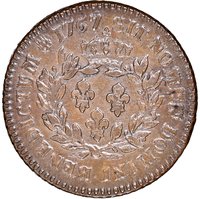
⭐ Somewhat Rare