

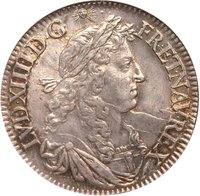
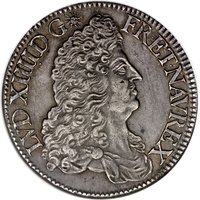
Obverse
Description:
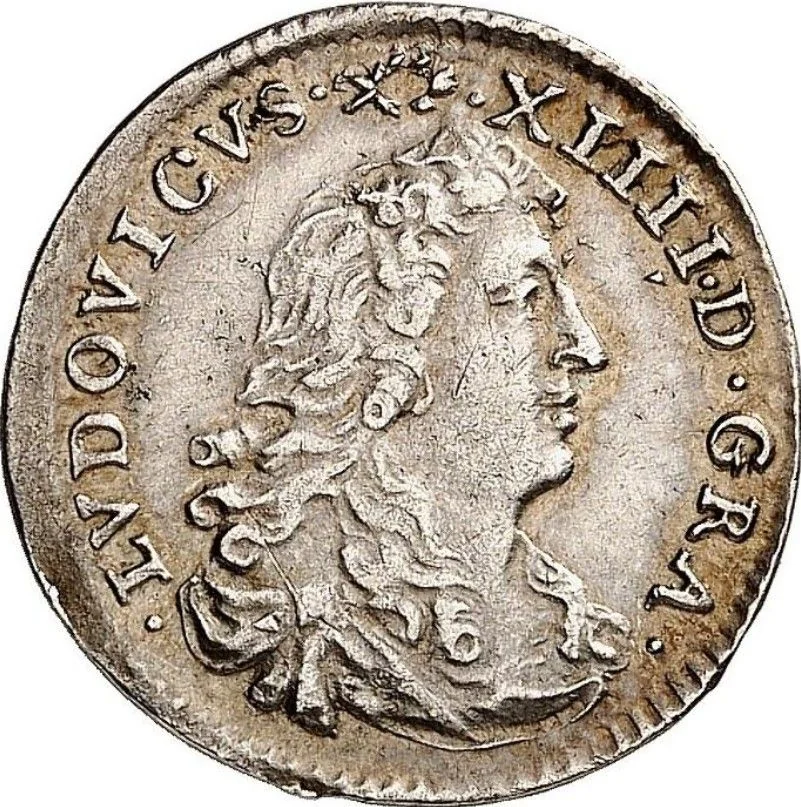
Bust of Louis XIV, bare-headed and draped, wearing a long wig.
Inscription:
LVDOVICVS• •XIIII• D• GRA•
Script: Latin
Engraver: François Warin
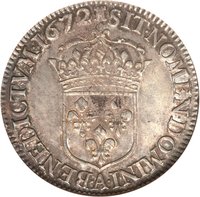
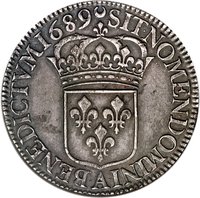
Reverse
Description:
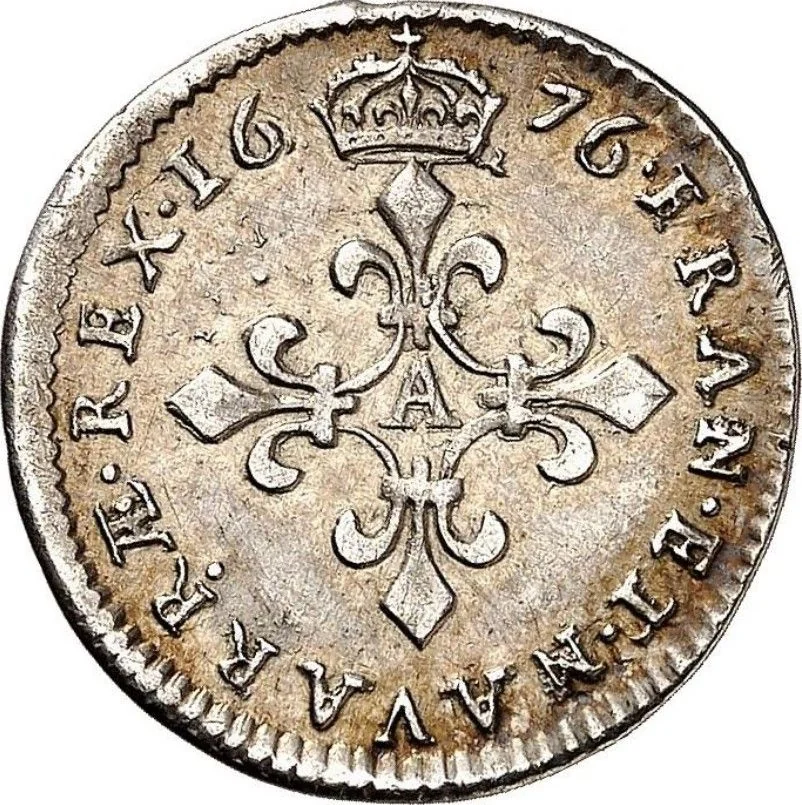
Crown over fleur-de-lis cross; mint mark centered.
Inscription:
•FRAN• ET• NAVARRÆ• REX• 1676
A
A
Script: Latin
Engraver: François Warin
Edge
Plain
Mints
| Name | Mark |
|---|---|
| Monnaie de Paris | A |
| Lyon | D |
Mintings
Historical background
In 1674, France was in the midst of the Franco-Dutch War (1672–1678), a conflict initiated by King Louis XIV that placed immense financial strain on the royal treasury. To fund his expansive military campaigns and the lavish expenditures of the court at Versailles, the Crown resorted to a series of fiscal manipulations, heavily impacting the currency. The primary method was the practice of augmentation – the official raising of the face value of existing coins. By royal edict, a silver écu, for example, could be declared worth more livres, thereby creating nominal money from thin air to pay state debts and soldiers' wages.
This monetary policy, orchestrated by Finance Minister Jean-Baptiste Colbert, was a short-term fix with severe long-term consequences. While it temporarily swelled the royal coffers, it triggered rapid inflation, as prices for goods and services rose to match the debased currency. The system also bred chaos and distrust; older coins with lower face values were hoarded or melted down, and a complex hierarchy of coins of the same metal but different official values circulated simultaneously. This instability harmed domestic commerce, punished creditors and those on fixed incomes, and created a thriving black market for currency exchange.
Colbert, a proponent of mercantilism, understood that a strong, stable currency was vital for economic health, but the demands of war overrode these principles. The situation in 1674 thus represents a critical tension in Louis XIV's reign: the pursuit of gloire and geopolitical dominance directly undermined the financial stability of the kingdom. These repeated devaluations, while providing immediate war funding, eroded public confidence in royal money and sowed the seeds for the deeper fiscal crises that would plague France in the decades to come.
This monetary policy, orchestrated by Finance Minister Jean-Baptiste Colbert, was a short-term fix with severe long-term consequences. While it temporarily swelled the royal coffers, it triggered rapid inflation, as prices for goods and services rose to match the debased currency. The system also bred chaos and distrust; older coins with lower face values were hoarded or melted down, and a complex hierarchy of coins of the same metal but different official values circulated simultaneously. This instability harmed domestic commerce, punished creditors and those on fixed incomes, and created a thriving black market for currency exchange.
Colbert, a proponent of mercantilism, understood that a strong, stable currency was vital for economic health, but the demands of war overrode these principles. The situation in 1674 thus represents a critical tension in Louis XIV's reign: the pursuit of gloire and geopolitical dominance directly undermined the financial stability of the kingdom. These repeated devaluations, while providing immediate war funding, eroded public confidence in royal money and sowed the seeds for the deeper fiscal crises that would plague France in the decades to come.
🌱 Common