

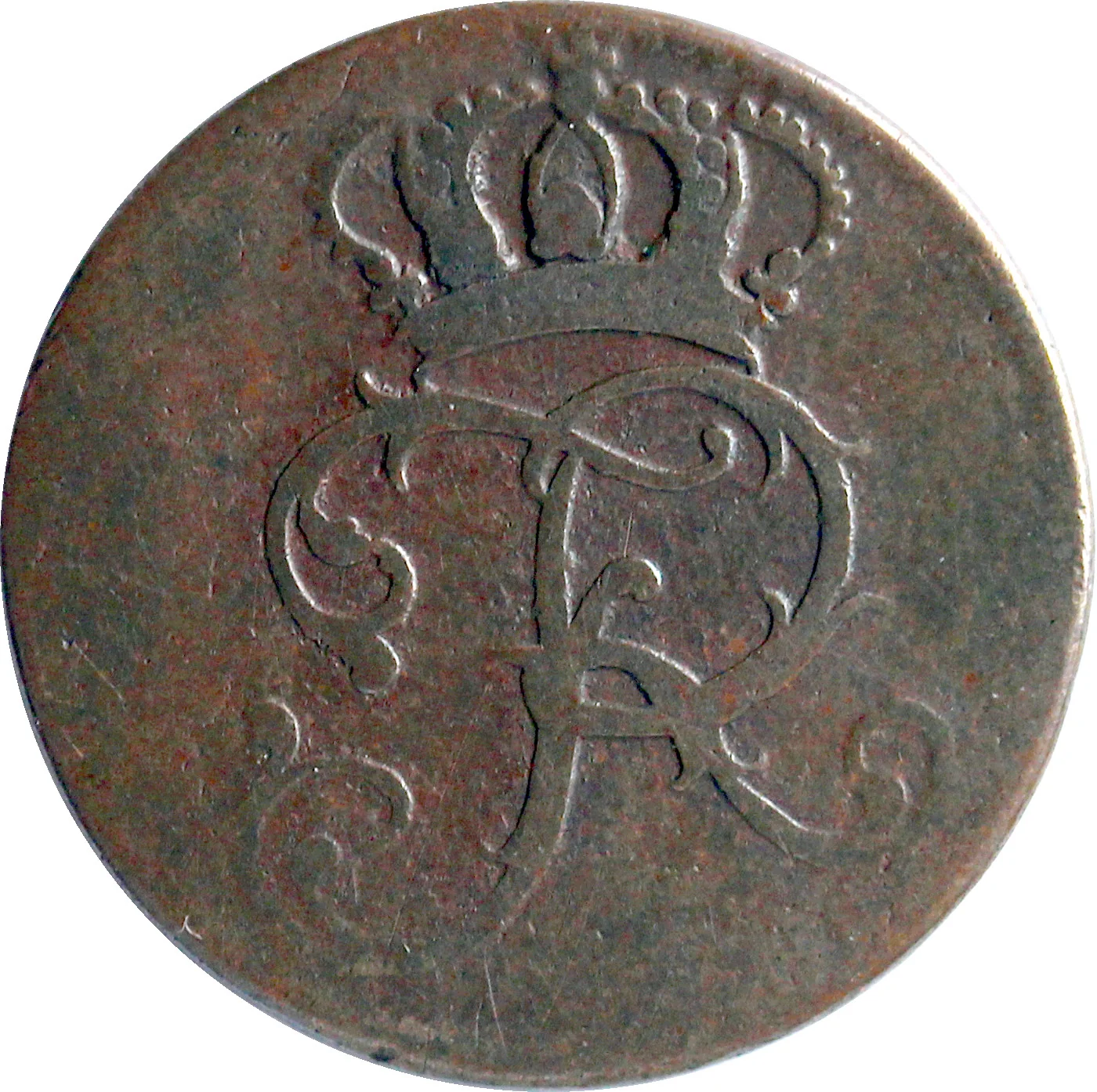
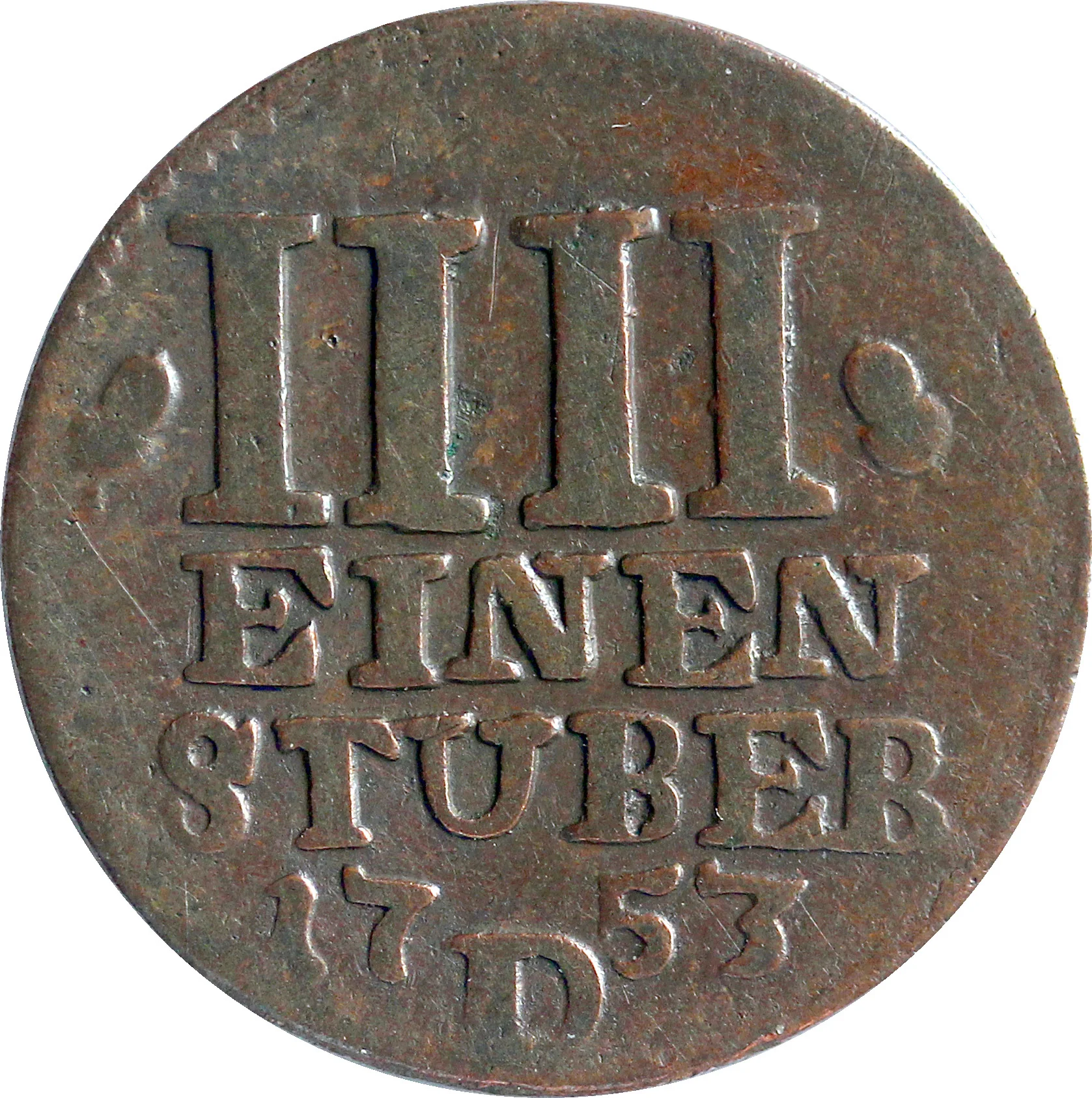
¼ stüber – East Frisia
Add to wishlist
Germany
Context
Years: 1753–1754
Country: Germany
Issuer: East Frisia
Ruler: Frederick II
Currency:
Demonetized: Yes
Material
Diameter: 19.82 mm
Weight: 3.15 g
Thickness: 1.31 mm
Shape: Round
Composition: Copper
Standard: Gold tenth ounce
Magnetic: No
Alignment: Medal alignment
flip
References
KM: #
Numista: #75372
Obverse
Reverse
Description:
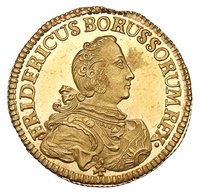
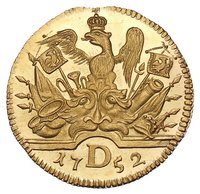
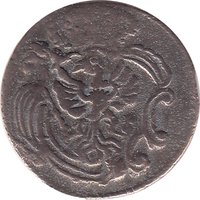
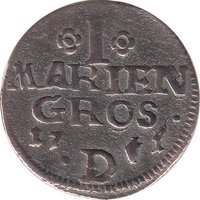
Value and date, mintmark beneath date.
Inscription:
IIII
EINEN
STUBER
1753
D
EINEN
STUBER
1753
D
Script: Latin
Edge
Mints
| Name | Mark |
|---|---|
| Aurich | — |
Mintings
| Year | Mint Mark | Mintage | Quality | Collection |
|---|---|---|---|---|
| 1753 | D | — | ||
| 1754 | D | — |
Historical background
In 1753, the currency situation in East Frisia was complex and fragmented, reflecting its political subordination and economic integration within wider German and European networks. The region was a principality under the rule of Prince Charles Edzard of the House of Cirksena, but its sovereignty was heavily constrained; since 1744, it existed under the looming protection and influence of the Kingdom of Prussia, which would fully annex it upon the prince's death later that year. Consequently, while some local coins were minted, the monetary landscape was dominated by the circulating currencies of its powerful neighbours and trade partners. Dutch guilders (daalders), Prussian talers, and various smaller German states' coins all circulated simultaneously, their values fluctuating against one another and against the unit of account.
The official unit of account for bookkeeping and larger transactions was the East Frisian Reichstaler, divided into 36 Groschen, each of 6 Schwaren. However, this was largely a notational standard, as actual physical payments were made in a bewildering variety of silver and minor coins from across the Holy Roman Empire and the Netherlands. This created a persistent problem of "Kleingeldmangel" (shortage of small change), which hampered daily market transactions for common people. Merchants and officials required constant reference to exchange rate bulletins (Kurantzettel) to assess the true value of the mixed coinage in their hands, leading to friction, confusion, and opportunities for fraud.
This monetary heterogeneity was a direct symptom of East Frisia's vulnerable geopolitical position and its role as a coastal trade hub. The reliance on foreign specie, particularly Dutch currency, underscored the region's economic orientation toward the North Sea and the Republic of the Netherlands. The impending Prussian annexation in 1744 promised a degree of future standardization under the Prussian monetary system, but in 1753, the situation remained in a state of transition—a localized, intricate mosaic of coins that served as a daily reminder of the region's lack of true monetary sovereignty and its place within the contested commercial spheres of Northern Europe.
The official unit of account for bookkeeping and larger transactions was the East Frisian Reichstaler, divided into 36 Groschen, each of 6 Schwaren. However, this was largely a notational standard, as actual physical payments were made in a bewildering variety of silver and minor coins from across the Holy Roman Empire and the Netherlands. This created a persistent problem of "Kleingeldmangel" (shortage of small change), which hampered daily market transactions for common people. Merchants and officials required constant reference to exchange rate bulletins (Kurantzettel) to assess the true value of the mixed coinage in their hands, leading to friction, confusion, and opportunities for fraud.
This monetary heterogeneity was a direct symptom of East Frisia's vulnerable geopolitical position and its role as a coastal trade hub. The reliance on foreign specie, particularly Dutch currency, underscored the region's economic orientation toward the North Sea and the Republic of the Netherlands. The impending Prussian annexation in 1744 promised a degree of future standardization under the Prussian monetary system, but in 1753, the situation remained in a state of transition—a localized, intricate mosaic of coins that served as a daily reminder of the region's lack of true monetary sovereignty and its place within the contested commercial spheres of Northern Europe.
💎 Extremely Rare