

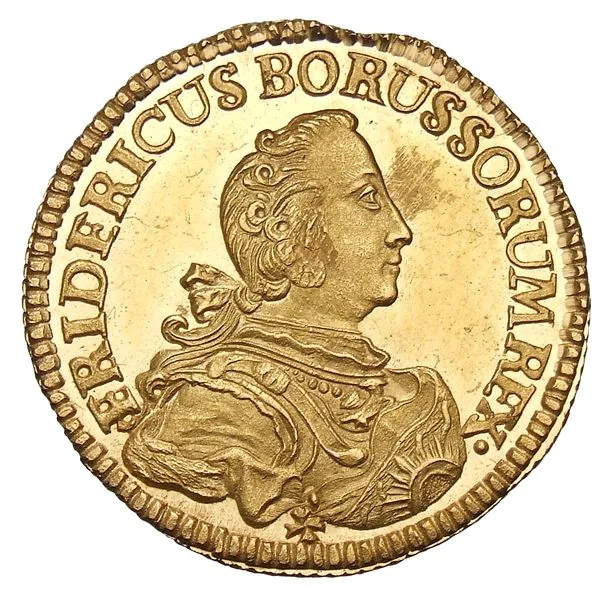
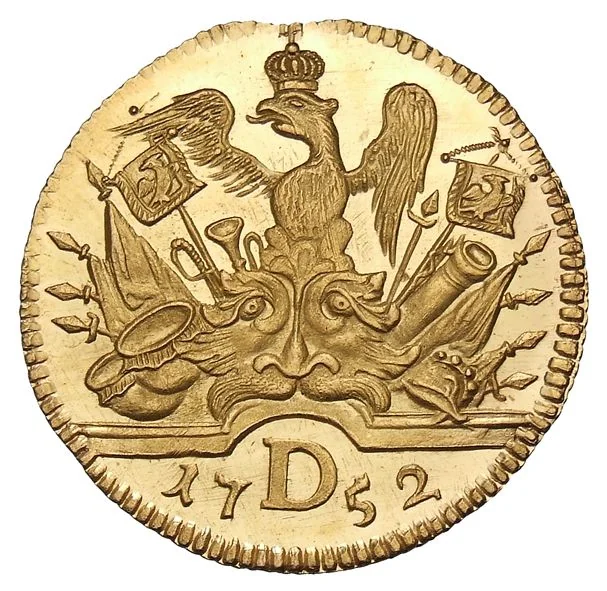
1 gold friedrich – East Frisia
Add to wishlist
Germany
Context
Years: 1752–1753
Country: Germany
Issuer: East Frisia
Ruler: Frederick II
Currency:
Demonetized: Yes
Material
References
KM: #
Numista: #417724
Value
Bullion value: $942.23
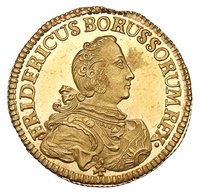
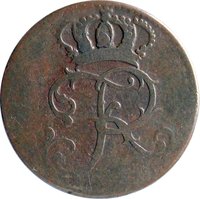
Obverse
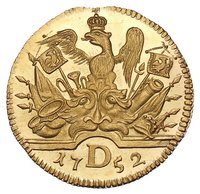
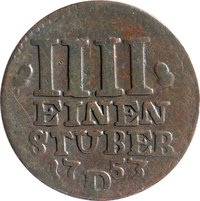
Reverse
Edge
Mints
| Name | Mark |
|---|---|
| Aurich | D |
Historical background
In 1752, East Frisia was navigating a complex and fragmented monetary landscape, a direct legacy of its political history. The region was not an independent sovereign state but a principality within the Holy Roman Empire, and since 1744, it had been under the direct rule of the Kingdom of Prussia following the extinction of its local Cirksena dynasty. This political shift did not immediately simplify currency matters, as East Frisia’s economy still operated with a mix of older, circulating coins from various German states, the Netherlands, and residual local issues, leading to chronic confusion and inefficiency in trade.
The primary unit of account was the East Frisian Thaler, but it existed alongside and in relation to a plethora of physical coins. These included the Reichsthaler (Imperial Thaler) used across the Empire, Dutch Gulden and Ducats due to strong trade links across the North Sea, and smaller regional coins like Grote and Schwaren for everyday transactions. The simultaneous circulation of these coins, each with fluctuating exchange rates and varying silver content, created a paradise for money-changers and a headache for merchants and peasants alike, facilitating debasement and fraud.
Prussian administration under Frederick the Great sought to impose greater monetary order, aligning the region more closely with the broader Prussian system. However, in 1752, this process was still underway. The overarching goal was to standardize currency to boost tax efficiency, stabilize commerce, and solidify Prussian control, but the practical reality on the ground remained one of monetary plurality and transition, characteristic of the Holy Roman Empire’s complex economic fabric on the eve of wider modernizing reforms.
The primary unit of account was the East Frisian Thaler, but it existed alongside and in relation to a plethora of physical coins. These included the Reichsthaler (Imperial Thaler) used across the Empire, Dutch Gulden and Ducats due to strong trade links across the North Sea, and smaller regional coins like Grote and Schwaren for everyday transactions. The simultaneous circulation of these coins, each with fluctuating exchange rates and varying silver content, created a paradise for money-changers and a headache for merchants and peasants alike, facilitating debasement and fraud.
Prussian administration under Frederick the Great sought to impose greater monetary order, aligning the region more closely with the broader Prussian system. However, in 1752, this process was still underway. The overarching goal was to standardize currency to boost tax efficiency, stabilize commerce, and solidify Prussian control, but the practical reality on the ground remained one of monetary plurality and transition, characteristic of the Holy Roman Empire’s complex economic fabric on the eve of wider modernizing reforms.
✨ Legendary