

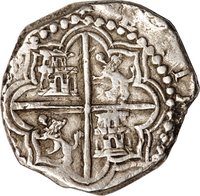
Obverse
Description:
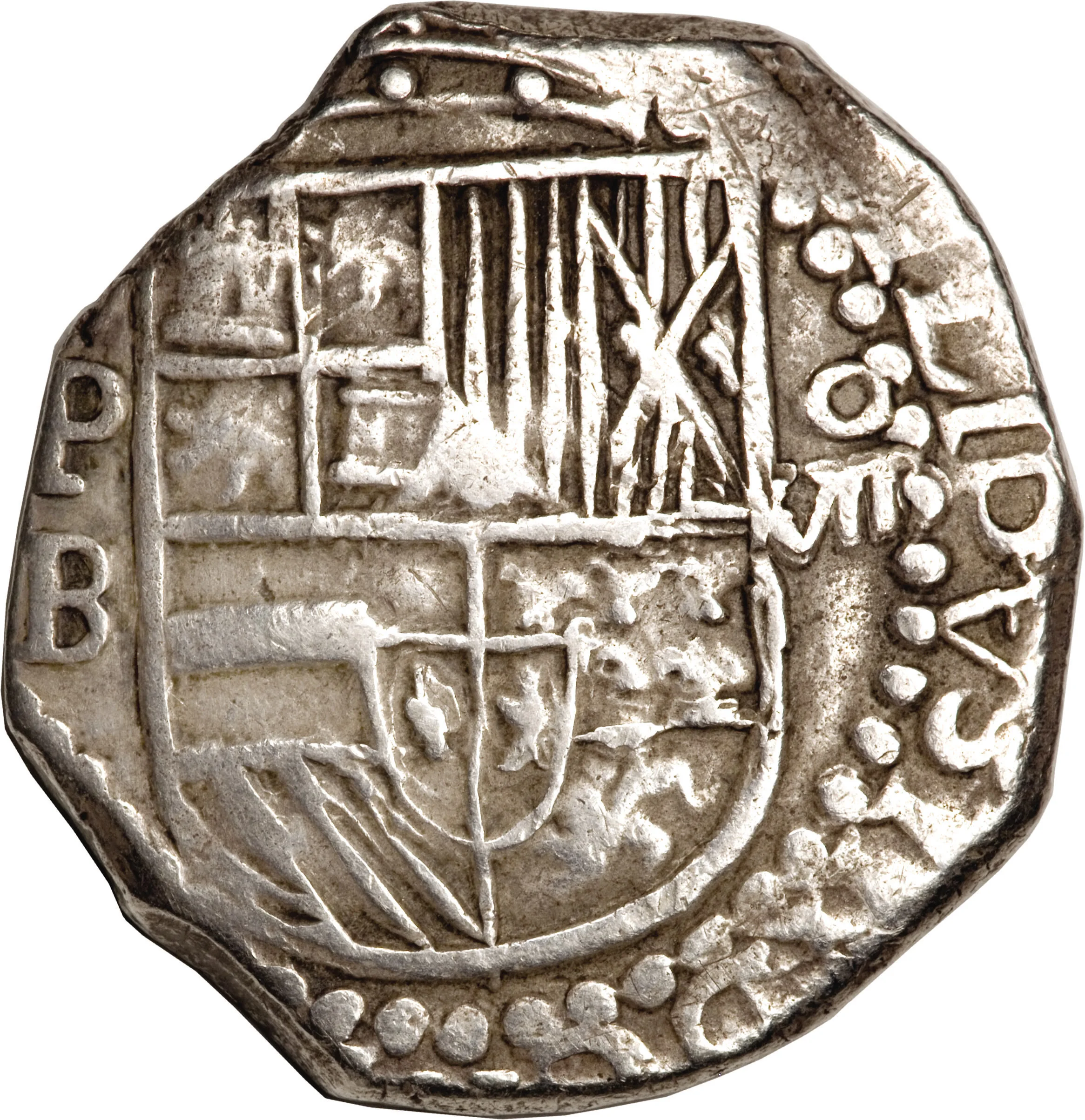
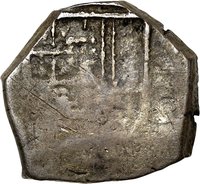
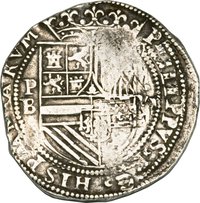
Coat of arms of the Catholic Kings under a crown. Mint mark P (Potosí), assayer M (Juan Sánchez Mejía). Value: 8. Border of dots.
Inscription:
PHILIPPVS III.DG.HISPANIARVM
P.M - 8
P.M - 8
Script: Latin
Reverse
Description:
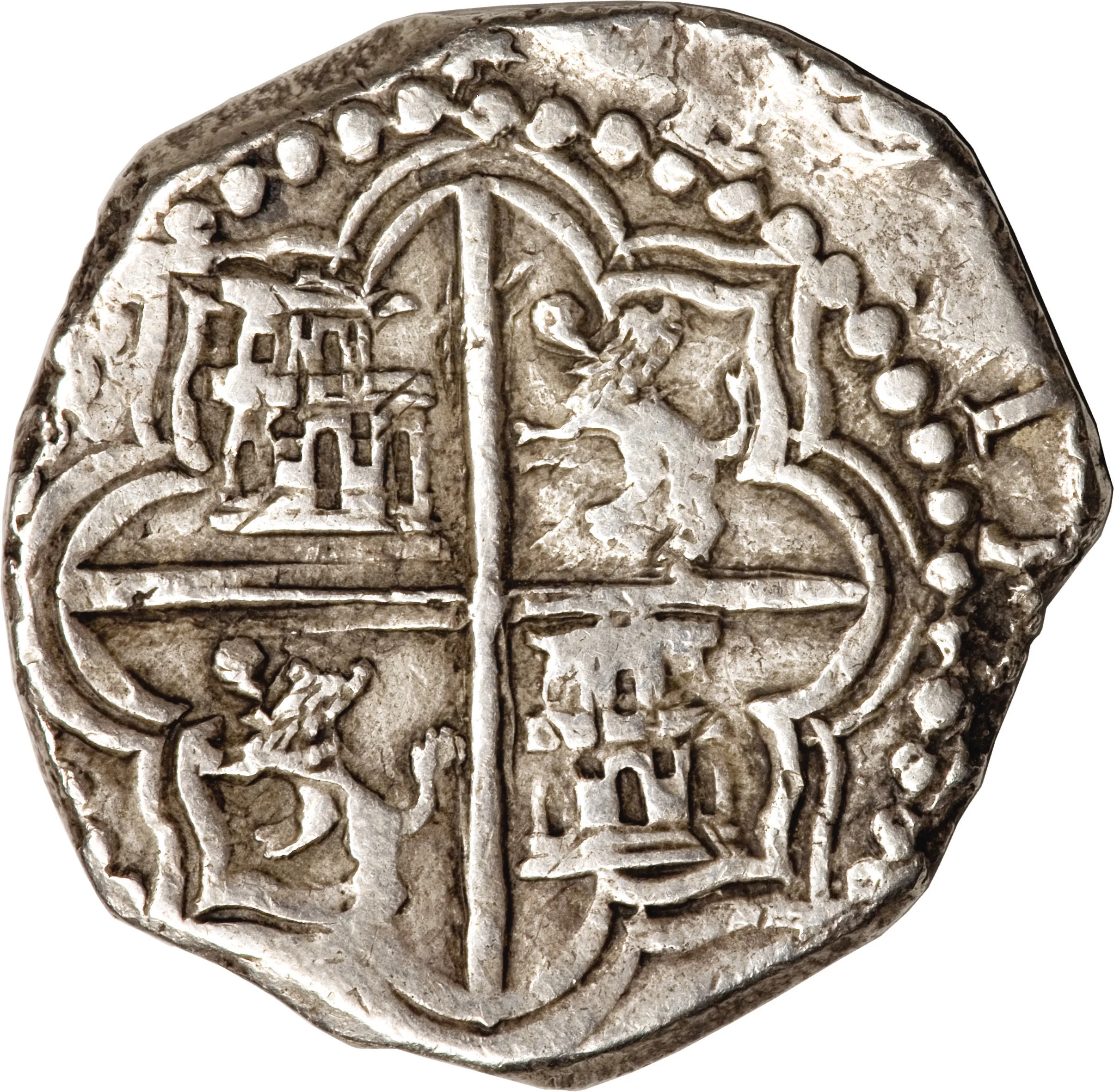
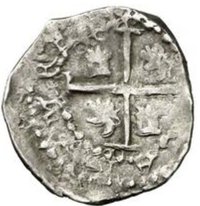
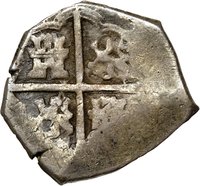
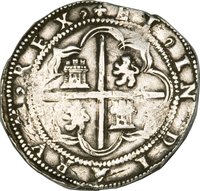
Jerusalem cross, two castles and two lions within a tressure. Dotted circle separates inner design from outer lettering, which begins at twelve o'clock.
Inscription:
ET INDIARVM REX . ANO 1617
Script: Latin
Edge
Mintings
| Year | Mint Mark | Mintage | Quality | Collection |
|---|---|---|---|---|
| — | — | — | ||
| — | PB | — | ||
| 1616 | M | — | ||
| 1617 | M/Q | — |
Historical background
In 1596, the currency situation in the Royal Audiencia of Charcas (modern Bolivia) was defined by a profound scarcity of official coinage and a reliance on disparate mediums of exchange. The region, home to the immense silver mines of Potosí (discovered in 1545), was the economic engine of the Spanish Empire, yet the minting of coins was centralized elsewhere. The Spanish Crown had established the first mint in the Americas in Mexico City in 1535, but the Casa de la Moneda in Potosí would not begin operations until 1574, and even then, its early output was chaotic and often debased.
Despite the Potosí mint's existence by 1596, its coins did not fully saturate the local economy. The primary unit was the silver real, with eight reales making a peso (the famous "piece of eight"). However, in daily transactions, especially for the indigenous majority and in rural areas, barter remained prevalent. Goods like coca leaves, textiles, and agricultural products commonly served as currency. Furthermore, due to a chronic shortage of small-denomination coins (moneda menuda), people often resorted to cutting silver coins into pieces to make change, a practice known as "clip money."
This period was also one of significant monetary instability. The late 16th century saw a massive influx of Potosí silver into the global economy, contributing to the "Price Revolution" of inflation in Europe. Locally, the mint faced scandals; the great debasement under Viceroy Francisco de Toledo's successors, where the silver content of coins was illegally reduced, was still a recent memory. While reforms were attempted, 1596 fell within an era of transitioning from a chaotic, commodity-based system toward a more standardized, though still imperfect, royal currency dominated by the silver flowing from the Cerro Rico mountain.
Despite the Potosí mint's existence by 1596, its coins did not fully saturate the local economy. The primary unit was the silver real, with eight reales making a peso (the famous "piece of eight"). However, in daily transactions, especially for the indigenous majority and in rural areas, barter remained prevalent. Goods like coca leaves, textiles, and agricultural products commonly served as currency. Furthermore, due to a chronic shortage of small-denomination coins (moneda menuda), people often resorted to cutting silver coins into pieces to make change, a practice known as "clip money."
This period was also one of significant monetary instability. The late 16th century saw a massive influx of Potosí silver into the global economy, contributing to the "Price Revolution" of inflation in Europe. Locally, the mint faced scandals; the great debasement under Viceroy Francisco de Toledo's successors, where the silver content of coins was illegally reduced, was still a recent memory. While reforms were attempted, 1596 fell within an era of transitioning from a chaotic, commodity-based system toward a more standardized, though still imperfect, royal currency dominated by the silver flowing from the Cerro Rico mountain.
Series: 1596 Bolivia circulation coins
💎 Very Rare