

1 Rupee – Madras Presidency
India

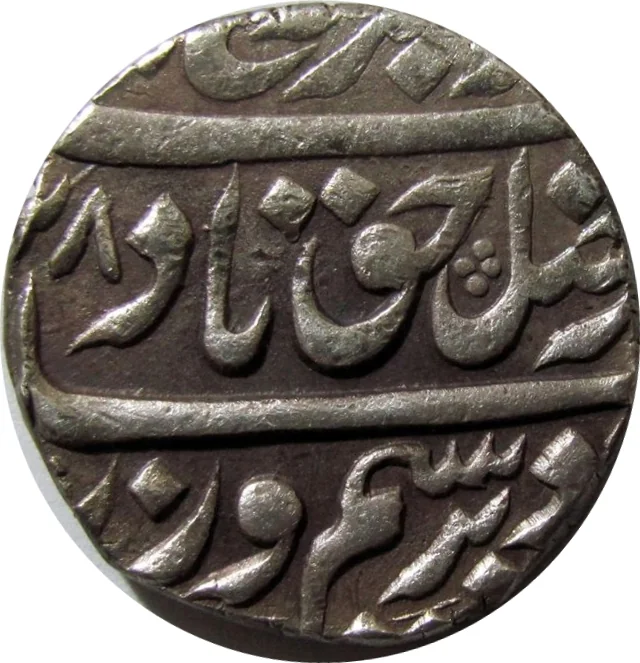
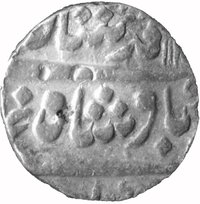
Obverse
Description:
Persian legend: "Sikka zad az fazl hagg bar sim wa zar Badshah bahar wa bar Farrukh-Siyar" dated AH 1128.
Inscription:
١١٢٨
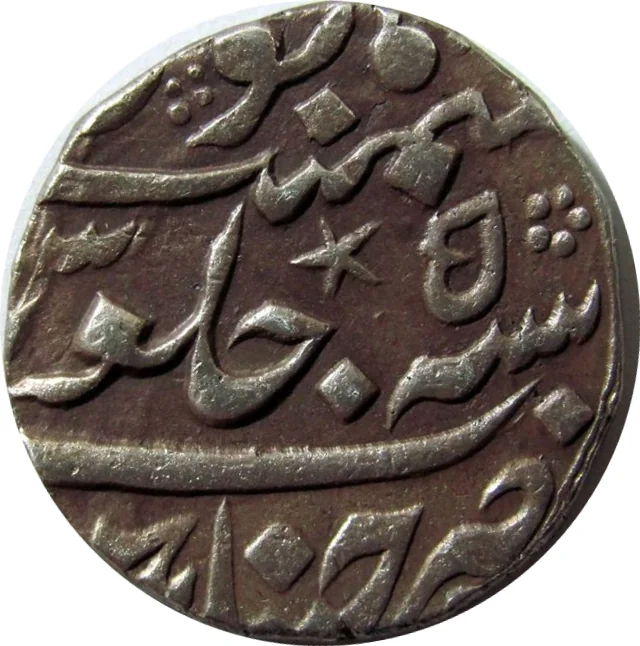
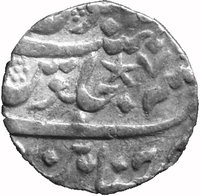
Reverse
Description:
Zarb Chinapatan, Year 5 of Maimanat Manus reign.
Inscription:
۵
Edge
Plain
Mintings
| Year | Mint Mark | Mintage | Quality | Collection |
|---|---|---|---|---|
| 1713 | — | — | ||
| 1714 | — | — | ||
| 1716 | — | — | ||
| 1717 | — | — | ||
| 1718 | — | — |
Historical background
In 1713, the currency situation within the Madras Presidency of the British East India Company was complex and transitional, operating within a multi-currency environment. The dominant system was the Mughal silver rupee, particularly the Arcot rupee minted in the nearby Carnatic region, which served as the primary standard for high-value transactions and revenue collection. Alongside this, a plethora of gold pagodas (primarily the "Three Swami" pagoda), copper cash, and various coins from other European powers and local Indian states circulated, creating a challenging landscape for trade and administration that required constant conversion and valuation.
The British administration at Fort St. George faced significant monetary challenges. A key issue was the steady drain of silver rupees from the Presidency to pay for the Company's investments in textiles for export, which often exceeded the value of imported goods sold locally. This shortage of reliable specie was exacerbated by the variable weight and purity of coins in circulation, leading to frequent disputes and "coin clipping." While the Company operated a mint in Madras, its output was insufficient to stabilize the currency, and its authority was limited outside the Presidency's immediate settlements.
Consequently, the period was marked by ongoing financial experimentation and regulation. The Company attempted to fix exchange rates between rupees, pagodas, and fanams (a fractional coin) through public "sanctions," but these official rates often conflicted with volatile market values. This unstable and heterogeneous system placed a burden on merchants and the economy, foreshadowing the more concerted, but still difficult, efforts later in the 18th century to impose a uniform and Company-controlled currency system across its expanding territories.
The British administration at Fort St. George faced significant monetary challenges. A key issue was the steady drain of silver rupees from the Presidency to pay for the Company's investments in textiles for export, which often exceeded the value of imported goods sold locally. This shortage of reliable specie was exacerbated by the variable weight and purity of coins in circulation, leading to frequent disputes and "coin clipping." While the Company operated a mint in Madras, its output was insufficient to stabilize the currency, and its authority was limited outside the Presidency's immediate settlements.
Consequently, the period was marked by ongoing financial experimentation and regulation. The Company attempted to fix exchange rates between rupees, pagodas, and fanams (a fractional coin) through public "sanctions," but these official rates often conflicted with volatile market values. This unstable and heterogeneous system placed a burden on merchants and the economy, foreshadowing the more concerted, but still difficult, efforts later in the 18th century to impose a uniform and Company-controlled currency system across its expanding territories.
✨ Legendary