

1 pfennig – Brunswick-Lüneburg-Calenberg-Hannover
Add to wishlist
Germany
Context
Material
References
KM: #
Numista: #74719
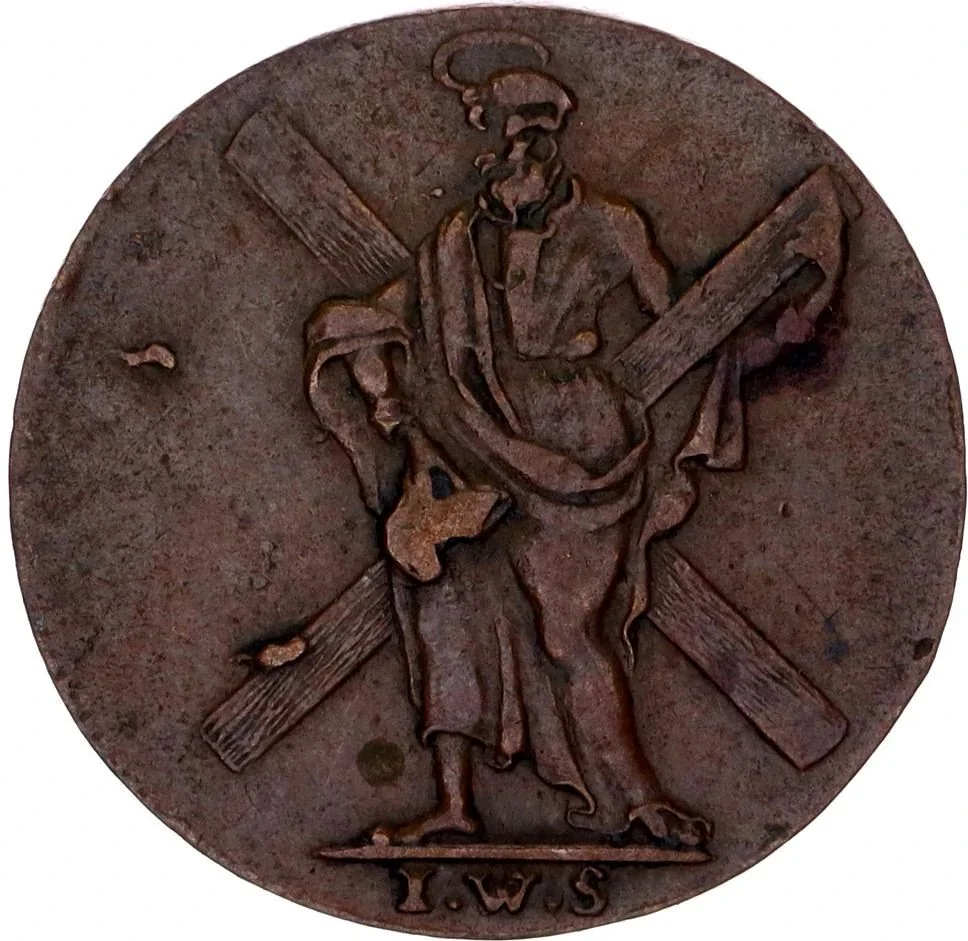
Obverse
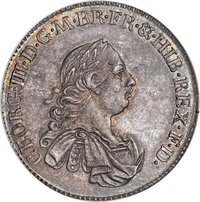
Description:
Saint Andrew with his cross.
Inscription:
I.W.S.
Script: Latin
Engraver: Johann Wilhelm Schlemm
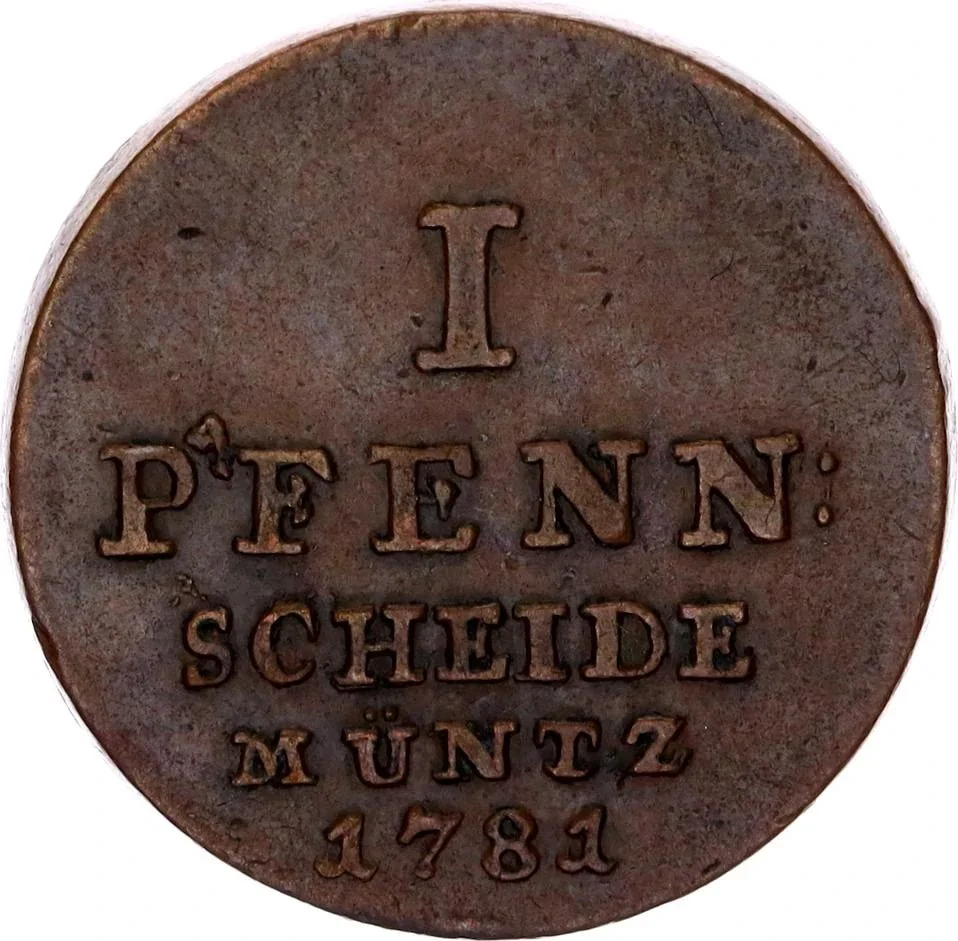
Reverse
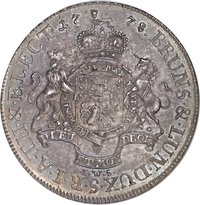
Description:
Dated five-line inscription with denomination.
Inscription:
1
PFENN:
SCHEIDE
MÜNTZ
1781
PFENN:
SCHEIDE
MÜNTZ
1781
Script: Latin
Edge
Mints
| Name | Mark |
|---|---|
| Clausthal | — |
Mintings
| Year | Mint Mark | Mintage | Quality | Collection |
|---|---|---|---|---|
| 1780 | — | — | ||
| 1781 | — | — | ||
| 1782 | — | — | ||
| 1782 | C | — | ||
| 1783 | — | — | ||
| 1784 | — | — | ||
| 1785 | — | — | ||
| 1786 | — | — | ||
| 1787 | — | — | ||
| 1788 | — | — | ||
| 1789 | — | — | ||
| 1793 | PLM | — | ||
| 1801 | C | — | ||
| 1802 | C | — |
Historical background
In 1780, the currency situation in the Duchy of Brunswick-Lüneburg, specifically the Principality of Calenberg (with its capital in Hanover), was characterized by significant complexity and instability. The region operated within the fragmented monetary system of the Holy Roman Empire, where multiple authorities minted coinage. Hanover itself issued its own Reichsthaler and Gute Groschen, but these circulated alongside a plethora of foreign coins from neighboring states like Prussia, Brunswick-Wolfenbüttel, and various free cities. This proliferation of currencies of varying intrinsic values, weights, and denominations created a chaotic environment for trade and daily transactions, ripe for confusion and exploitation.
The core of the problem lay in the disparity between the official Kurantgeld (specie or "current money") and the depreciated Rechnungsgeld (accounting or "banco money") used for bookkeeping. Furthermore, a severe shortage of small change (Scheidemünzen) plagued the local economy, hindering everyday commerce for the common people. This vacuum was often filled by debased coins from elsewhere or even counterfeit money, further eroding public trust. The government faced constant challenges in setting and enforcing exchange rates between the myriad coins, leading to arbitrage and losses for both the state and its subjects.
This monetary disarray was a direct concern for the ruling prince, who was also the Elector of Hanover and, notably, King George III of Great Britain. While the personal union with Britain brought political weight, it did not simplify the domestic currency crisis. By 1780, authorities recognized the need for reform, which would culminate a decade later in the introduction of the Conventionsgeld system based on the Conventionsthaler. This move, aligning Hanover with monetary standards in Austria and southern Germany, was a direct response to the dysfunctional and multi-layered currency landscape of the period.
The core of the problem lay in the disparity between the official Kurantgeld (specie or "current money") and the depreciated Rechnungsgeld (accounting or "banco money") used for bookkeeping. Furthermore, a severe shortage of small change (Scheidemünzen) plagued the local economy, hindering everyday commerce for the common people. This vacuum was often filled by debased coins from elsewhere or even counterfeit money, further eroding public trust. The government faced constant challenges in setting and enforcing exchange rates between the myriad coins, leading to arbitrage and losses for both the state and its subjects.
This monetary disarray was a direct concern for the ruling prince, who was also the Elector of Hanover and, notably, King George III of Great Britain. While the personal union with Britain brought political weight, it did not simplify the domestic currency crisis. By 1780, authorities recognized the need for reform, which would culminate a decade later in the introduction of the Conventionsgeld system based on the Conventionsthaler. This move, aligning Hanover with monetary standards in Austria and southern Germany, was a direct response to the dysfunctional and multi-layered currency landscape of the period.
⭐ Somewhat Rare