

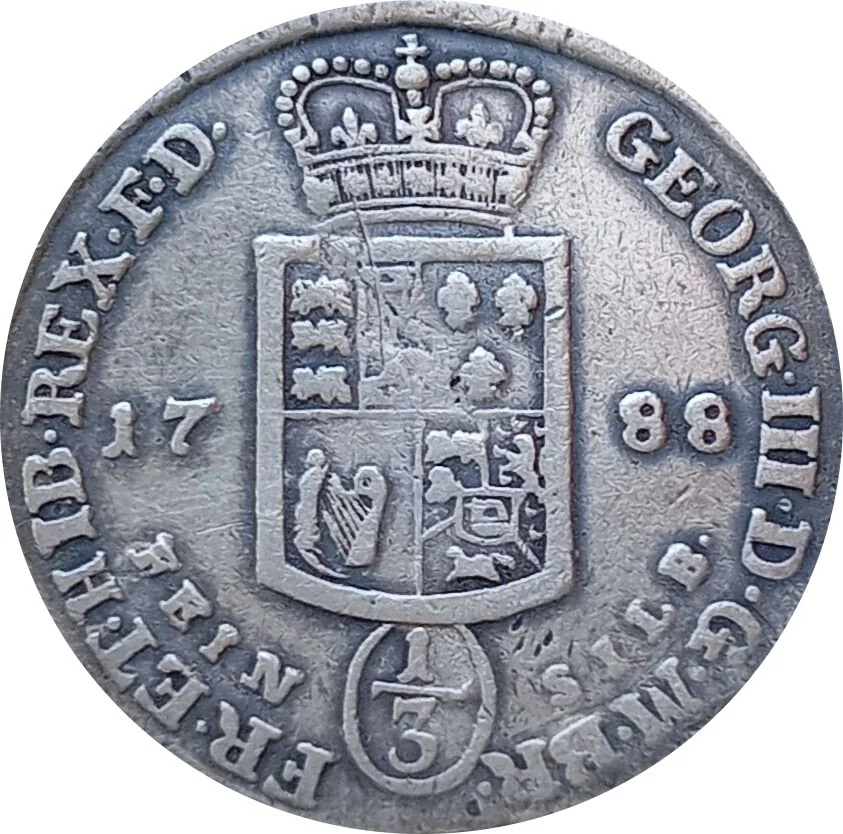
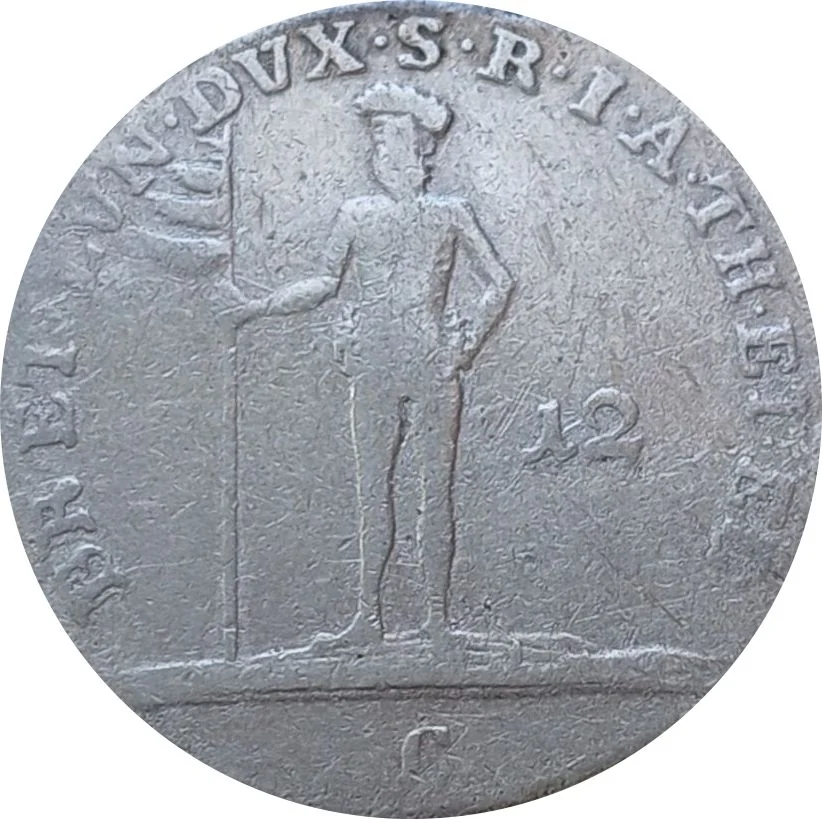
⅓ thaler – Brunswick-Lüneburg-Calenberg-Hannover
Add to wishlist
Germany
Context
Material
References
KM: #
Numista: #482158
Value
Bullion value: $16.04
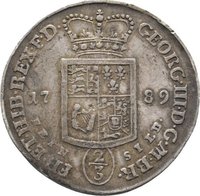
Obverse
Inscription:
GEORG.III.D.G.M.BR.FR.ET.HIB.REX.F.D.1788
FEIN SILB
(1/3)
FEIN SILB
(1/3)
Script: Latin
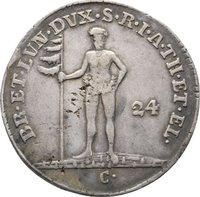
Reverse
Inscription:
BR.ET.LVN.DVX.S.R.I.A.TH.ET.EL.
12
.C.
12
.C.
Script: Latin
Edge
Mints
| Name | Mark |
|---|---|
| Zellerfeld | — |
Mintings
| Year | Mint Mark | Mintage | Quality | Collection |
|---|---|---|---|---|
| 1781 | — | — | ||
| 1785 | — | — | ||
| 1785 | C | — | ||
| 1786 | C | — | ||
| 1787 | C | — | ||
| 1788 | C | — | ||
| 1789 | C | — |
Historical background
In 1781, the currency situation in the Duchy of Brunswick-Lüneburg, specifically the Principality of Calenberg (with its capital in Hanover), was characterized by significant complexity and fragmentation. The region was part of the Holy Roman Empire and lacked a unified monetary system, even within its own territories. Multiple coinage systems circulated simultaneously, including the Reichsthaler (Imperial Thaler) used for large transactions and accounting, the Conventionsthaler (a slightly different standard adopted by several German states), and a plethora of smaller local and regional coins like Gute Groschen and Mariengroschen. This created a chaotic environment for commerce, requiring constant reference to exchange tables.
The root of this complexity lay in the political structure. While ruled by the House of Hanover (with the Elector also being the King of Great Britain), the monetary sovereignty was often shared or contested with other local estates and mints. Furthermore, the need to facilitate trade with neighboring states meant that coins from Brunswick-Wolfenbüttel, Prussia, and various free cities were also in common circulation. This monetary plurality led to widespread confusion, facilitated clipping and counterfeiting, and imposed a burden on merchants who had to navigate fluctuating values and metallic content.
Efforts at standardization were ongoing but incomplete. The Conventionsfuß of 1753, which aimed to create a uniform silver standard across southern and central Germany, had some influence, but older systems persisted. Consequently, in 1781, transactions required careful specification of which "Thaler" was meant, and prices were often listed in both local and Reichsthaler values. This unstable and inefficient system highlighted the growing need for monetary consolidation, a challenge that would only be fully addressed in the following century after the Napoleonic Wars reshaped the German political landscape.
The root of this complexity lay in the political structure. While ruled by the House of Hanover (with the Elector also being the King of Great Britain), the monetary sovereignty was often shared or contested with other local estates and mints. Furthermore, the need to facilitate trade with neighboring states meant that coins from Brunswick-Wolfenbüttel, Prussia, and various free cities were also in common circulation. This monetary plurality led to widespread confusion, facilitated clipping and counterfeiting, and imposed a burden on merchants who had to navigate fluctuating values and metallic content.
Efforts at standardization were ongoing but incomplete. The Conventionsfuß of 1753, which aimed to create a uniform silver standard across southern and central Germany, had some influence, but older systems persisted. Consequently, in 1781, transactions required careful specification of which "Thaler" was meant, and prices were often listed in both local and Reichsthaler values. This unstable and inefficient system highlighted the growing need for monetary consolidation, a challenge that would only be fully addressed in the following century after the Napoleonic Wars reshaped the German political landscape.
✨ Legendary