

1 thaler – Brunswick-Lüneburg-Calenberg-Hannover
Add to wishlist
Germany
Context
References
KM: #
Numista: #31057
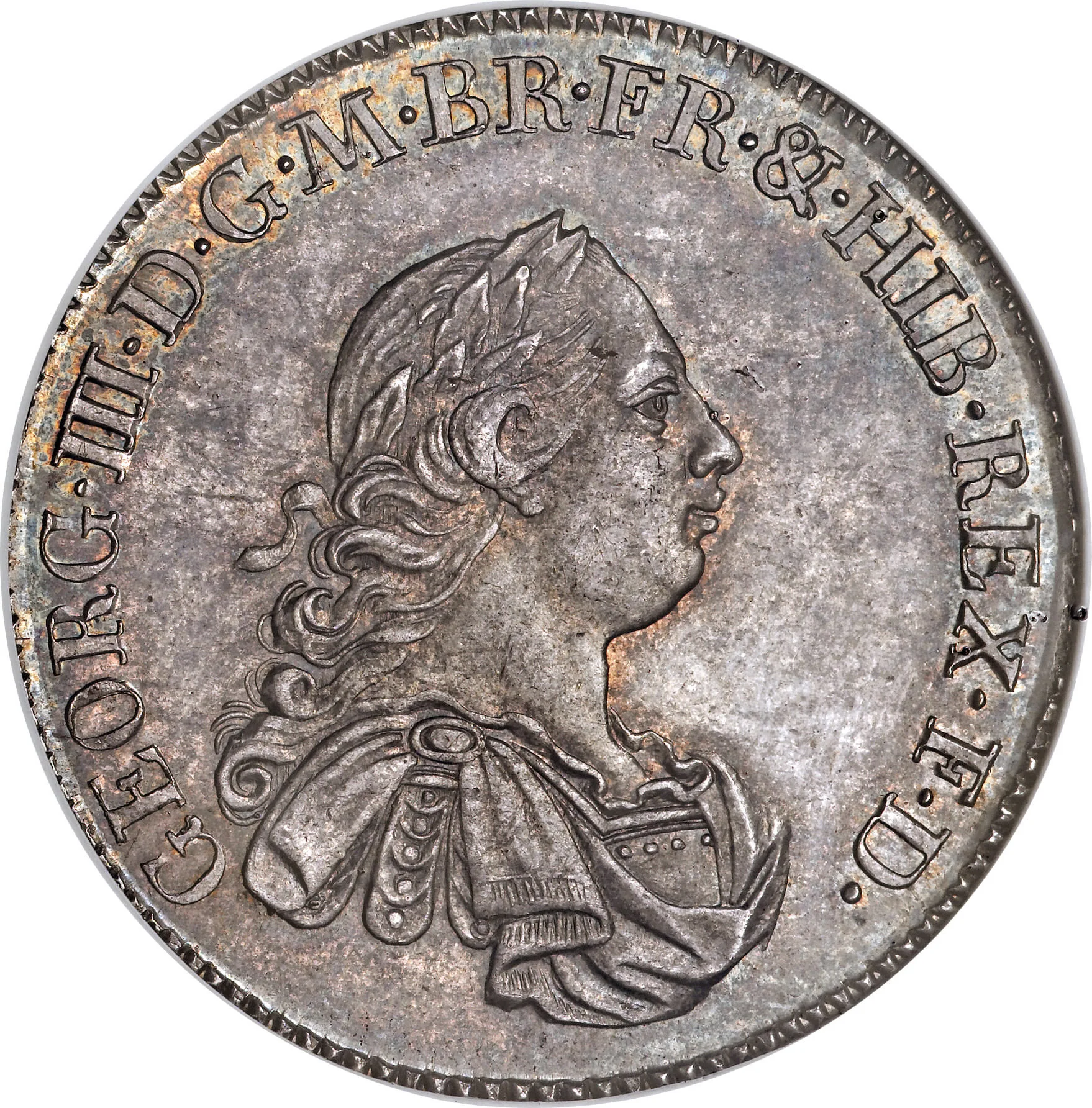
Obverse
Description:
Bust of George III, encircled by legend.
Script: Latin
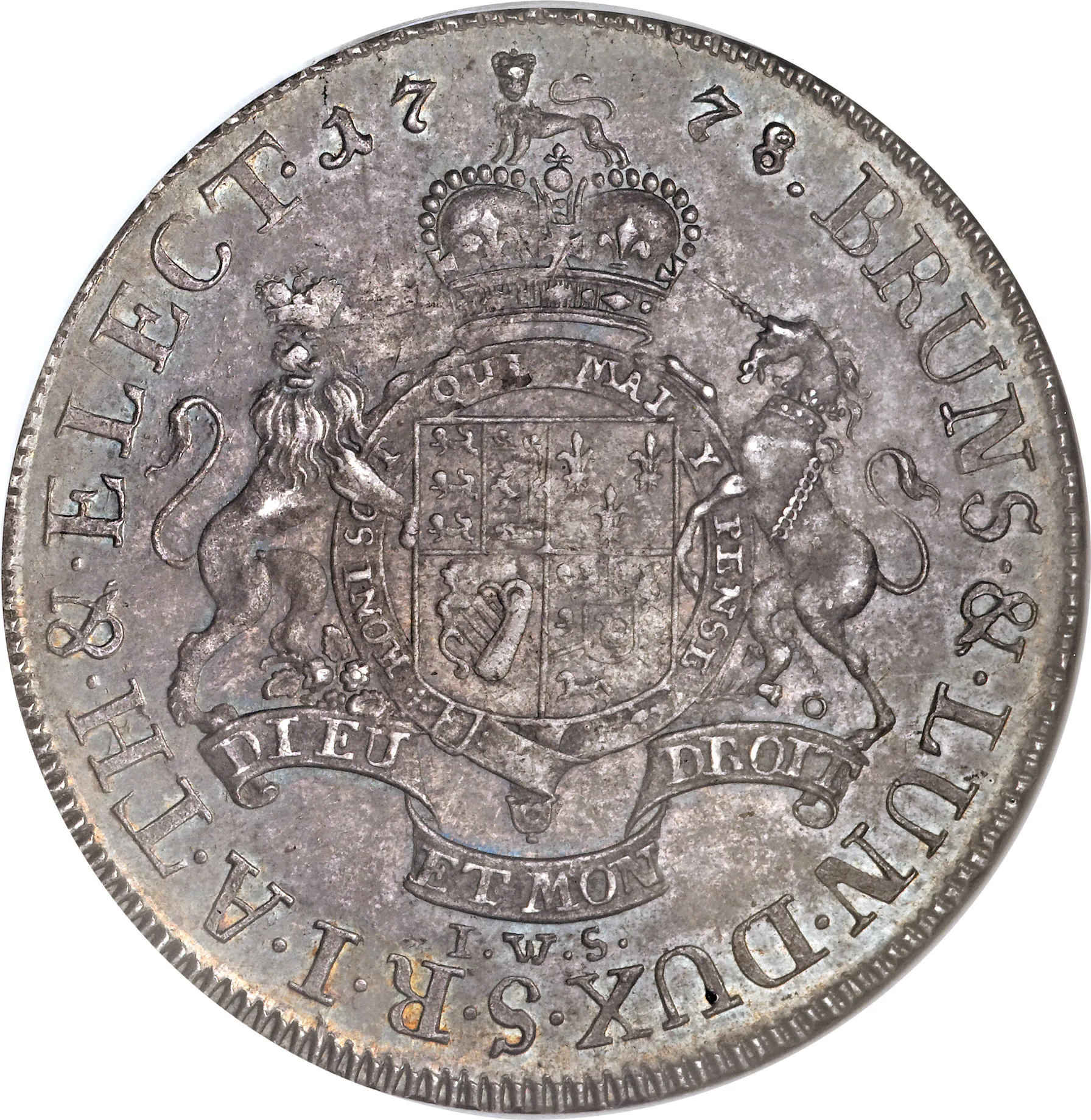
Reverse
Description:
Crowned coat of arms flanked by animals with encircling legend.
Script: Latin
Edge
Mints
| Name | Mark |
|---|---|
| Clausthal | — |
Mintings
| Year | Mint Mark | Mintage | Quality | Collection |
|---|---|---|---|---|
| 1777 | — | — | ||
| 1778 | — | — |
Historical background
In 1777, the currency situation in the Duchy of Brunswick-Lüneburg, specifically the Principality of Calenberg (with its capital in Hanover), was complex and fragmented, reflecting the broader political structure of the Holy Roman Empire. The territory was not a unified monetary zone; instead, it operated under the "Conventionsfuß" system established by the Leipzig Mint Treaty of 1763. This treaty standardized the silver content of the large silver Thaler coin, with the Hanoverian Conventionsthaler being minted at a rate of 10 thalers from a specific weight of fine silver. However, everyday commerce relied on a confusing multiplicity of smaller subsidiary coins, such as Gute Groschen, Mariengroschen, and Pfennige, whose values and metal content could vary locally.
This system created significant practical challenges. The value of small change was often unstable, leading to frequent recoinages and manipulations, especially during the Seven Years' War (1756-1763), which had ended just over a decade prior. The war had left many German states, including Hanover, with heavy debts, leading to the debasement of subsidiary coinage to generate seigniorage revenue. Consequently, merchants and the public had to navigate a dual system: large, stable silver Conventionsthalers used for state finance and long-distance trade, and a flood of less reliable small coins for daily wages and local market purchases, with exchange rates between them being a constant source of calculation and potential dispute.
Furthermore, the monetary landscape was complicated by the personal union with Great Britain, as the Elector of Hanover was also King George III of England. While this connection brought international trade, it did not create a unified currency with Britain. Hanover's coinage remained distinct, though British gold guineas and Portuguese gold moedas circulated alongside local specie, adding another layer of exchange complexity. Thus, in 1777, the currency situation was one of precarious order at the high-value level, masking a disordered and inflationary environment for everyday transactions, a condition that would persist until the Napoleonic reforms forced greater standardization in the early 19th century.
This system created significant practical challenges. The value of small change was often unstable, leading to frequent recoinages and manipulations, especially during the Seven Years' War (1756-1763), which had ended just over a decade prior. The war had left many German states, including Hanover, with heavy debts, leading to the debasement of subsidiary coinage to generate seigniorage revenue. Consequently, merchants and the public had to navigate a dual system: large, stable silver Conventionsthalers used for state finance and long-distance trade, and a flood of less reliable small coins for daily wages and local market purchases, with exchange rates between them being a constant source of calculation and potential dispute.
Furthermore, the monetary landscape was complicated by the personal union with Great Britain, as the Elector of Hanover was also King George III of England. While this connection brought international trade, it did not create a unified currency with Britain. Hanover's coinage remained distinct, though British gold guineas and Portuguese gold moedas circulated alongside local specie, adding another layer of exchange complexity. Thus, in 1777, the currency situation was one of precarious order at the high-value level, masking a disordered and inflationary environment for everyday transactions, a condition that would persist until the Napoleonic reforms forced greater standardization in the early 19th century.
✨ Legendary