

1 Pfennig – Landgraviate of Hesse-Darmstadt
Context
Year: 1773
Issuer: Landgraviate of Hesse-Darmstadt
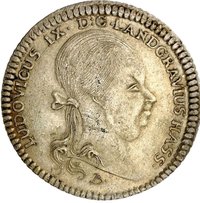
Ruler: Louis IX
Currency:
(1568—1805)
Demonetized: Yes
Material
References
KM: #Click to copy to clipboard231
Numista: #74597
Obverse
Description:
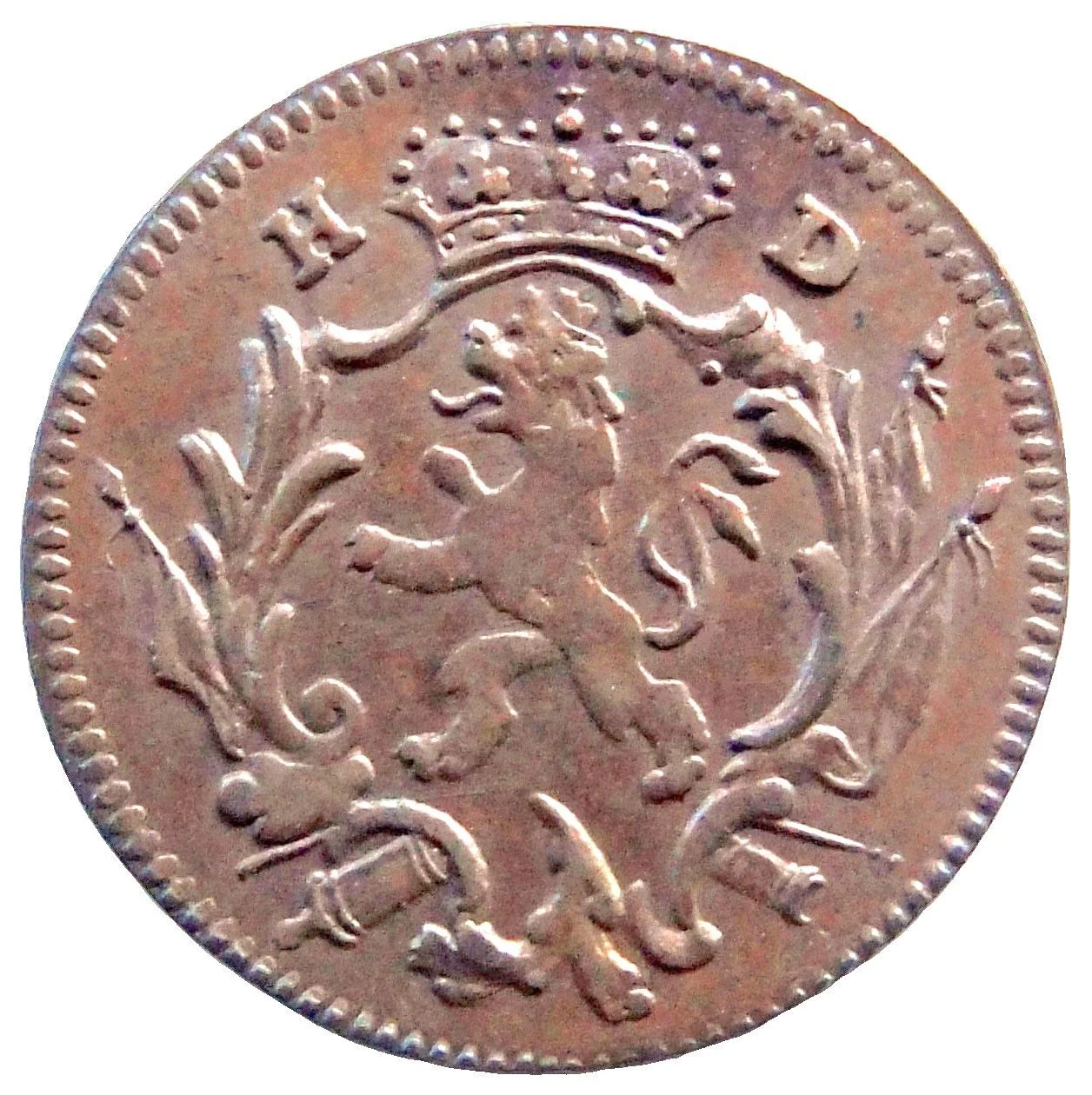
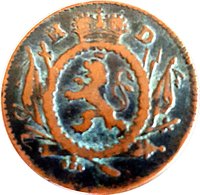
Lion in rococo cartouche; crown with "H.D." above, cannons below.
Inscription:
H / D
Script: Latin
Reverse
Description:
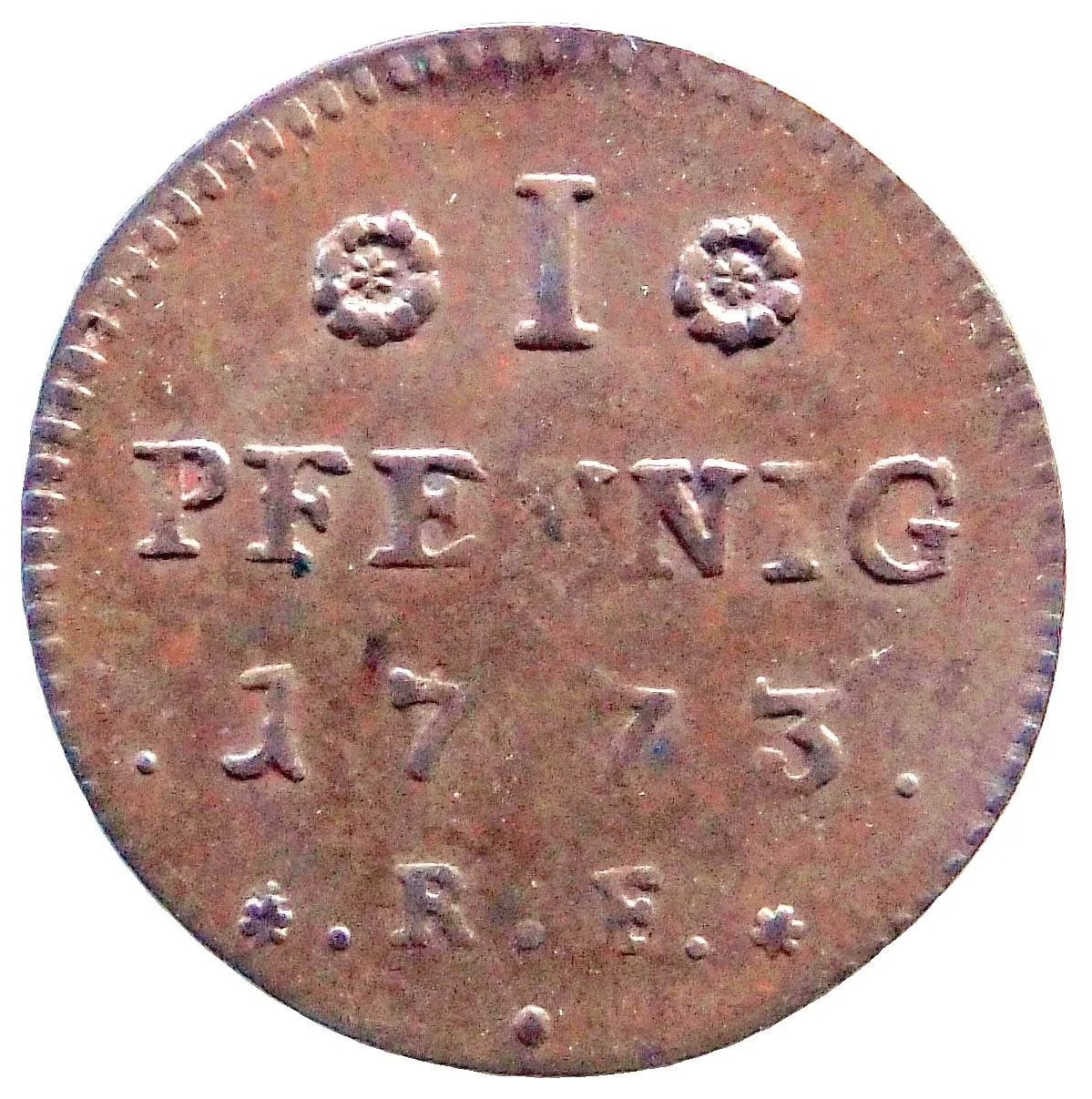
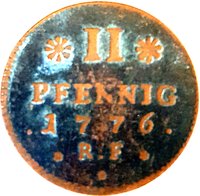
Dated 4-line inscription with denomination and mintmaster initials.
Inscription:
* I *
PFENNIG
.1773.
*.R.F.*
.
PFENNIG
.1773.
*.R.F.*
.
Script: Latin
Edge
Mints
| Name | Mark |
|---|---|
| Darmstadt | — |
Mintings
| Year | Mint Mark | Mintage | Quality | Collection |
|---|---|---|---|---|
| 1773 | — | — |
Historical background
In 1773, the currency situation in the Landgraviate of Hesse-Darmstadt was complex and fragmented, typical of the Holy Roman Empire's myriad states. The landgraviate did not have a single, unified monetary system. Instead, circulation was dominated by a mixture of foreign and domestic coins, primarily silver Reichsthaler and Gulden, whose values were officially defined by the Imperial Coinage Ordinance (Reichsmünzfuß). However, the practical reality was a chaotic coexistence of coins from neighboring states like Electoral Mainz, the Palatinate, and even further afield, each with varying silver content and acceptance rates, leading to constant calculation and exchange difficulties for merchants and the populace.
The landgrave's own minting rights were limited and often unprofitable. While the Darmstadt mint produced some coinage, its output was insufficient to establish a dominant regional currency. More critically, the landgraviate was financially strained, with Landgrave Ludwig IX prioritizing military expenditures over monetary reform. This lack of strong, centralized coinage meant that the monetary system was essentially driven by market forces and the inflow of foreign coins from trade, making the economy vulnerable to debasement and speculative exchange.
Consequently, daily transactions were cumbersome, requiring familiarity with multiple conversion tables (Wechseltabellen). The value of a coin depended not only on its official denomination but also on its origin, wear, and the current market assessment of its silver content. This instability hindered commerce and tax collection, creating a persistent background of economic inefficiency. While not in a state of acute crisis in 1773, this unsatisfactory monetary fragmentation was a recognized problem that would eventually contribute to broader calls for financial and administrative consolidation in the decades to come.
The landgrave's own minting rights were limited and often unprofitable. While the Darmstadt mint produced some coinage, its output was insufficient to establish a dominant regional currency. More critically, the landgraviate was financially strained, with Landgrave Ludwig IX prioritizing military expenditures over monetary reform. This lack of strong, centralized coinage meant that the monetary system was essentially driven by market forces and the inflow of foreign coins from trade, making the economy vulnerable to debasement and speculative exchange.
Consequently, daily transactions were cumbersome, requiring familiarity with multiple conversion tables (Wechseltabellen). The value of a coin depended not only on its official denomination but also on its origin, wear, and the current market assessment of its silver content. This instability hindered commerce and tax collection, creating a persistent background of economic inefficiency. While not in a state of acute crisis in 1773, this unsatisfactory monetary fragmentation was a recognized problem that would eventually contribute to broader calls for financial and administrative consolidation in the decades to come.
💎 Extremely Rare