

1 rupee – Awadh
Add to wishlist
India
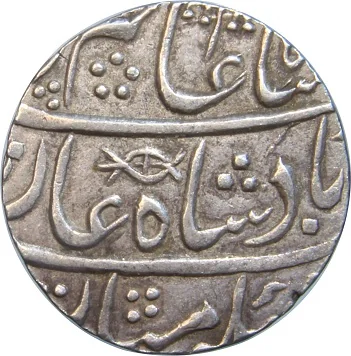
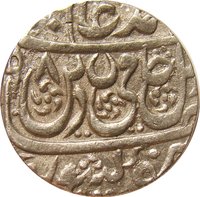
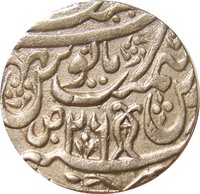
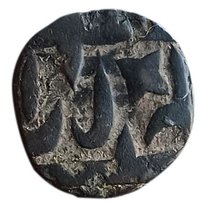
Obverse
Description:
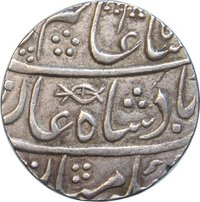
Emperor's Fish Mint
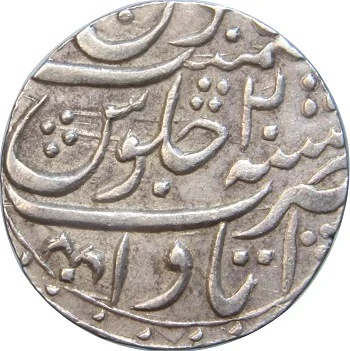
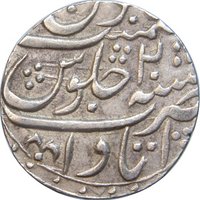
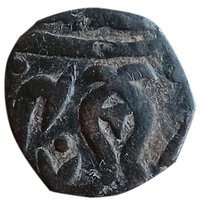
Reverse
Description:
RY Date
Edge
Plain
Mintings
| Year | Mint Mark | Mintage | Quality | Collection |
|---|---|---|---|---|
| 1778 | — | — | ||
| 1779 | — | — | ||
| 1780 | — | — | ||
| 1781 | — | — | ||
| 1782 | — | — | ||
| 1783 | — | — | ||
| 1784 | — | — |
Historical background
In 1778, the currency situation in Awadh was a complex tapestry reflecting its political subordination to the British East India Company and internal economic strain. Following the Treaty of Allahabad (1765), the Nawab of Awadh, initially Shuja-ud-Daula and by 1778 his son Asaf-ud-Daula, was a wealthy but financially crippled client state. The Nawabate was burdened by a massive, ongoing British subsidy (approximately 76 lakhs of rupees annually) and hefty war indemnities, forcing the treasury in Lucknow to drain its silver reserves to meet these obligations. This systematic extraction of bullion created a chronic shortage of specie, the solid metal needed to mint reliable coins.
Consequently, the monetary system became unstable and heterogeneous. While the official rupee of the Nawabs, akin to the Mughal sikka, remained the standard, its purity and availability fluctuated. More significantly, a proliferation of different coins circulated: older Mughal rupees, rupees from neighboring regions like Bengal, and a debased local currency. The shortage of silver led to an increased reliance on copper dam and gold mohurs for smaller and larger transactions, respectively, but without a stable fixed exchange rate between them. This created a chaotic environment where money-changers (sarrafs) held substantial power, and transaction costs were high due to the need to constantly assess the weight and purity of coins.
This monetary disarray was both a symptom and a cause of deeper economic distress. The scarcity of reliable currency hampered trade and agriculture, the core of Awadh's wealth, while the Nawab's government, desperate for revenue, often resorted to short-term fiscal measures that further undermined confidence in the currency. Thus, in 1778, Awadh's currency was not merely a medium of exchange but a direct indicator of its political vassalage and its deepening fiscal crisis, setting the stage for the more direct British financial control and eventual annexation that would follow in the next century.
Consequently, the monetary system became unstable and heterogeneous. While the official rupee of the Nawabs, akin to the Mughal sikka, remained the standard, its purity and availability fluctuated. More significantly, a proliferation of different coins circulated: older Mughal rupees, rupees from neighboring regions like Bengal, and a debased local currency. The shortage of silver led to an increased reliance on copper dam and gold mohurs for smaller and larger transactions, respectively, but without a stable fixed exchange rate between them. This created a chaotic environment where money-changers (sarrafs) held substantial power, and transaction costs were high due to the need to constantly assess the weight and purity of coins.
This monetary disarray was both a symptom and a cause of deeper economic distress. The scarcity of reliable currency hampered trade and agriculture, the core of Awadh's wealth, while the Nawab's government, desperate for revenue, often resorted to short-term fiscal measures that further undermined confidence in the currency. Thus, in 1778, Awadh's currency was not merely a medium of exchange but a direct indicator of its political vassalage and its deepening fiscal crisis, setting the stage for the more direct British financial control and eventual annexation that would follow in the next century.
✨ Legendary