

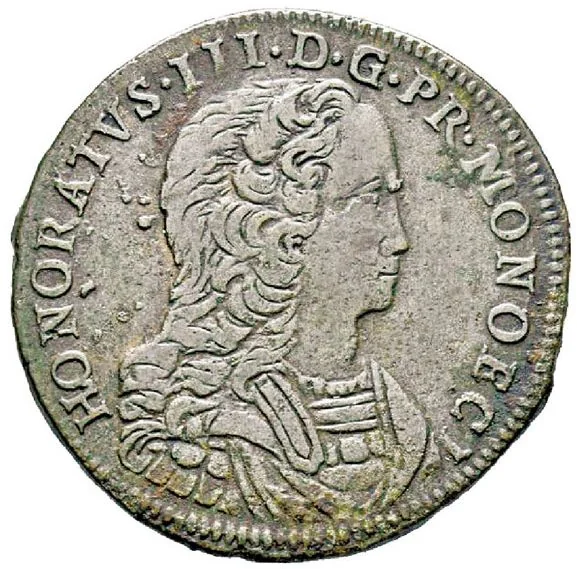
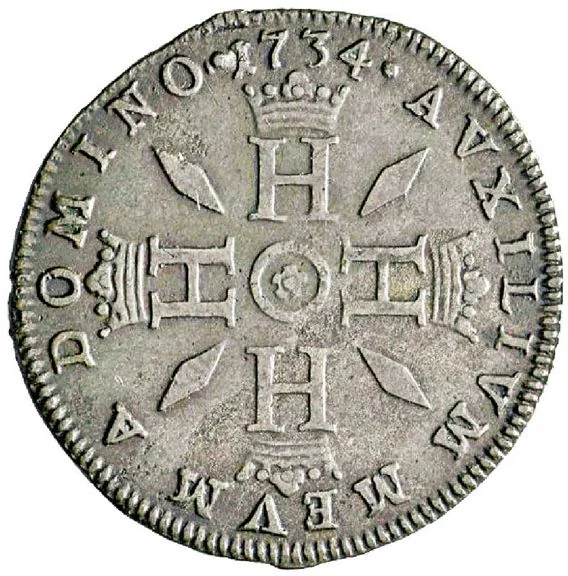
1 Pezzetta – Monaco
Monaco

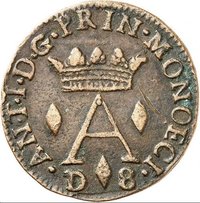
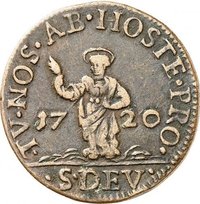
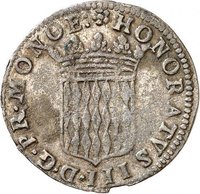
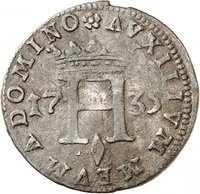
Obverse
Reverse
Edge
Plain
Mints
| Name | Mark |
|---|---|
| Monaco | — |
Mintings
| Year | Mint Mark | Mintage | Quality | Collection |
|---|---|---|---|---|
| 1734 | — | — | ||
| 1735 | — | — |
Historical background
In 1734, Monaco existed as a sovereign principality under the protective, yet financially dominant, shadow of the Kingdom of France. While Prince Antoine I ruled, the territory's economic and monetary systems were deeply intertwined with those of its powerful neighbour. The French livre tournois was the de facto circulating currency, used for all significant trade, state finances, and daily commerce. This practical reality stemmed from the 1641 Treaty of Péronne, which placed Monaco under French protection, and the subsequent economic dependence that made adopting the French monetary system a necessity.
Officially, the Princes of Monaco retained the right to mint their own coinage, a symbol of their sovereignty. However, this privilege was exercised sporadically and for specific purposes. Any Monégasque coins, such as the silver écu or copper denier, were struck in extremely limited quantities, often to commemorate a princely accession or for ceremonial distributions. These coins were not intended to form an independent monetary system but served as political tokens, circulating locally alongside and valued in relation to their French counterparts.
Therefore, the "currency situation" was one of a dual but hierarchical system. The French livre, subdivided into sols and deniers, provided the stable and universally accepted backbone of the economy. Any local Monégasque coinage was supplementary and conformed strictly to the standards of the French monetary system to ensure seamless acceptance. The year 1734 saw no major monetary upheaval; it was a point of continuity within this long-standing arrangement where Monaco’s fiscal life was fundamentally an extension of France’s, despite its formal political independence.
Officially, the Princes of Monaco retained the right to mint their own coinage, a symbol of their sovereignty. However, this privilege was exercised sporadically and for specific purposes. Any Monégasque coins, such as the silver écu or copper denier, were struck in extremely limited quantities, often to commemorate a princely accession or for ceremonial distributions. These coins were not intended to form an independent monetary system but served as political tokens, circulating locally alongside and valued in relation to their French counterparts.
Therefore, the "currency situation" was one of a dual but hierarchical system. The French livre, subdivided into sols and deniers, provided the stable and universally accepted backbone of the economy. Any local Monégasque coinage was supplementary and conformed strictly to the standards of the French monetary system to ensure seamless acceptance. The year 1734 saw no major monetary upheaval; it was a point of continuity within this long-standing arrangement where Monaco’s fiscal life was fundamentally an extension of France’s, despite its formal political independence.
💎 Extremely Rare