

2 Pence – United States
United States
Context
Material
References
KM: #Click to copy to clipboard6-8
Numista: #70081
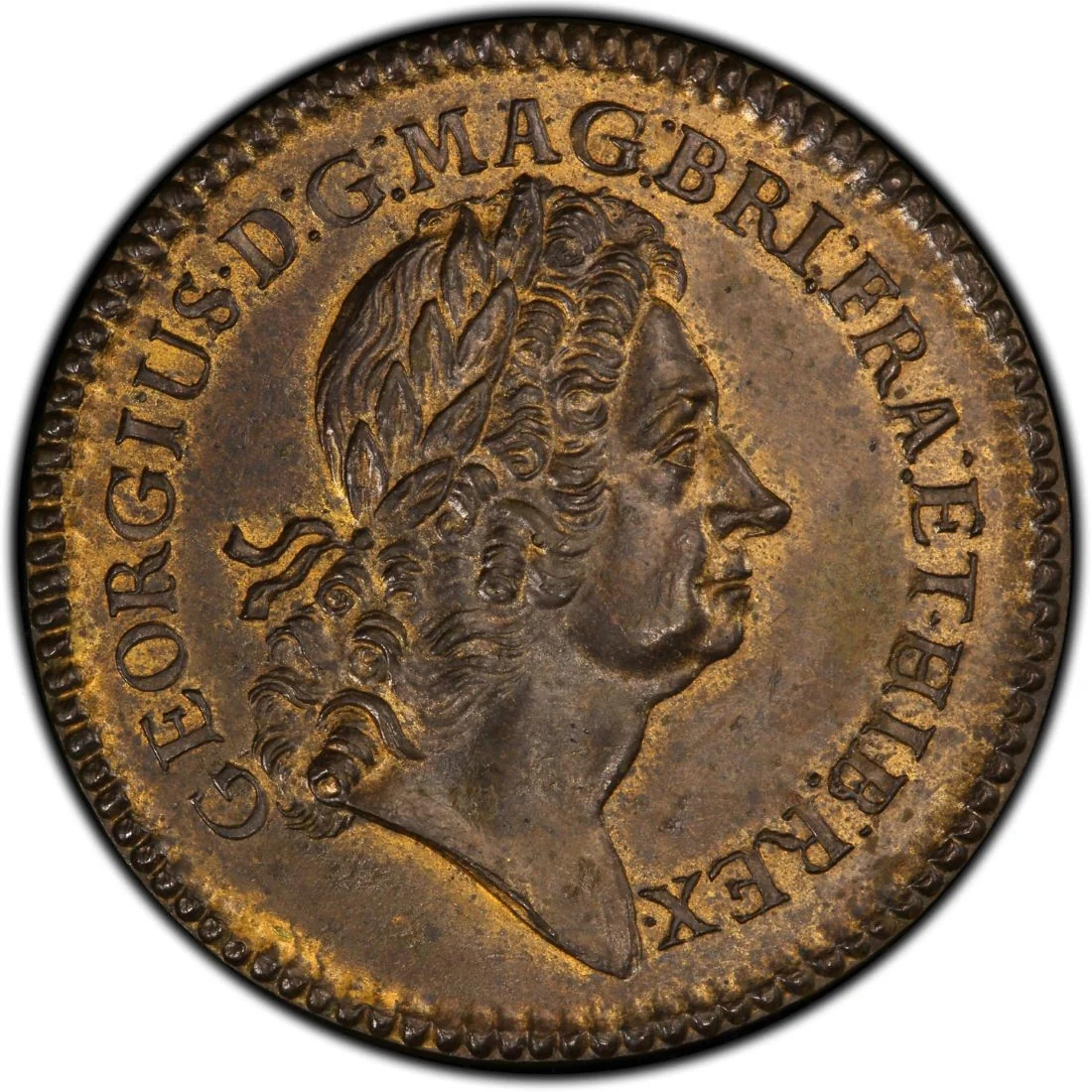
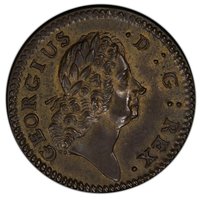
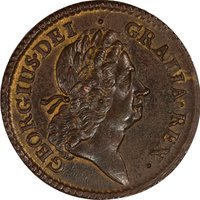
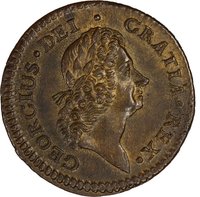
Obverse
Description:
King George I of England.
Inscription:
GEORGIVS.D:G:MAG.BRI:FRA:ET.HIB:REX.
Script: Latin
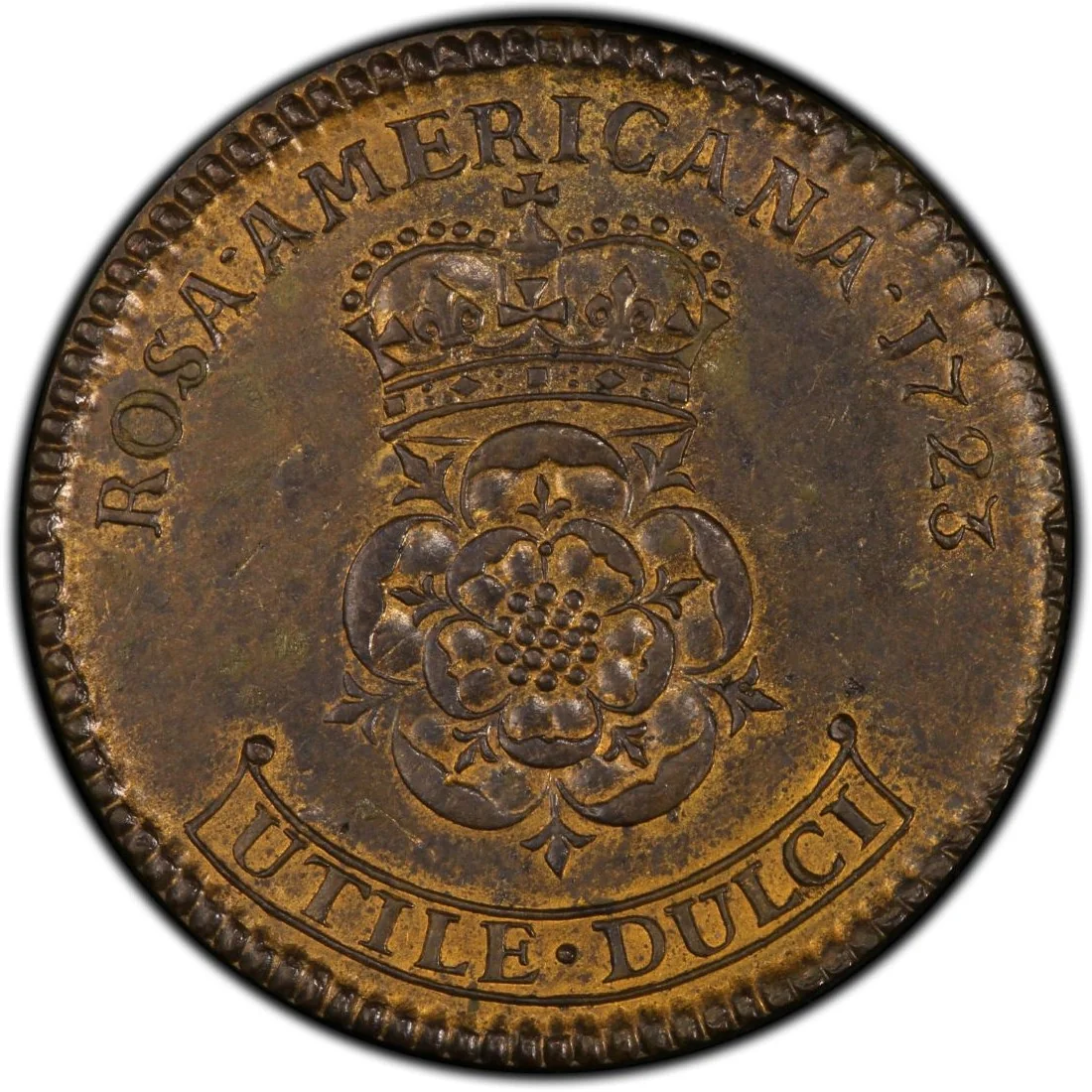
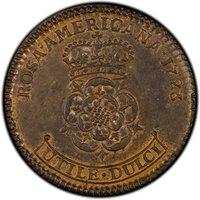
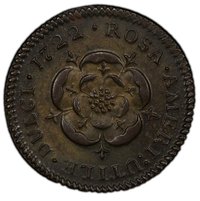
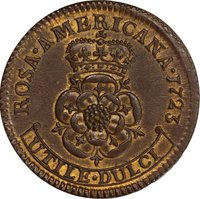
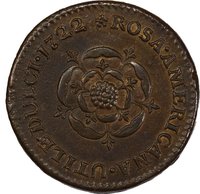
Reverse
Edge
Mintings
| Year | Mint Mark | Mintage | Quality | Collection |
|---|---|---|---|---|
| — | — | — | ||
| 1722 | — | — | ||
| 1723 | — | — | ||
| 1724 | — | — | ||
| 1733 | — | — | Proof |
Historical background
In 1722, the currency situation in the British American colonies, including those that would become the United States, was defined by a chronic shortage of official British coinage. Sterling was the official standard, but gold and silver coins like Spanish pieces of eight were more commonly used in everyday transactions due to mercantilist policies that drained specie back to England. This persistent scarcity of hard currency severely hampered local commerce and economic development, forcing colonial governments to devise their own solutions.
The primary response was the issuance of paper money, or "bills of credit," first pioneered by Massachusetts in 1690. By 1722, several colonies, including South Carolina, Rhode Island, and Pennsylvania, had followed suit, using these notes to pay for public expenditures like military campaigns and infrastructure. These bills were not true fiat currency but were typically backed by the promise of future tax revenues, with colonies pledging to accept them for tax payments and sometimes to redeem them for specie after a set period. This system provided a vital, though imperfect, medium of exchange.
However, this monetary independence created tension with British authorities and led to significant instability. The value of these colonial currencies fluctuated widely based on public confidence and the fiscal discipline of each assembly, often depreciating against sterling. In 1722, the colonies were operating under the regulatory framework of the Currency Act of 1704, which aimed to control this depreciation by setting exchange rate ceilings. The situation was a patchwork of different paper currencies of varying reliability, setting the stage for future imperial conflicts over monetary sovereignty that would culminate in the restrictive Currency Act of 1764.
The primary response was the issuance of paper money, or "bills of credit," first pioneered by Massachusetts in 1690. By 1722, several colonies, including South Carolina, Rhode Island, and Pennsylvania, had followed suit, using these notes to pay for public expenditures like military campaigns and infrastructure. These bills were not true fiat currency but were typically backed by the promise of future tax revenues, with colonies pledging to accept them for tax payments and sometimes to redeem them for specie after a set period. This system provided a vital, though imperfect, medium of exchange.
However, this monetary independence created tension with British authorities and led to significant instability. The value of these colonial currencies fluctuated widely based on public confidence and the fiscal discipline of each assembly, often depreciating against sterling. In 1722, the colonies were operating under the regulatory framework of the Currency Act of 1704, which aimed to control this depreciation by setting exchange rate ceilings. The situation was a patchwork of different paper currencies of varying reliability, setting the stage for future imperial conflicts over monetary sovereignty that would culminate in the restrictive Currency Act of 1764.
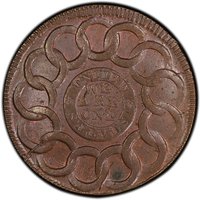
💎 Extremely Rare