

10 Ducats – Austrian Empire
Austria
Context
Years: 1656–1657
Country: Austria 
Issuer: Austrian Empire
Ruler: Ferdinand III
Currency:
(1520—1754)
Demonetized: Yes
Material
References
KM: #Click to copy to clipboard996
Numista: #69380
Value
Bullion value: $5784.82
Obverse
Description:
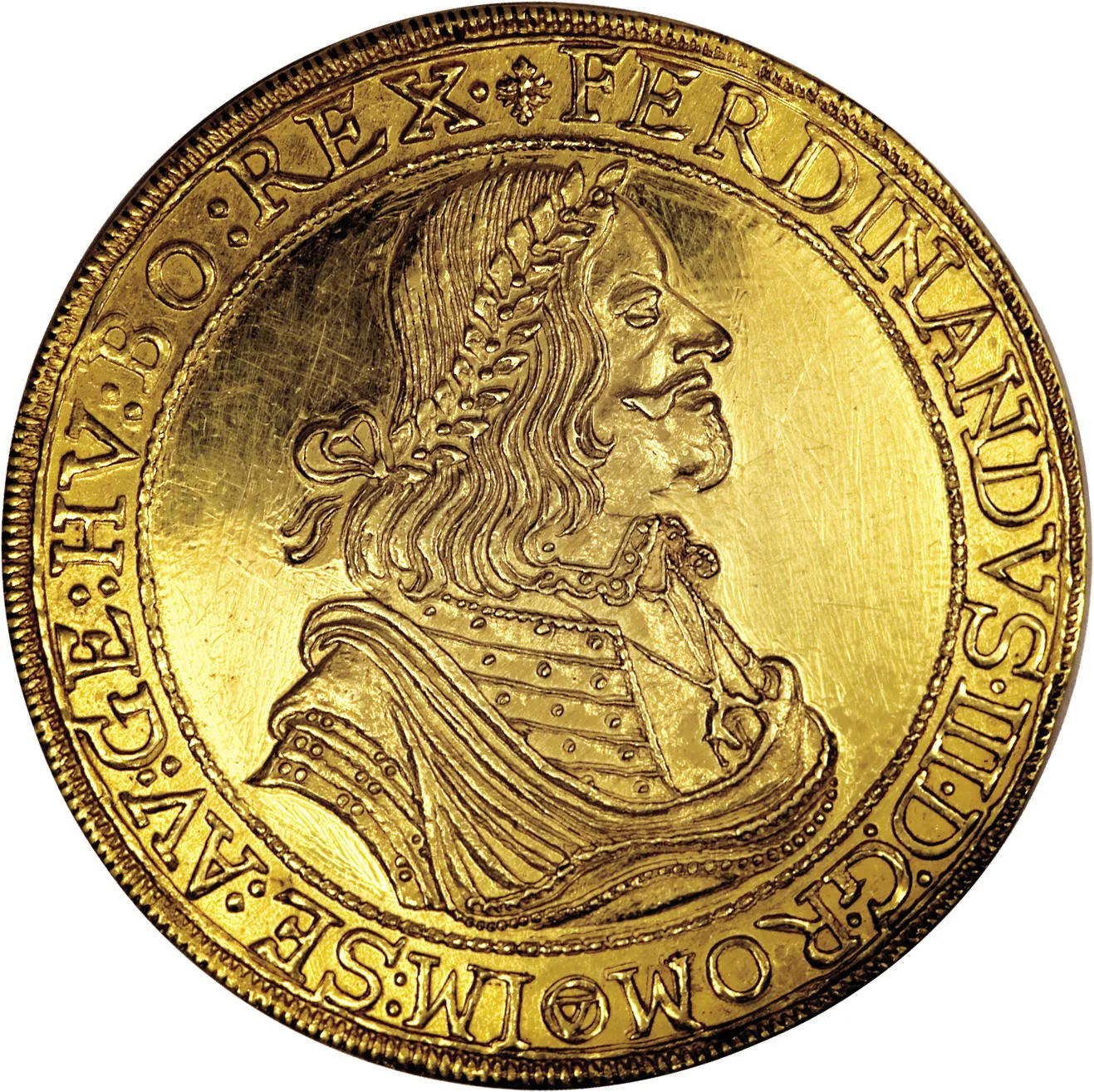
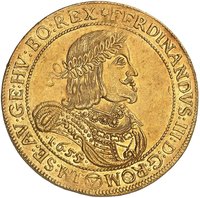
Laureate bust right.
Inscription:
FERDINANDVS III D G ROM IM SE AV GE HV BO REX
Script: Latin
Reverse
Inscription:
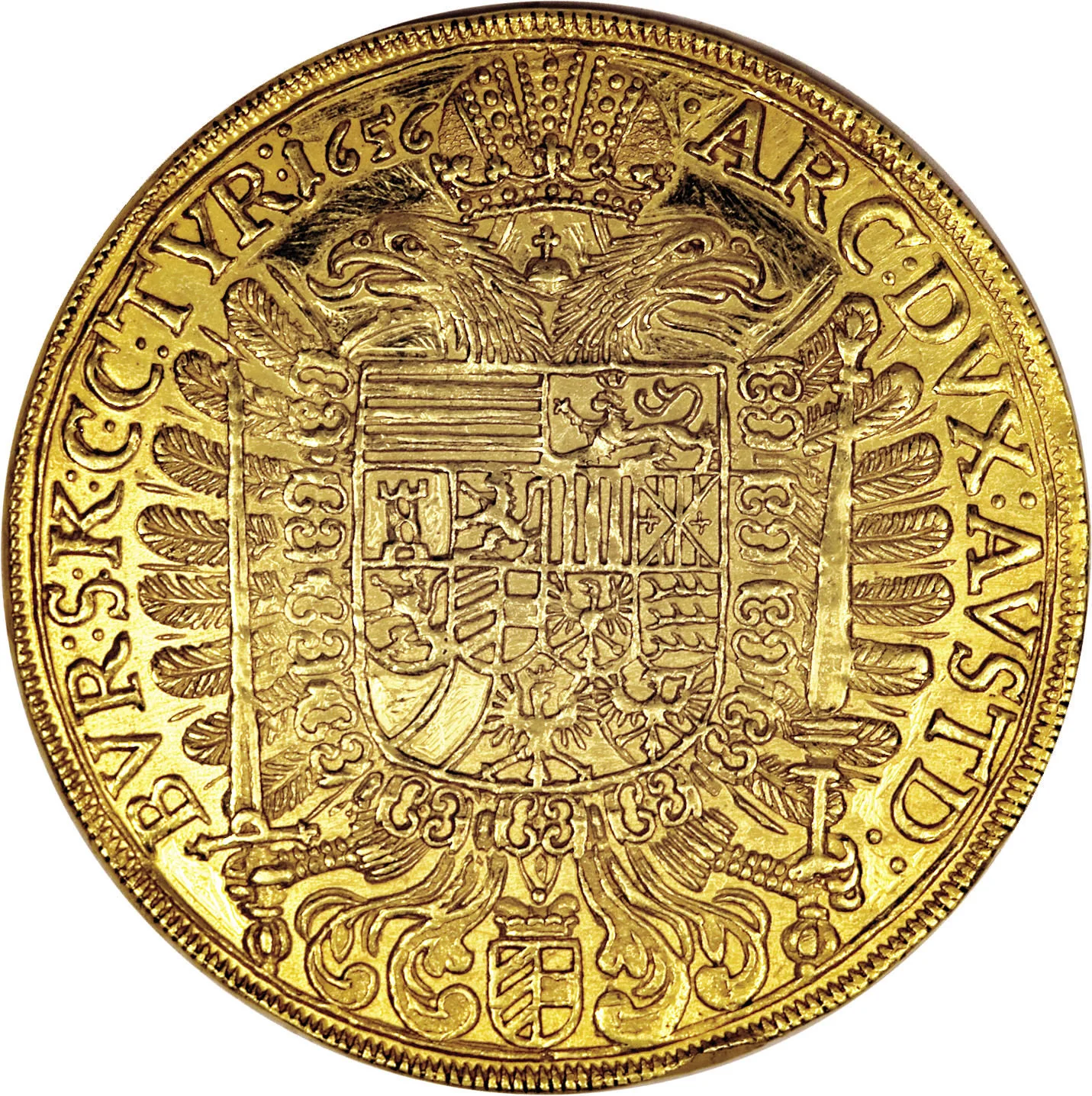
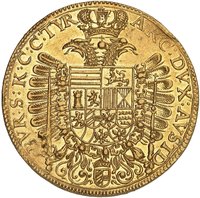
ARC DVX AVST D BVR S K C C TYR 1656
Script: Latin
Edge
Mints
| Name | Mark |
|---|---|
| Münze Österreich | — |
Mintings
| Year | Mint Mark | Mintage | Quality | Collection |
|---|---|---|---|---|
| 1656 | — | — | ||
| 1657 | — | — |
Historical background
In 1656, the Austrian Habsburg monarchy was grappling with a severe and protracted currency crisis, a direct consequence of the Thirty Years' War (1618-1648). The enormous costs of financing the conflict had drained the imperial treasury, leading successive emperors, including Ferdinand III, to drastically debase the coinage. The primary silver coin, the Reichsthaler, saw its silver content systematically reduced, while vast quantities of low-quality Kipper und Wipper coins (small change made from copper or heavily alloyed silver) flooded the economy. This practice, essentially a form of state-sanctioned inflation, temporarily funded the war effort but devastated public trust in the currency and triggered rampant price inflation.
The situation was chaotic and economically damaging. The proliferation of debased coins of varying quality from different mints, both within the Habsburg lands and across the fractured German states, created a bewildering monetary landscape. Gresham's law took hold, where "bad money drove out good," as people hoarded older, high-silver coins and passed on the new, inferior ones. This hampered trade, distorted prices, and created significant hardship for ordinary people, particularly those on fixed incomes or wages, while often benefiting speculators and those with access to precious metals.
Recognizing the destabilizing effects, Emperor Ferdinand III initiated a major monetary reform in 1656, which would be fully implemented in 1659. The plan, influenced by officials like Count Johann von Portia, aimed to restore stability by standardizing the coinage. It introduced a new silver standard based on the Reichsthaler and mandated the minting of higher-quality, uniform coins (Reichsmünzfuß). While this reform marked a critical turning point, its success in 1656 was not yet assured; the year itself represents the tense culmination of a crisis and the beginning of a difficult, multi-year process to restore monetary order to the war-ravaged empire.
The situation was chaotic and economically damaging. The proliferation of debased coins of varying quality from different mints, both within the Habsburg lands and across the fractured German states, created a bewildering monetary landscape. Gresham's law took hold, where "bad money drove out good," as people hoarded older, high-silver coins and passed on the new, inferior ones. This hampered trade, distorted prices, and created significant hardship for ordinary people, particularly those on fixed incomes or wages, while often benefiting speculators and those with access to precious metals.
Recognizing the destabilizing effects, Emperor Ferdinand III initiated a major monetary reform in 1656, which would be fully implemented in 1659. The plan, influenced by officials like Count Johann von Portia, aimed to restore stability by standardizing the coinage. It introduced a new silver standard based on the Reichsthaler and mandated the minting of higher-quality, uniform coins (Reichsmünzfuß). While this reform marked a critical turning point, its success in 1656 was not yet assured; the year itself represents the tense culmination of a crisis and the beginning of a difficult, multi-year process to restore monetary order to the war-ravaged empire.
✨ Legendary