

10 Ducats – Austrian Empire
Austria
Context
Year: 1655
Country: Austria 
Issuer: Austrian Empire
Ruler: Ferdinand III
Currency:
(1520—1754)
Demonetized: Yes
Material
References
KM: #Click to copy to clipboard993
Numista: #354737
Value
Bullion value: $5800.36
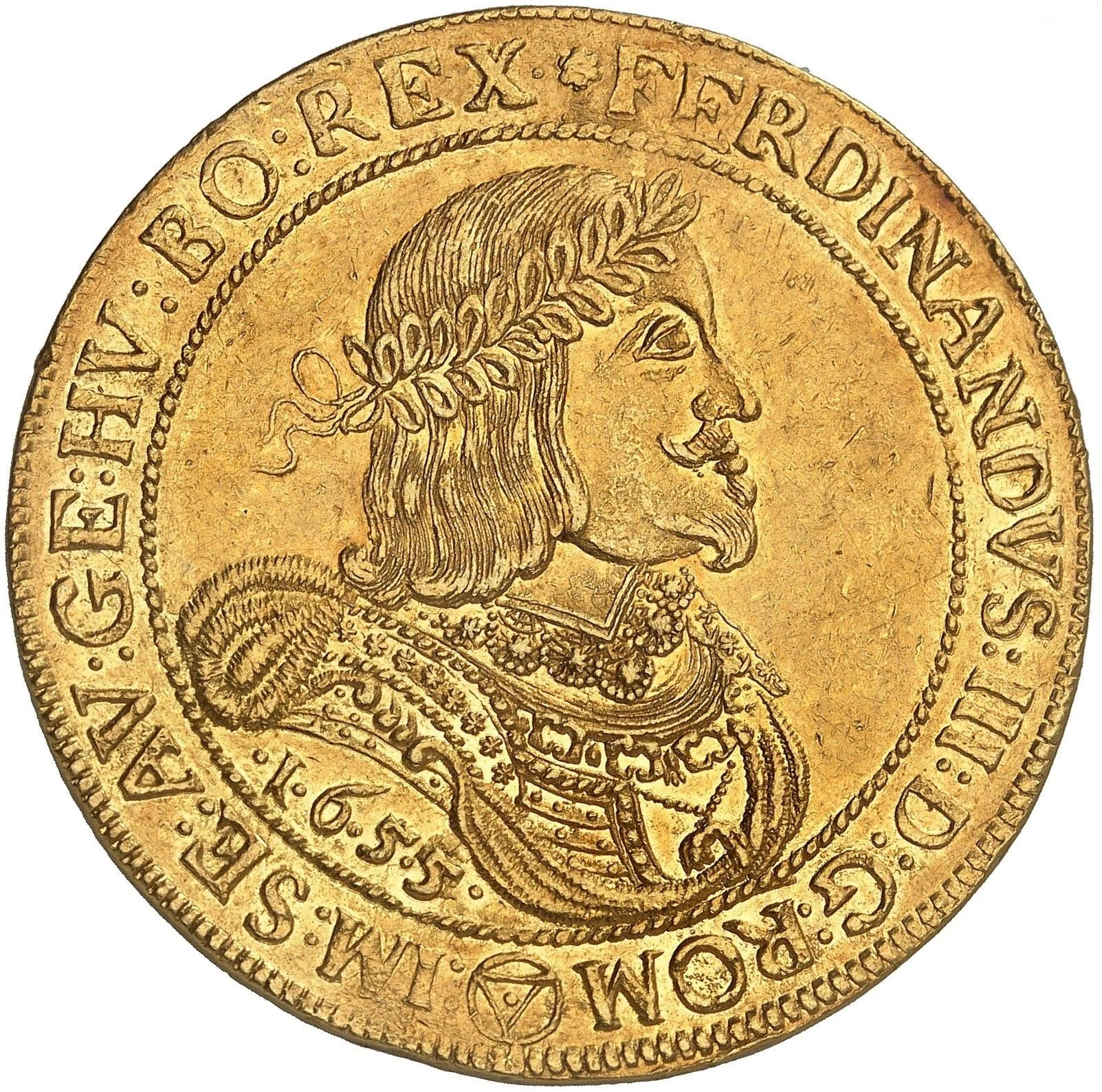
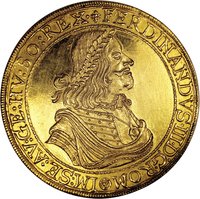
Obverse
Description:
Large ornate laureate bust right.
Inscription:
* FERDINANDVS : III : D : G : ROM : IM : SE : AV : GE : HV : BO : REX •
1655
1655
Script: Latin
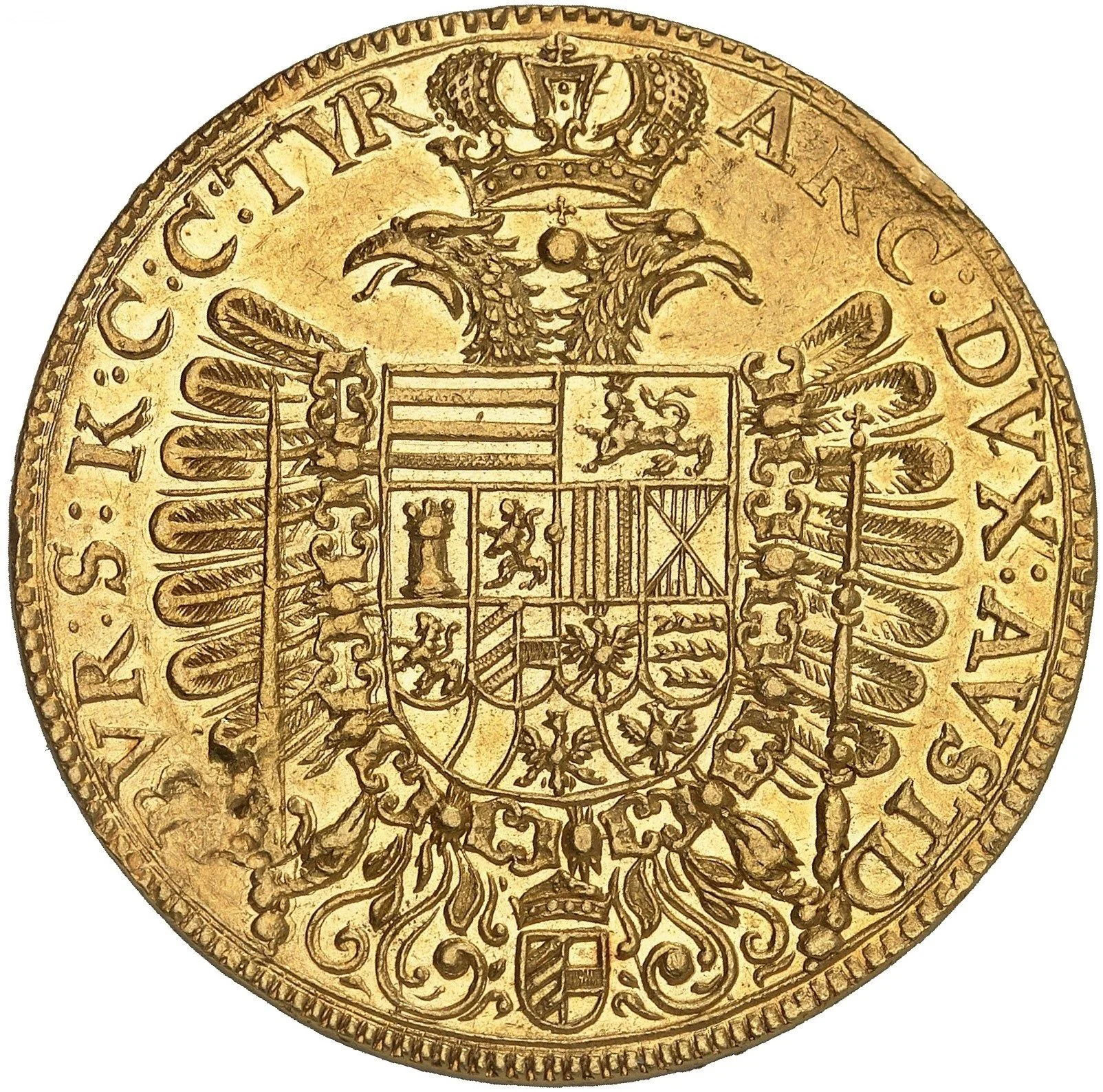
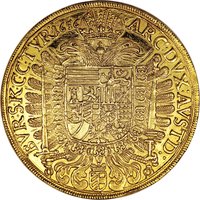
Reverse
Description:
Imperial eagle with crowned breast shield.
Inscription:
ARC : DVX : AVSTD BVR : S : K : C : C : TYR
Script: Latin
Edge
Mints
| Name | Mark |
|---|---|
| Münze Österreich | — |
Mintings
| Year | Mint Mark | Mintage | Quality | Collection |
|---|---|---|---|---|
| 1655 | — | — |
Historical background
In 1655, the Austrian Habsburg monarchy, a sprawling and diverse empire, was grappling with a deeply entrenched and chaotic currency situation. The core issue was the coexistence of multiple monetary systems: the Reichsthaler (Imperial Thaler), used for large-scale trade and accounting, and a plethora of debased subsidiary coins for daily use, primarily Kreuzers. Decades of financial strain from the Thirty Years' War (1618-1648) had forced the Habsburgs and individual territories within the Empire to repeatedly debase their coinage to fund military campaigns, leading to a severe loss of public trust and wildly fluctuating values.
The practical consequence was a complex and inefficient economy where the intrinsic metal value of a coin often exceeded its face value, leading to hoarding of good coins and the rapid circulation of bad ones (Gresham's Law). Furthermore, different crown lands, such as Bohemia, Austria, and Hungary, often minted their own variations, creating a bewildering patchwork of exchange rates. This monetary fragmentation severely hampered internal trade, complicated tax collection for the central government in Vienna, and created opportunities for arbitrage and fraud.
While Emperor Ferdinand III (r. 1637-1657) was aware of the problem, comprehensive reform remained elusive in 1655. The empire's decentralized political structure, where powerful estates resisted central financial control, and the lingering fiscal exhaustion from the war made a standardized currency impossible. Therefore, the monetary landscape remained one of confusion and instability, acting as a significant drag on economic recovery and highlighting the challenges of governing a composite state before the era of centralizing absolutism.
The practical consequence was a complex and inefficient economy where the intrinsic metal value of a coin often exceeded its face value, leading to hoarding of good coins and the rapid circulation of bad ones (Gresham's Law). Furthermore, different crown lands, such as Bohemia, Austria, and Hungary, often minted their own variations, creating a bewildering patchwork of exchange rates. This monetary fragmentation severely hampered internal trade, complicated tax collection for the central government in Vienna, and created opportunities for arbitrage and fraud.
While Emperor Ferdinand III (r. 1637-1657) was aware of the problem, comprehensive reform remained elusive in 1655. The empire's decentralized political structure, where powerful estates resisted central financial control, and the lingering fiscal exhaustion from the war made a standardized currency impossible. Therefore, the monetary landscape remained one of confusion and instability, acting as a significant drag on economic recovery and highlighting the challenges of governing a composite state before the era of centralizing absolutism.
✨ Legendary