

2 Thalers – Brunswick-Lüneburg-Celle
Germany
Context
Years: 1659–1664
Country: Germany 
Issuer: Brunswick-Lüneburg-Celle
Ruler: Christian Louis
Currency:
Demonetized: Yes
Material
References
KM: #Click to copy to clipboard252
Numista: #66934
Value
Bullion value: $162.60
Obverse
Description:
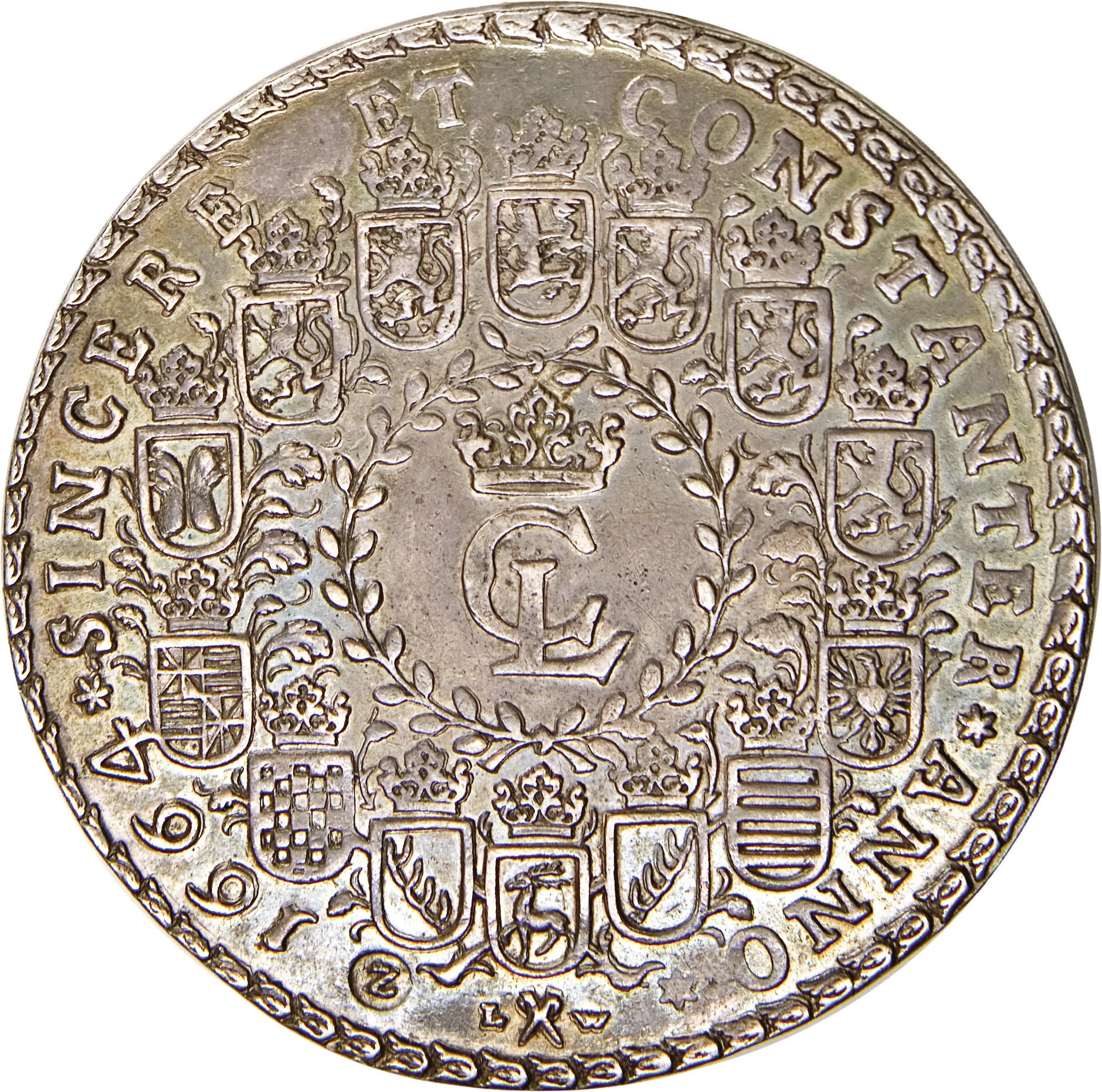
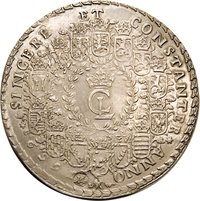
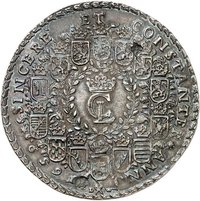
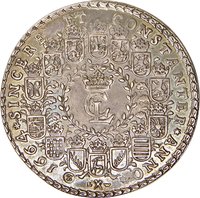
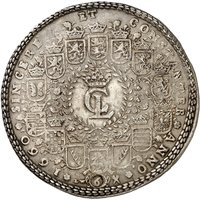
Crowned CL monogram within a wreath, encircled by fourteen shields.
Inscription:
* SINCERE ET CONSTANTER * ANNO 1664
CL
LW
CL
LW
Reverse
Description:
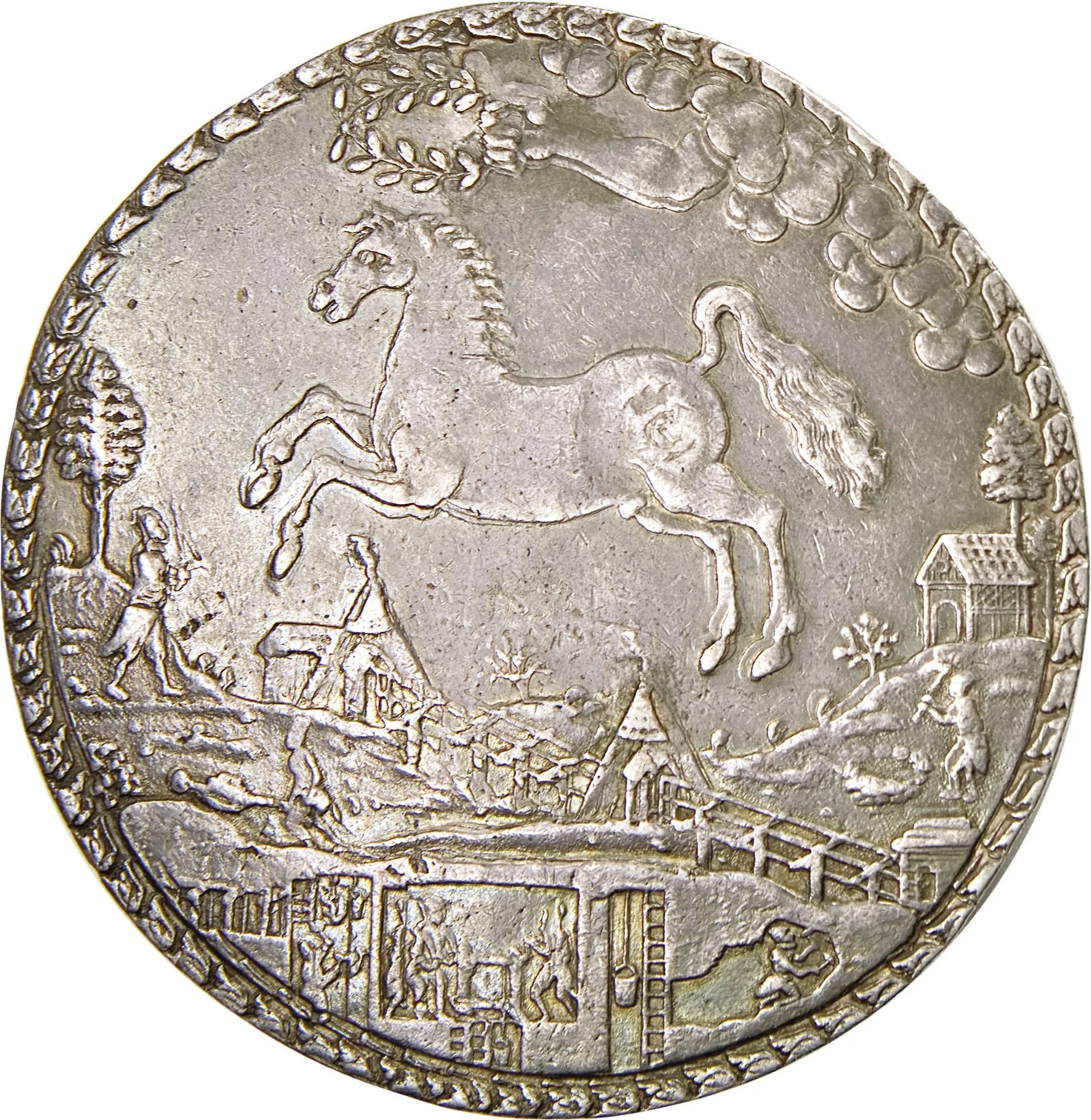
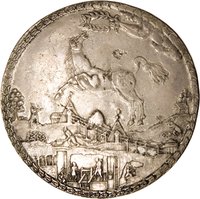
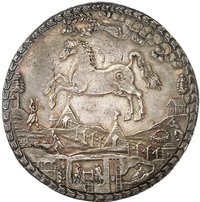
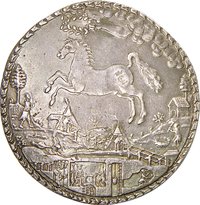
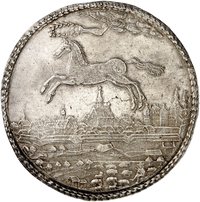
A divine hand crowns a horse with a wreath above a silver mine.
Edge
Mints
| Name | Mark |
|---|---|
| Clausthal | — |
Mintings
| Year | Mint Mark | Mintage | Quality | Collection |
|---|---|---|---|---|
| 1659 | — | — | ||
| 1661 | — | — | ||
| 1662 | — | — | ||
| 1663 | — | — | ||
| 1664 | — | — |
Historical background
In 1659, the Duchy of Brunswick-Lüneburg, specifically the Principality of Celle under Duke Christian Louis, was entangled in the complex and debilitating monetary chaos that plagued the Holy Roman Empire after the Thirty Years' War. The primary issue was the proliferation of debased coinage, as various territorial rulers, including those within the Brunswick-Lüneburg dynastic branches, engaged in competitive devaluation to raise short-term revenue. This resulted in a flood of low-quality Kippermünzen (small change coins) with wildly fluctuating values, which crippled long-distance trade, eroded public trust, and caused severe inflation, harming both the local economy and the ducal finances.
Duke Christian Louis faced this crisis within the framework of the Reichsmünzordnung (Imperial Coinage Ordinance), which was largely ineffective. While imperial decrees aimed to standardize currency, enforcement was weak, and sovereign princes like those of Brunswick-Lüneburg retained minting rights. The situation in Celle was further complicated by the need to coordinate with its rival sibling principalities, particularly Hanover and Wolfenbüttel, as their mutually debased coins circulated freely across borders, creating a classic "bad money drives out good" scenario. The monetary disarray thus reflected both the fractured political state of the Empire and the intense fiscal pressures on rulers rebuilding their territories.
Consequently, the year 1659 represented a point of mounting pressure for reform. While a comprehensive solution for the entire duchy remained elusive, the unsustainable economic damage was pushing the Celle court and its neighbors toward eventual regional agreements. These would culminate in the coming decades with conventions like the Zinnaische Münzvertrag (1667) and the Leipziger Münzfuß (1690), which sought to establish a stable Reichsthaler standard. Therefore, the background of 1659 is one of acute crisis serving as the catalyst for the arduous, multi-principality negotiations that would slowly bring order to Brunswick-Lüneburg's currency.
Duke Christian Louis faced this crisis within the framework of the Reichsmünzordnung (Imperial Coinage Ordinance), which was largely ineffective. While imperial decrees aimed to standardize currency, enforcement was weak, and sovereign princes like those of Brunswick-Lüneburg retained minting rights. The situation in Celle was further complicated by the need to coordinate with its rival sibling principalities, particularly Hanover and Wolfenbüttel, as their mutually debased coins circulated freely across borders, creating a classic "bad money drives out good" scenario. The monetary disarray thus reflected both the fractured political state of the Empire and the intense fiscal pressures on rulers rebuilding their territories.
Consequently, the year 1659 represented a point of mounting pressure for reform. While a comprehensive solution for the entire duchy remained elusive, the unsustainable economic damage was pushing the Celle court and its neighbors toward eventual regional agreements. These would culminate in the coming decades with conventions like the Zinnaische Münzvertrag (1667) and the Leipziger Münzfuß (1690), which sought to establish a stable Reichsthaler standard. Therefore, the background of 1659 is one of acute crisis serving as the catalyst for the arduous, multi-principality negotiations that would slowly bring order to Brunswick-Lüneburg's currency.
✨ Legendary