

6 Thalers – Brunswick-Lüneburg-Celle
Germany
Context
Year: 1660
Country: Germany 
Issuer: Brunswick-Lüneburg-Celle
Ruler: Christian Louis
Currency:
Demonetized: Yes
Material
References
KM: #Click to copy to clipboard233.2
Numista: #296969
Value
Bullion value: $494.93
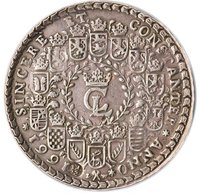
Obverse
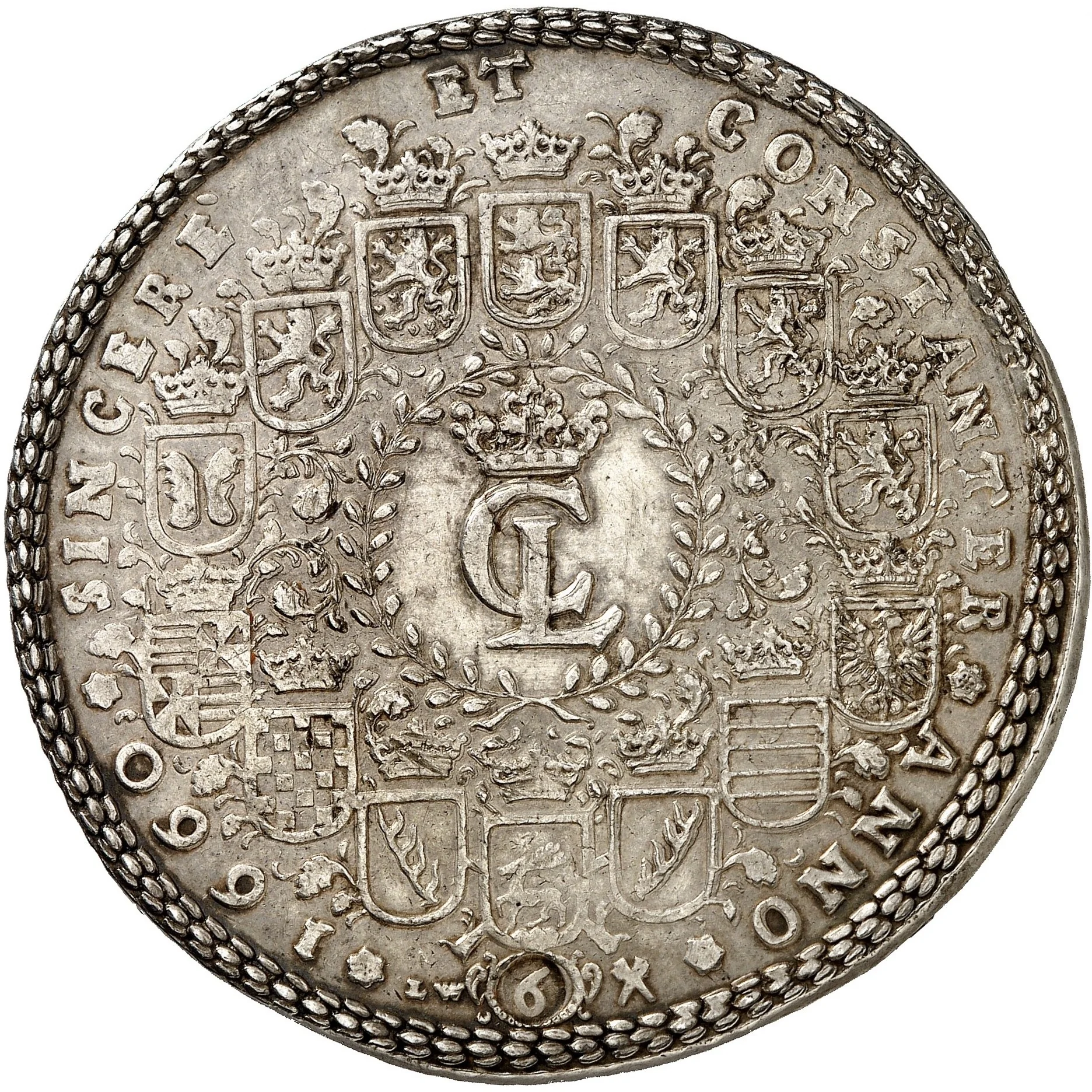
Description:
Monogram & coat of arms
Inscription:
SINCERE ET CONSTANTER ANNO 1660
CL
6
LW
CL
6
LW
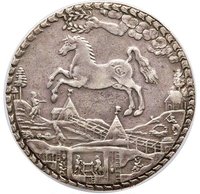
Reverse
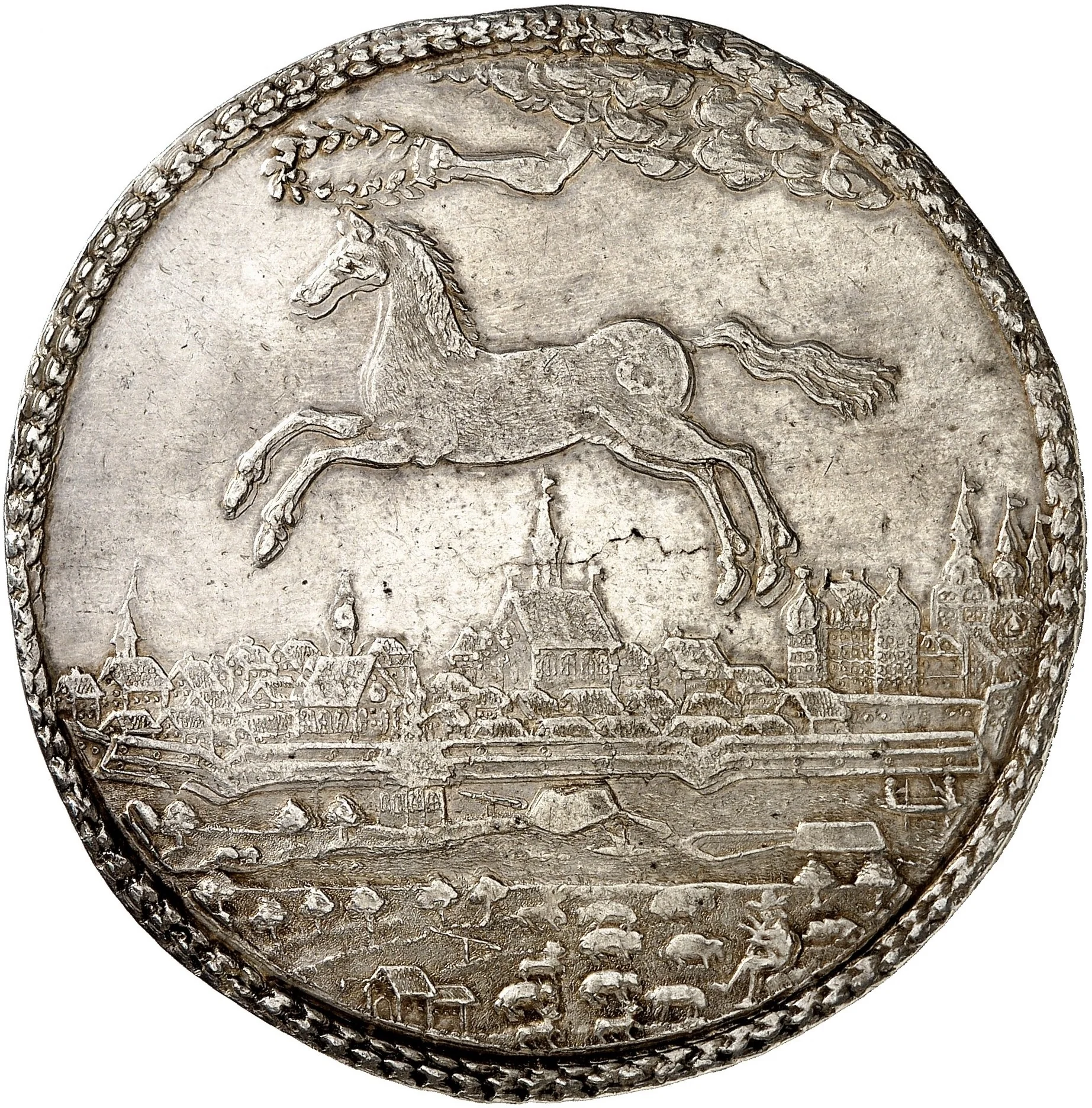
Description:
Horse leaping left over a mine.
Inscription:
CL
Edge
Mints
| Name | Mark |
|---|---|
| Clausthal | — |
Mintings
| Year | Mint Mark | Mintage | Quality | Collection |
|---|---|---|---|---|
| 1660 | — | — |
Historical background
In 1660, the Duchy of Brunswick-Lüneburg, specifically the Principality of Celle under Duke George William, faced a complex and fragmented currency situation typical of the Holy Roman Empire. The region was not a unified monetary zone; instead, multiple coinage authorities, including the duke himself, the city of Brunswick, and various ecclesiastical and secular lords within the territory, issued their own coins. This proliferation of mints led to a chaotic circulation of coins of varying weights, metallic purity, and value, severely complicating trade and undermining economic stability.
The core problem was the debasement of coinage, a practice where issuing authorities reduced the precious metal content in coins while maintaining their face value to generate short-term profit. This created a classic "bad money drives out good" scenario (Gresham's Law), where older, full-value coins were hoarded or melted down, leaving the economy flooded with inferior currency. The resulting inflation eroded public trust, disrupted long-distance commerce, and created significant hardship for the common population, who saw the real value of their payments and savings diminish.
Recognizing the crisis, Duke George William was actively engaged in attempts at monetary reform. He participated in regional agreements, such as the Zinnaische Münzvertrag of 1667, which aimed to standardize coinage across several North German territories. The goal for Celle in 1660 was therefore to move from chaotic debasement toward a stable, uniform currency system based on the Reichsthaler standard, a necessary step to ensure fiscal sovereignty, foster economic recovery, and increase state revenue through seigniorage from a trusted coinage.
The core problem was the debasement of coinage, a practice where issuing authorities reduced the precious metal content in coins while maintaining their face value to generate short-term profit. This created a classic "bad money drives out good" scenario (Gresham's Law), where older, full-value coins were hoarded or melted down, leaving the economy flooded with inferior currency. The resulting inflation eroded public trust, disrupted long-distance commerce, and created significant hardship for the common population, who saw the real value of their payments and savings diminish.
Recognizing the crisis, Duke George William was actively engaged in attempts at monetary reform. He participated in regional agreements, such as the Zinnaische Münzvertrag of 1667, which aimed to standardize coinage across several North German territories. The goal for Celle in 1660 was therefore to move from chaotic debasement toward a stable, uniform currency system based on the Reichsthaler standard, a necessary step to ensure fiscal sovereignty, foster economic recovery, and increase state revenue through seigniorage from a trusted coinage.
✨ Legendary