

1 rupee – Mughal Empire
Add to wishlist
India
Context
Year: 1760
Islamic (Hijri) Year:: 1173
Country: India
Issuer: Mughal Empire
Ruler: Alamgir II
Currency:
(1540—1842)
Demonetized: Yes
Material
References
KM: #
Numista: #65582
Value
Bullion value: $29.20
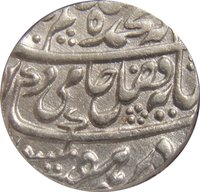
Obverse
Description:
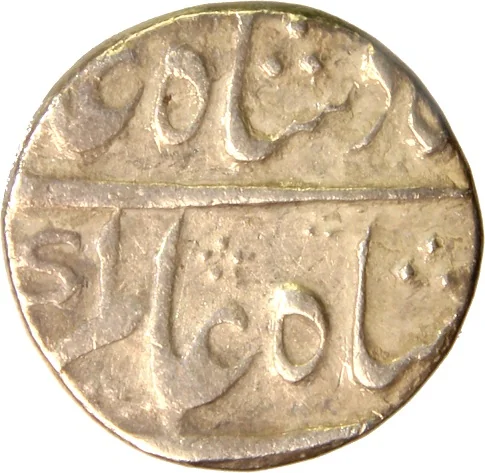
Emperor's name
Inscription:
Alamgir (II)
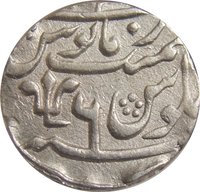
Reverse
Description:
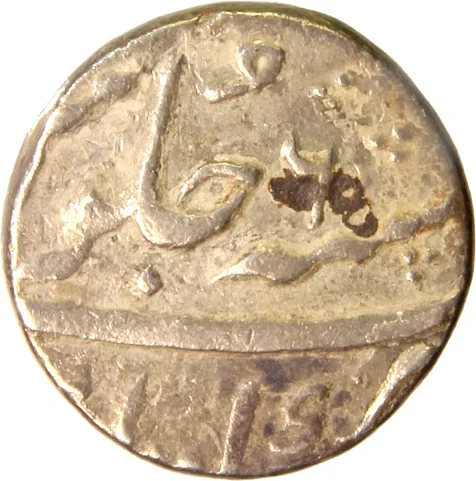
RY Date & Mint
Edge
Plain
Mintings
| Year | Mint Mark | Mintage | Quality | Collection |
|---|---|---|---|---|
| 1760 | — | — |
Historical background
By 1760, the Mughal Empire's currency system, once a pillar of its centralized authority, was in a state of advanced decay and fragmentation. The imperial silver rupee, bearing the emperor's name, remained the theoretical standard, but the political collapse following the 1739 sack of Delhi had shattered the unified monetary space. Provincial governors and emerging regional powers like the Marathas, Bengal Nawabs, and Awadh Nawabs increasingly minted their own rupees, often of varying weight and purity, leading to complex exchange rates and hindering inter-regional trade. The imperial mint in Delhi, while still operating, had lost its monopoly and prestige.
This monetary fragmentation was exacerbated by a severe shortage of silver, the lifeblood of the rupee. Decades of warfare, tribute payments to foreign invaders like Nadir Shah, and the diversion of bullion to European trading companies (notably the British East India Company) drained the subcontinent's silver reserves. The Company itself was injecting vast quantities of silver to purchase Indian goods, but this flowed to coastal presidencies like Bengal and Madras, not to the depleted imperial heartland. The result was a currency crisis marked by coinage debasement, scarcity of reliable specie, and a proliferation of local and obsolete coins still in circulation.
Consequently, the monetary landscape in 1760 was one of competing currencies reflecting the political reality of a fractured empire. While the Mughal rupee's name and form endured, its substance was controlled by regional successors. This financial instability crippled the central state's ability to pay armies or administer effectively, accelerating its decline. Simultaneously, it created opportunities for European companies and Indian bankers (sarrafs) who mastered the complex exchange and credit networks, gradually becoming the de facto managers of India's finances as the Mughal fiscal order crumbled.
This monetary fragmentation was exacerbated by a severe shortage of silver, the lifeblood of the rupee. Decades of warfare, tribute payments to foreign invaders like Nadir Shah, and the diversion of bullion to European trading companies (notably the British East India Company) drained the subcontinent's silver reserves. The Company itself was injecting vast quantities of silver to purchase Indian goods, but this flowed to coastal presidencies like Bengal and Madras, not to the depleted imperial heartland. The result was a currency crisis marked by coinage debasement, scarcity of reliable specie, and a proliferation of local and obsolete coins still in circulation.
Consequently, the monetary landscape in 1760 was one of competing currencies reflecting the political reality of a fractured empire. While the Mughal rupee's name and form endured, its substance was controlled by regional successors. This financial instability crippled the central state's ability to pay armies or administer effectively, accelerating its decline. Simultaneously, it created opportunities for European companies and Indian bankers (sarrafs) who mastered the complex exchange and credit networks, gradually becoming the de facto managers of India's finances as the Mughal fiscal order crumbled.
✨ Legendary