

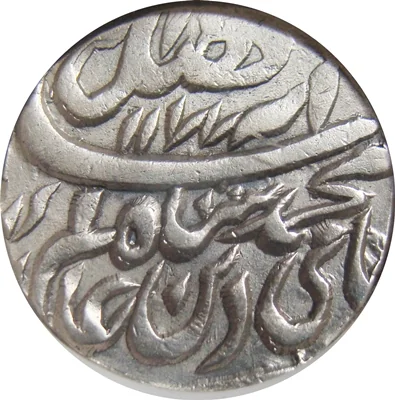
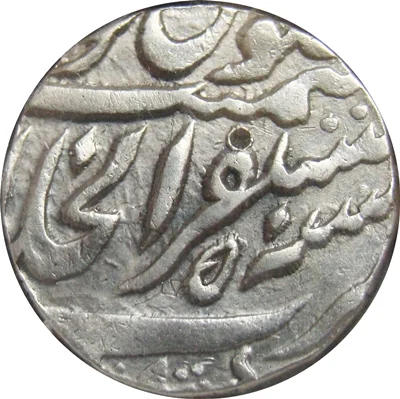
1 rupee – Mughal Empire
Add to wishlist
India
Context
Years: 1759–1806
Country: India
Issuer: Mughal Empire
Ruler: Shah Alam II
Currency:
(1540—1842)
Demonetized: Yes
Material
References
KM: #
Numista: #139870
Value
Bullion value: $27.74
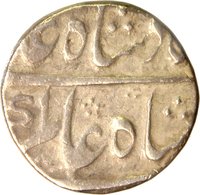
Obverse
Description:
AH Date Inscription
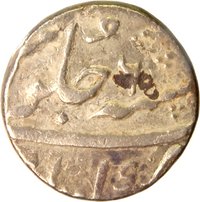
Reverse
Description:
Mint and year
Edge
Mintings
| Year | Mint Mark | Mintage | Quality | Collection |
|---|---|---|---|---|
| — | — | — | ||
| 1761 | — | — | ||
| 1763 | — | — | ||
| 1764 | — | — | ||
| 1765 | — | — | ||
| 1766 | — | — | ||
| 1767 | — | — | ||
| 1768 | — | — |
Historical background
By 1759, the Mughal Empire's currency system, once a pillar of its imperial strength, was under severe strain and fragmentation. The standard silver rupee, established by Sher Shah Suri and refined by Akbar, remained the nominal unit of account, but its authority was rapidly eroding. Decades of political instability following Nadir Shah's 1739 invasion had drained the central treasury in Delhi, leading to debasement—the reduction of precious metal content in minted coins—to fund endless warfare. This practice, combined with the loss of key silver-producing regions, undermined public trust in the currency's intrinsic value.
The political decentralization of the empire critically fractured the monetary system. Powerful regional successor states like Bengal, Awadh, and the Maratha Confederacy now operated their own mints, issuing rupees in the name of the increasingly powerless Mughal emperor but to their own standards of weight and purity. This created a complex and inefficient patchwork of currencies, where a rupee from Bengal might trade at a different value than one from Delhi or Hyderabad, hampering inter-regional trade. Furthermore, European trading companies, particularly the English East India Company, were beginning to exert significant economic influence, introducing foreign silver and gold coins that competed with local currencies, especially in coastal regions.
Consequently, 1759 represents a pivotal moment of transition. The Battle of Plassey (1757) had already placed the vast revenues of Bengal under Company control, a blow that further starved the central Mughal mint of silver. While the old system still functioned in pockets, it was no longer unified or reliably managed by a central authority. The stage was set for the gradual displacement of the Mughal rupee by company-struck coins and, eventually, a standardized colonial currency, marking the end of an independent Indian monetary tradition.
The political decentralization of the empire critically fractured the monetary system. Powerful regional successor states like Bengal, Awadh, and the Maratha Confederacy now operated their own mints, issuing rupees in the name of the increasingly powerless Mughal emperor but to their own standards of weight and purity. This created a complex and inefficient patchwork of currencies, where a rupee from Bengal might trade at a different value than one from Delhi or Hyderabad, hampering inter-regional trade. Furthermore, European trading companies, particularly the English East India Company, were beginning to exert significant economic influence, introducing foreign silver and gold coins that competed with local currencies, especially in coastal regions.
Consequently, 1759 represents a pivotal moment of transition. The Battle of Plassey (1757) had already placed the vast revenues of Bengal under Company control, a blow that further starved the central Mughal mint of silver. While the old system still functioned in pockets, it was no longer unified or reliably managed by a central authority. The stage was set for the gradual displacement of the Mughal rupee by company-struck coins and, eventually, a standardized colonial currency, marking the end of an independent Indian monetary tradition.
✨ Legendary