

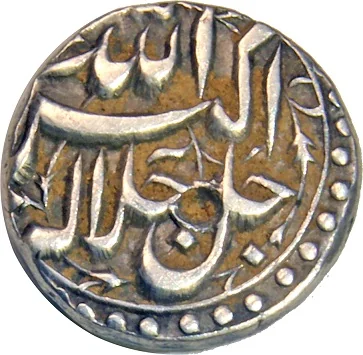
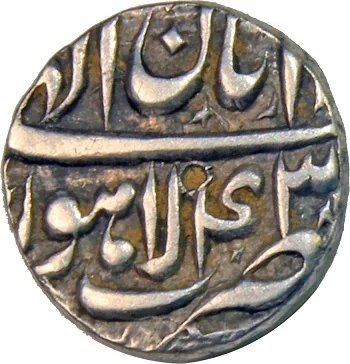
½ Rupee – Mughal Empire
India
Context
Years: 1594–1605
Country: India 
Issuer: Mughal Empire
Ruler: Akbar
Currency:
(1540—1842)
Demonetized: Yes
Material
Diameter: 17 mm
Weight: 5.7 g
Silver weight: 5.70 g
Shape: Irregular round
Composition: Silver
Magnetic: No
References
KM: #Click to copy to clipboard66.3
Numista: #65315
Value
Bullion value: $16.56
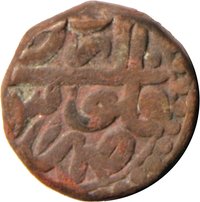
Obverse
Description:
Lahore Mint: Pakistan's official coin producer.
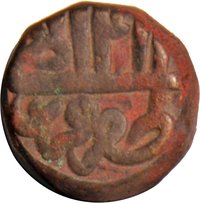
Reverse
Description:
Ilahi 43 Aban
Edge
Plain
Mintings
| Year | Mint Mark | Mintage | Quality | Collection |
|---|---|---|---|---|
| — | 39 | — | ||
| — | 40 | — | ||
| — | 47 | — | ||
| — | 48 | — | ||
| — | 49 | — | ||
| — | 41 | — | ||
| — | 42 | — | ||
| — | 43 | — | ||
| — | 44 | — | ||
| — | 45 | — | ||
| — | 46 | — |
Historical background
In 1594, the Mughal Empire's currency system under Emperor Akbar was a model of stability and sophisticated state control, reflecting the empire's immense economic power. The foundation was the silver rupee, a high-purity coin that served as the primary unit for revenue assessment, large trade, and state expenditure. It was complemented by a carefully regulated system of fractional coins: the copper dam (valued at 1/40 of a rupee) for everyday local transactions, and the gold mohur, used primarily for hoarding, large gifts, and international trade. This trimetallic system, with fixed exchange rates between the metals, was managed centrally from the imperial mints (dar al-zarb), ensuring uniformity across the realm.
This monetary stability was a direct achievement of Akbar's administrative reforms. Following his conquest of Bengal, which provided access to new silver sources, and the establishment of control over Rajput mines, the state secured a steady bullion supply. Akbar standardized the weight and purity of coins, famously inscribing them with religious and poetic phrases, and enforced strict minting regulations to prevent debasement. The system was integrated into the zabt revenue system, where land taxes were assessed and often collected in cash (rupees or dams), monetizing the agrarian economy and deepening the state's penetration into the countryside.
Consequently, by 1594, currency was a key instrument of imperial integration and economic prosperity. A reliable rupee facilitated the expansion of hundis (bills of exchange), enabling secure long-distance trade and banking across the empire and into global networks. The widespread use of the copper dam in local markets stimulated commerce and craft production. While regional variations and older currencies persisted, the central authority over coinage remained unchallenged, providing a stable fiscal foundation for Akbar's ongoing military campaigns and monumental architectural projects.
This monetary stability was a direct achievement of Akbar's administrative reforms. Following his conquest of Bengal, which provided access to new silver sources, and the establishment of control over Rajput mines, the state secured a steady bullion supply. Akbar standardized the weight and purity of coins, famously inscribing them with religious and poetic phrases, and enforced strict minting regulations to prevent debasement. The system was integrated into the zabt revenue system, where land taxes were assessed and often collected in cash (rupees or dams), monetizing the agrarian economy and deepening the state's penetration into the countryside.
Consequently, by 1594, currency was a key instrument of imperial integration and economic prosperity. A reliable rupee facilitated the expansion of hundis (bills of exchange), enabling secure long-distance trade and banking across the empire and into global networks. The widespread use of the copper dam in local markets stimulated commerce and craft production. While regional variations and older currencies persisted, the central authority over coinage remained unchallenged, providing a stable fiscal foundation for Akbar's ongoing military campaigns and monumental architectural projects.
✨ Legendary