

1 Dam – Mughal Empire
India
Context

Material
References
KM: #Click to copy to clipboard32.29
Numista: #57872
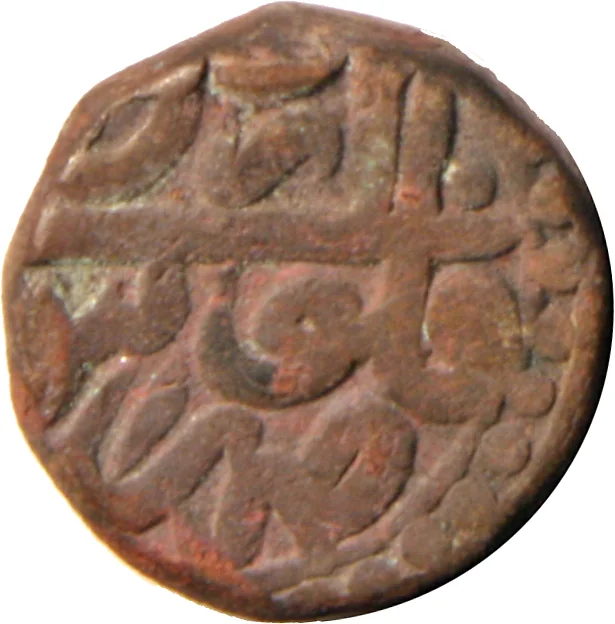
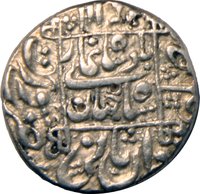
Obverse
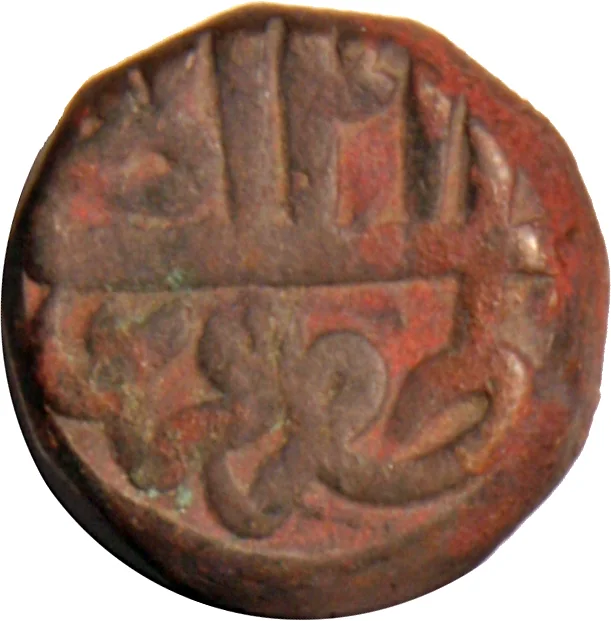
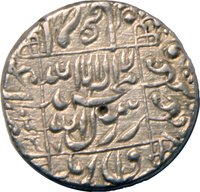
Reverse
Description:
Illahi Date
Inscription:
۴۱ correspondant à l'an 1597
Edge
Plain
Mintings
| Year | Mint Mark | Mintage | Quality | Collection |
|---|---|---|---|---|
| 1597 | — | — |
Historical background
In 1597, the Mughal Empire's currency system, under the reign of Emperor Akbar (r. 1556–1605), was a model of imperial strength and sophisticated economic administration. The foundation was the silver rupee, a high-purity coin that served as the primary unit of account and medium for large transactions and revenue collection. It was complemented by a tri-metallic system featuring gold mohurs for state treasure and grand ceremonies, and copper dams for everyday marketplace use by the common people. This structured hierarchy facilitated both long-distance trade and the local agrarian economy, with a fixed exchange rate (officially 40 dams to 1 rupee) providing remarkable monetary stability across the vast empire.
This stability was directly enforced by strict state control. Akbar had centralized minting operations, with coins produced in imperial mints (dar al-zarb) across major cities like Lahore, Delhi, and Ahmedabad. The coins bore standardized inscriptions, including the ruler's name, the mint location, and the Islamic calendar year, ensuring uniformity and deterring forgery. Most critically, Akbar had successfully reformed the land revenue system (zabt), demanding tax payments in cash rather than kind. This policy, masterminded by his finance minister Raja Todar Mal, created a powerful engine that drove the demand for Mughal currency, pulling vast quantities of silver into the treasury and reinforcing the rupee's dominance.
However, the year 1597 fell within a period of dynamic challenge and adjustment. The empire was experiencing massive inflows of American (Spanish) silver via trade with Europe through the Portuguese at Goa and overland routes. This influx was beginning to exert inflationary pressures, subtly altering the value of metals. Furthermore, Akbar was in the final phase of his military campaigns in the Deccan, which strained finances even as they promised new sources of wealth. Thus, while the currency system in 1597 was robust and admirably managed, it stood on the cusp of the long-term economic shifts that would later characterize the 17th century, balancing between imperial design and the forces of a globalizing silver market.
This stability was directly enforced by strict state control. Akbar had centralized minting operations, with coins produced in imperial mints (dar al-zarb) across major cities like Lahore, Delhi, and Ahmedabad. The coins bore standardized inscriptions, including the ruler's name, the mint location, and the Islamic calendar year, ensuring uniformity and deterring forgery. Most critically, Akbar had successfully reformed the land revenue system (zabt), demanding tax payments in cash rather than kind. This policy, masterminded by his finance minister Raja Todar Mal, created a powerful engine that drove the demand for Mughal currency, pulling vast quantities of silver into the treasury and reinforcing the rupee's dominance.
However, the year 1597 fell within a period of dynamic challenge and adjustment. The empire was experiencing massive inflows of American (Spanish) silver via trade with Europe through the Portuguese at Goa and overland routes. This influx was beginning to exert inflationary pressures, subtly altering the value of metals. Furthermore, Akbar was in the final phase of his military campaigns in the Deccan, which strained finances even as they promised new sources of wealth. Thus, while the currency system in 1597 was robust and admirably managed, it stood on the cusp of the long-term economic shifts that would later characterize the 17th century, balancing between imperial design and the forces of a globalizing silver market.
💎 Extremely Rare