

1 Riksdaler – Sweden
Sweden
Context
Years: 1730–1733
Issuer: Sweden 
Ruler: Frederick I
Currency:
(1719—1798)
Demonetized: Yes
Total mintage: 41,575
Material
References
KM: #Click to copy to clipboard395.2
Numista: #64692
Value
Bullion value: $74.49
Obverse
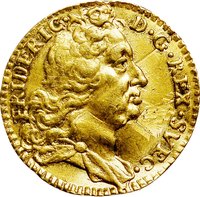
Description:
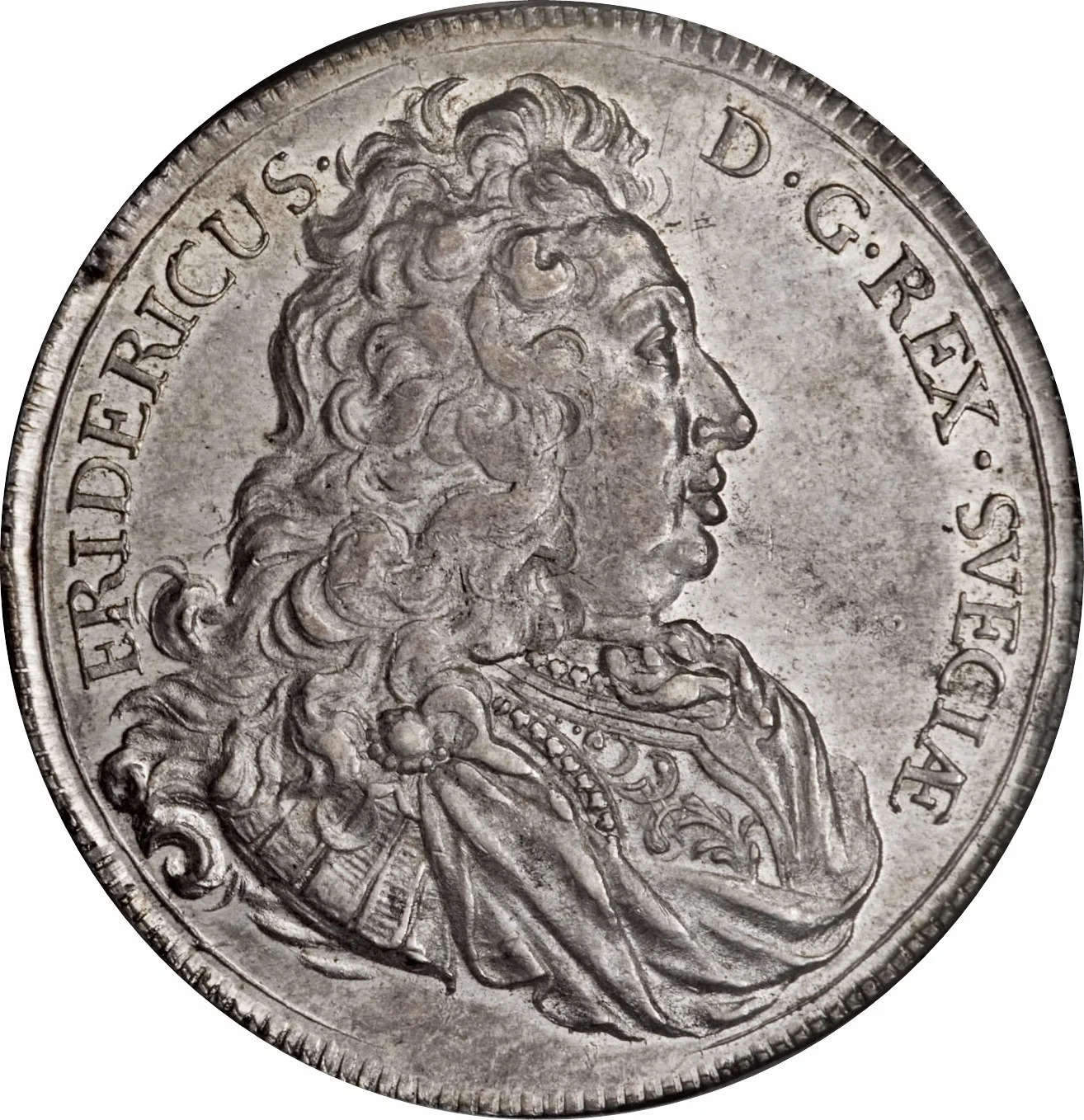
Bust of King Frederick I with long, curly hair. He wears ornate armor with shoulder ribbons and a draped brooch.
Inscription:
FRIDERICUS•D•G•REX•SVECIAE•
Reverse
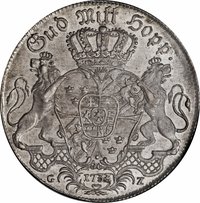
Description:
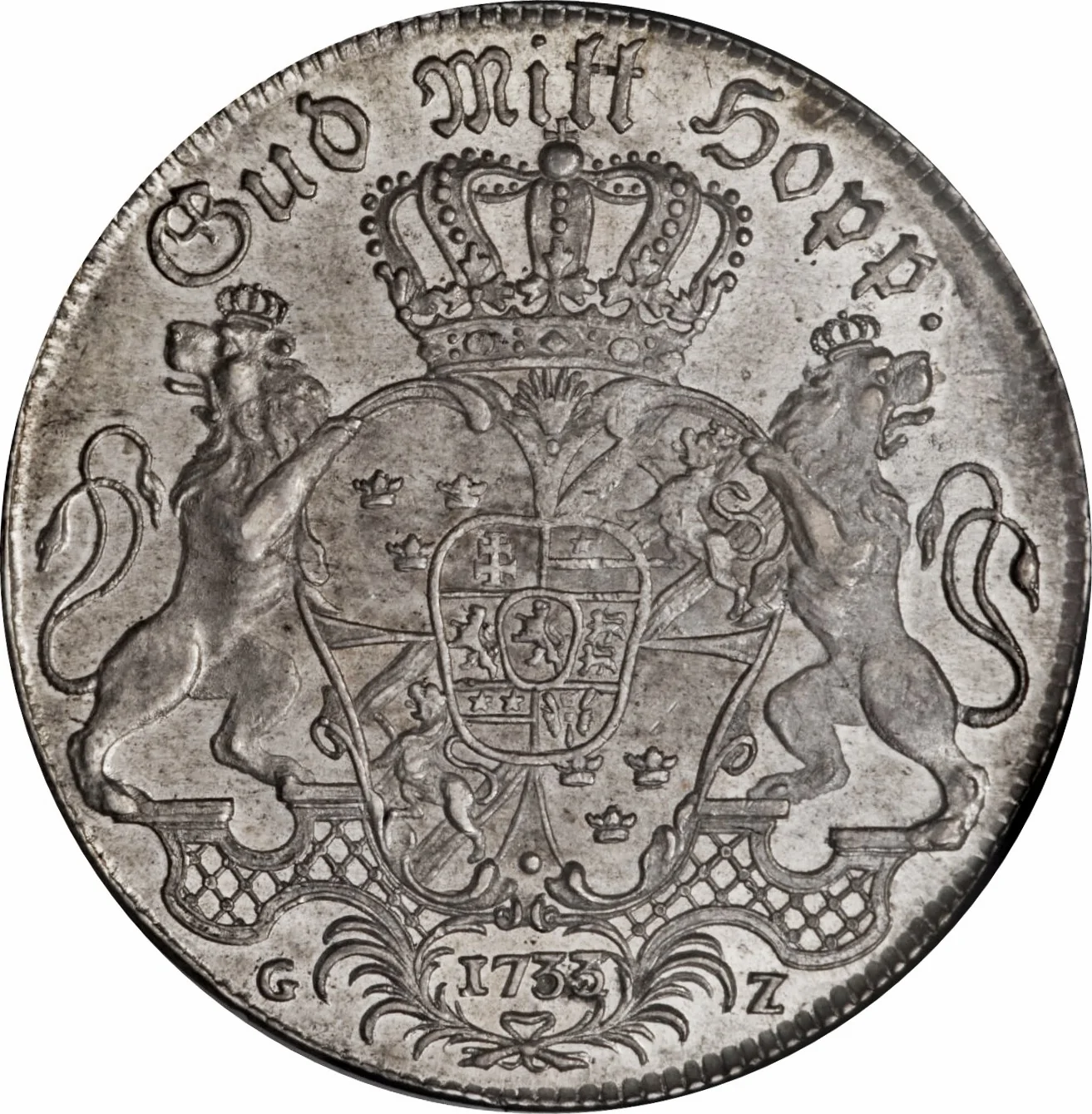
Sweden’s crowned arms in a shield, supported by lions. The King’s motto is above, the date below in a palm-wreath cartouche flanked by mintmarks.
Inscription:
Gud Mitt Hopp .
1733
GZ
1733
GZ
Edge
Smooth with embossed lettering
Legend:
MANIBUS NE LAEDAR AVARIS
Categories
| Symbols> Coat of Arms |
Mints
| Name | Mark |
|---|---|
| Stockholm | — |
Mintings
| Year | Mint Mark | Mintage | Quality | Collection |
|---|---|---|---|---|
| 1730 | — | 3,992 | ||
| 1731 | — | 18,664 | ||
| 1732 | — | 7,442 | ||
| 1733 | — | 11,477 |
Historical background
In 1730, Sweden was navigating a complex and challenging currency situation, largely a legacy of the Great Northern War (1700–1721). To finance the prolonged conflict, the government under King Charles XII had resorted to massive coinage debasement, significantly reducing the silver content in coins like the daler. This created a system with two parallel currencies: a depreciated, low-value "plate money" (plåtmynt) for domestic use and a higher-value silver daler for foreign trade. The result was severe inflation, a loss of public confidence in the currency, and a chaotic monetary environment that hampered economic recovery in the war's aftermath.
The government, now under the "Age of Liberty" parliament (Riksdag), recognized the need for reform. A major step was taken in 1726 with the introduction of the riksdaler specie, a new currency intended to be tied to a fixed silver standard and restore stability. However, by 1730, this reform was still in its fragile early stages. The old debased coins remained in circulation, and the public's trust was slow to rebuild. Furthermore, Sweden suffered from a chronic shortage of physical silver, making it difficult to back the currency adequately and leading to persistent liquidity problems in the economy.
Therefore, the currency situation in 1730 was one of transition and uncertainty. While the legal framework for a stable, silver-based system was in place, the practical realities of replacing a deeply degraded currency were immense. The economy still bore the scars of wartime finance, with inflation memories fresh and the dual-currency system causing complications in trade and taxation. The success of the riksdaler specie was not yet assured, placing monetary stability as a central and unresolved concern for Swedish policymakers in that era.
The government, now under the "Age of Liberty" parliament (Riksdag), recognized the need for reform. A major step was taken in 1726 with the introduction of the riksdaler specie, a new currency intended to be tied to a fixed silver standard and restore stability. However, by 1730, this reform was still in its fragile early stages. The old debased coins remained in circulation, and the public's trust was slow to rebuild. Furthermore, Sweden suffered from a chronic shortage of physical silver, making it difficult to back the currency adequately and leading to persistent liquidity problems in the economy.
Therefore, the currency situation in 1730 was one of transition and uncertainty. While the legal framework for a stable, silver-based system was in place, the practical realities of replacing a deeply degraded currency were immense. The economy still bore the scars of wartime finance, with inflation memories fresh and the dual-currency system causing complications in trade and taxation. The success of the riksdaler specie was not yet assured, placing monetary stability as a central and unresolved concern for Swedish policymakers in that era.
✨ Legendary