

5 öre – Sweden
Add to wishlist
Sweden
Context
Years: 1729–1751
Issuer: Sweden
Ruler: Frederick I
Currency:
(1719—1798)
Demonetized: Yes
Total mintage: 9,071,001
References
KM: #
Numista: #55507
Obverse
Description:
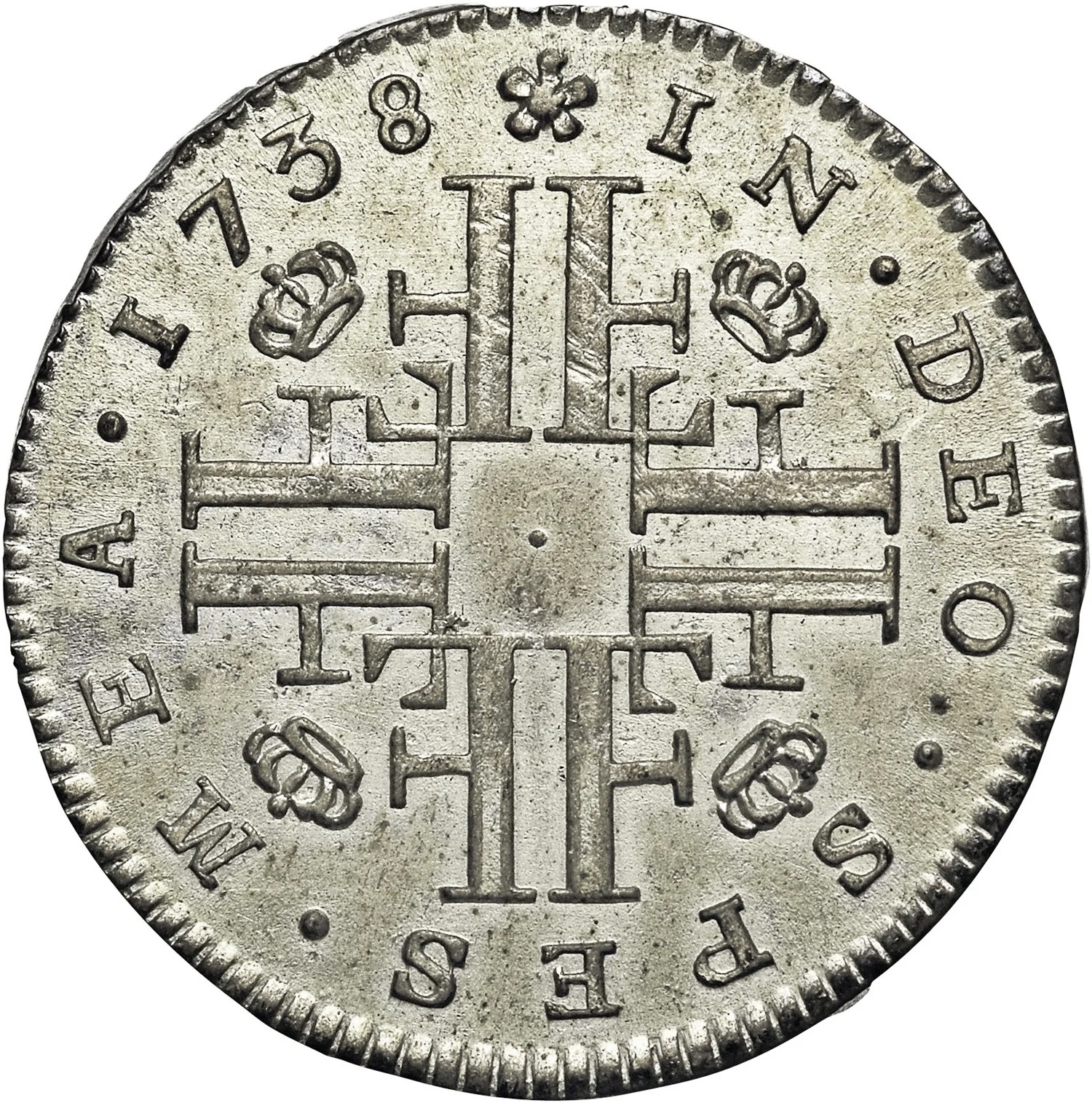
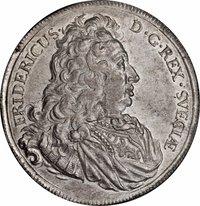
Cruciform monogram of Frederick I (third type), with mirrored F's forming each arm. A central dot and diagonal crowns between the arms. Rim inscription of the king's motto and date.
Inscription:
• IN • DEO • SPES • MEA • 1738 *
Script: Latin
Reverse
Description:
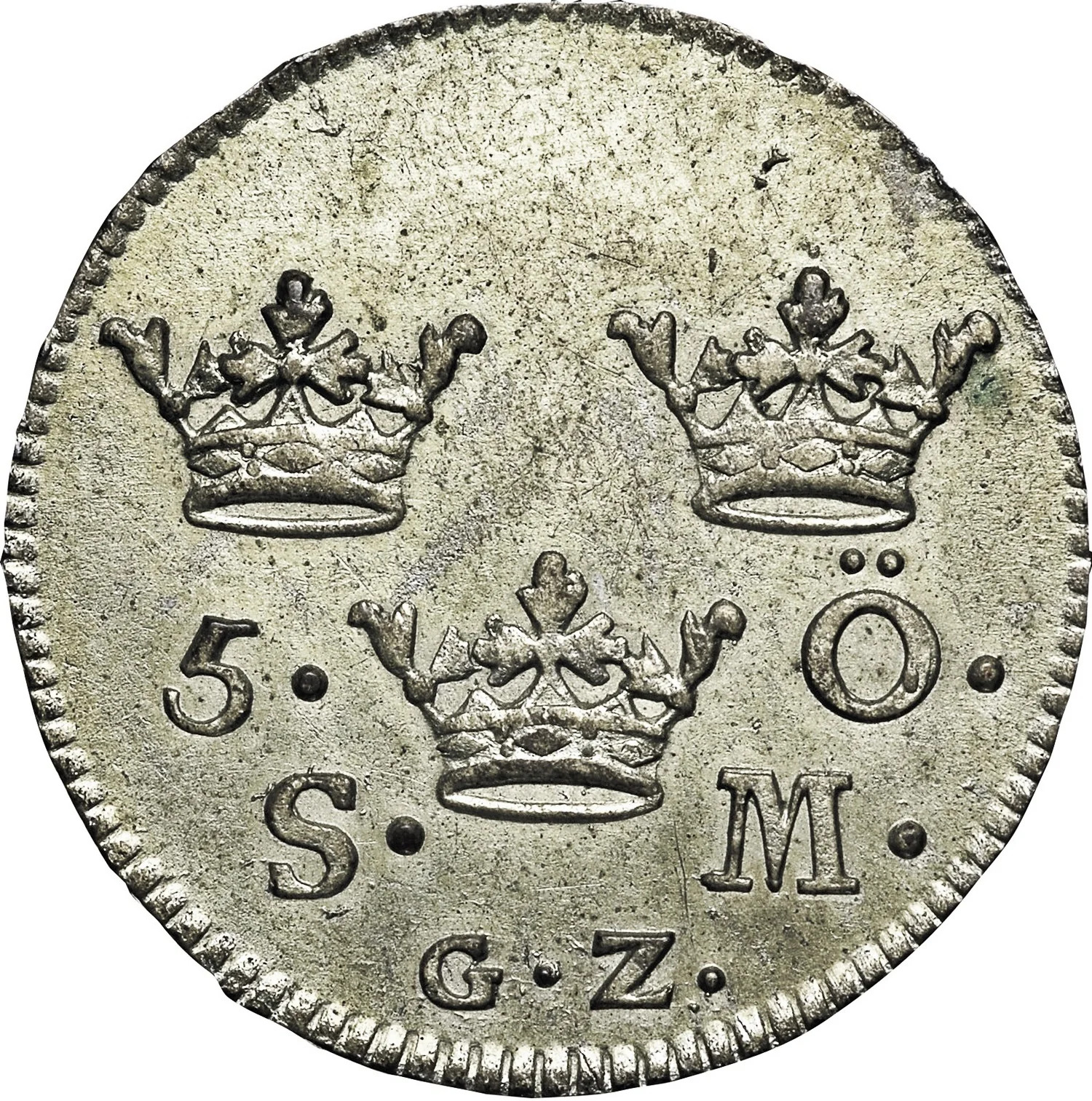
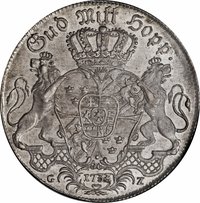
Three Crowns flank both sides. Mintmark below if present.
Inscription:
5 · Ö ·
S · M ·
G · Z ·
S · M ·
G · Z ·
Script: Latin
Edge
Plain
Mints
| Name | Mark |
|---|---|
| Stockholm | — |
Mintings
| Year | Mint Mark | Mintage | Quality | Collection |
|---|---|---|---|---|
| 1729 | — | 428,688 | ||
| 1730 | — | 1,003,873 | ||
| 1731 | — | 1,245,758 | ||
| 1732 | — | 985,276 | ||
| 1733 | — | 263,575 | ||
| 1735 | — | 152,183 | ||
| 1736 | — | 260,053 | ||
| 1737 | — | 432,007 | ||
| 1738 | — | 200,000 | ||
| 1739 | — | 423,061 | ||
| 1740 | — | 76,788 | ||
| 1741 | — | 842,215 | ||
| 1742 | — | 824,945 | ||
| 1743 | — | 405,086 | ||
| 1744 | — | 388,177 | ||
| 1745 | — | 311,152 | ||
| 1746 | — | — | ||
| 1747 | — | 407,341 | ||
| 1748 | — | 141,875 | ||
| 1749 | — | 144,098 | ||
| 1750 | — | 58,382 | ||
| 1751 | — | 76,468 |
Historical background
In 1729, Sweden was navigating the complex aftermath of the Great Northern War (1700–1721), which had left the kingdom's finances in ruins. To fund the protracted conflict, the government, under the "Age of Liberty" parliament (Riksdag), had resorted to massive coin debasement and the issuance of copper plate money (plåtmynt). This resulted in severe inflation and a chaotic monetary system with multiple concurrent forms of currency—silver coins, heavily depreciated copper plates, and credit notes—all circulating with unstable exchange rates. The public's trust in the currency was extremely low, and the economy suffered from a critical shortage of reliable small-change money for everyday transactions.
The response was the landmark Monetary Regulation of 1729, a decisive attempt at stabilization. The policy, championed by Arvid Horn's government, aimed to return to a silver standard by officially devaluing the copper plate money to its intrinsic metallic value, effectively writing down its face value by 50%. Simultaneously, the state began minting new, high-quality silver coins (riksdaler specie) to restore confidence. This was a painful but necessary deflationary measure, as it abruptly reduced the nominal money supply and aimed to anchor the currency to a tangible, valuable metal.
The immediate effects of the 1729 regulation were socially painful, causing losses for holders of copper money and contributing to economic hardship. However, it is historically viewed as a crucial first step toward long-term stability. It established a clearer silver-based framework, which would be refined in the coming decades, most notably with the establishment of the Riksens Ständers Bank (precursor to the Riksbank) in 1729 and later monetary reforms. Thus, the currency situation in 1729 represents a pivotal moment of austerity and recalibration, as Sweden sought to discipline its finances and lay a foundation for recovery after the fiscal excesses of war.
The response was the landmark Monetary Regulation of 1729, a decisive attempt at stabilization. The policy, championed by Arvid Horn's government, aimed to return to a silver standard by officially devaluing the copper plate money to its intrinsic metallic value, effectively writing down its face value by 50%. Simultaneously, the state began minting new, high-quality silver coins (riksdaler specie) to restore confidence. This was a painful but necessary deflationary measure, as it abruptly reduced the nominal money supply and aimed to anchor the currency to a tangible, valuable metal.
The immediate effects of the 1729 regulation were socially painful, causing losses for holders of copper money and contributing to economic hardship. However, it is historically viewed as a crucial first step toward long-term stability. It established a clearer silver-based framework, which would be refined in the coming decades, most notably with the establishment of the Riksens Ständers Bank (precursor to the Riksbank) in 1729 and later monetary reforms. Thus, the currency situation in 1729 represents a pivotal moment of austerity and recalibration, as Sweden sought to discipline its finances and lay a foundation for recovery after the fiscal excesses of war.
⭐ Rare