

1 Mohar – Patan Kingdom
Nepal
Context
Year: 1731
Nepal Sambat Year: 851
Country: Nepal 
Issuer: Patan Kingdom
Ruler: Jaya Vishnu Malla
Currency:
(1546—1932)
Demonetized: Yes
Material
References
KM: #Click to copy to clipboard400
Numista: #64350
Value
Bullion value: $15.30
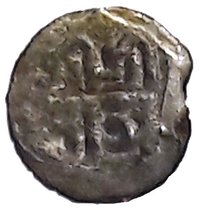
Obverse
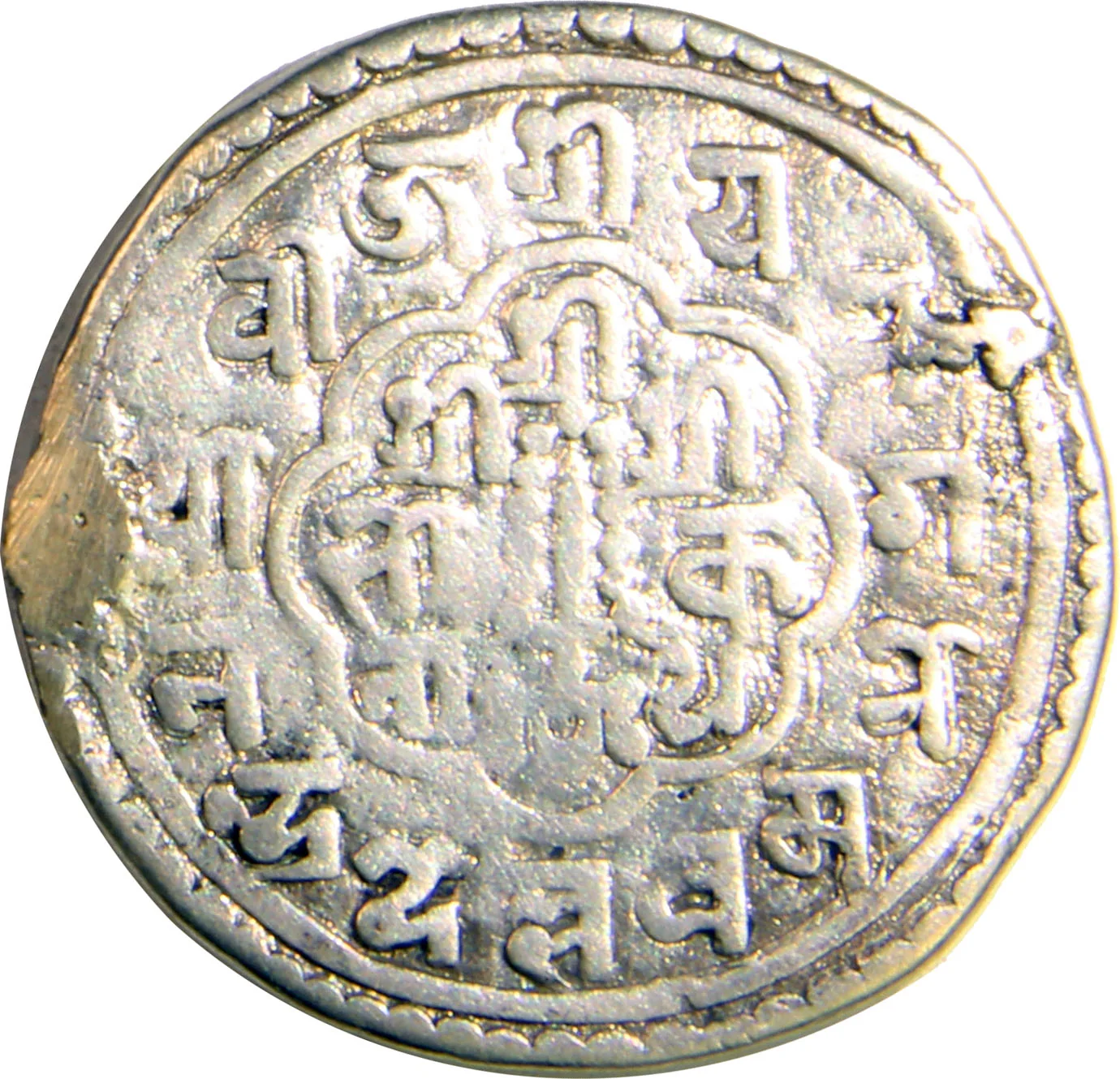
Description:
Trishul and King's Name
Inscription:
Sri Sri Jaya Vishnu Malla Deva
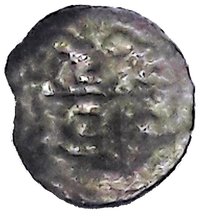
Reverse
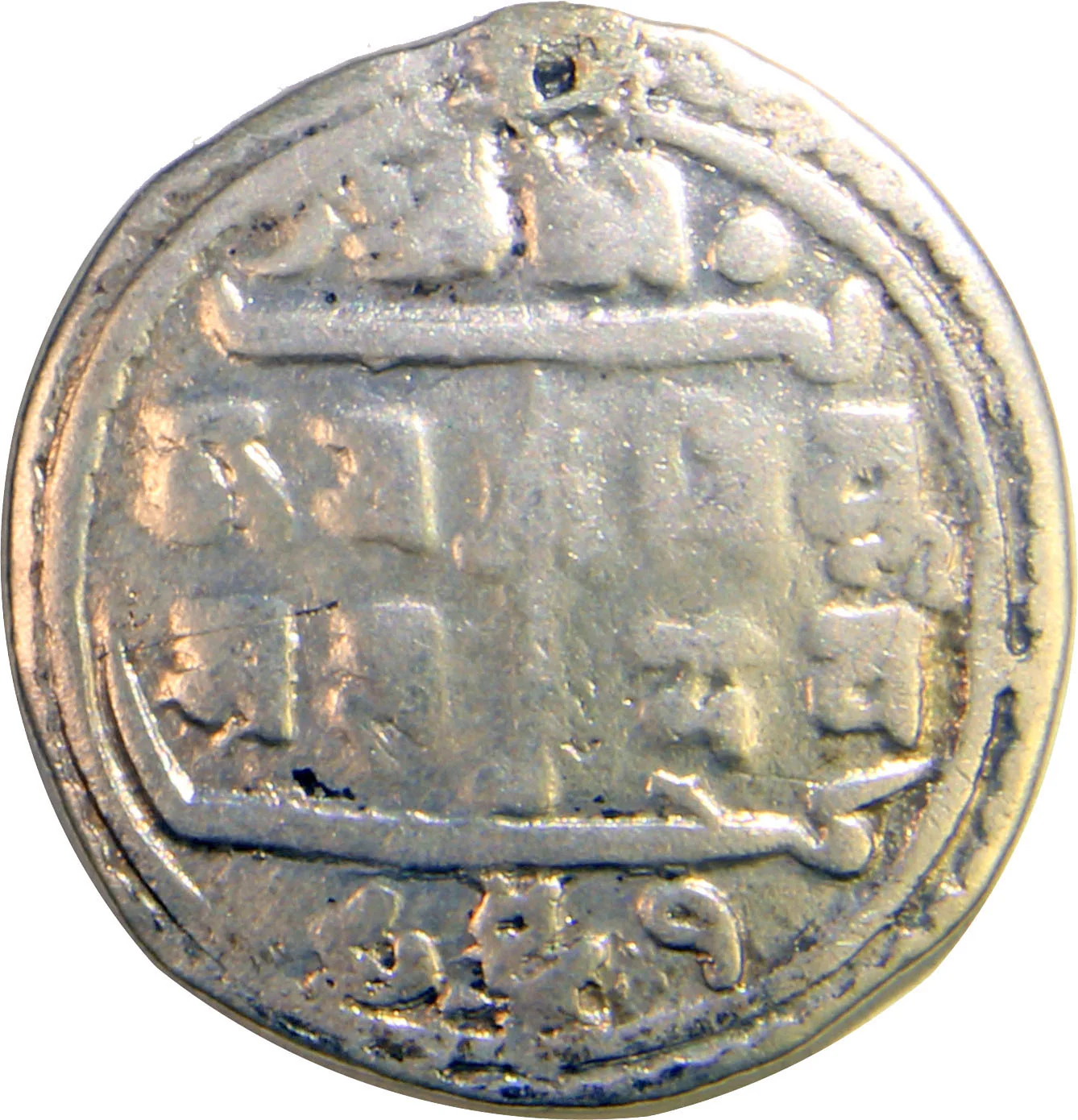
Description:
King's sword.
Inscription:
Sri Sri Jaya Vishnu Malla Deva
Edge
Plain
Mintings
| Year | Mint Mark | Mintage | Quality | Collection |
|---|---|---|---|---|
| 1731 | — | — |
Historical background
In 1731, the Patan Kingdom, a constituent state within the Kathmandu Valley's intricate tri-kingdom system (alongside Kathmandu and Bhaktapur), operated under a complex monetary regime. The primary currency was the Mohar, a silver coin minted independently by each of the three kingdoms. Patan's own Mohars, struck at the kingdom's mint (Lakshmi Chhen), bore distinct symbols like the lotus and the Sri character, serving as both a medium of exchange and a statement of sovereignty against its Malla rivals. However, the system was not uniform; coins from all three kingdoms circulated simultaneously, requiring merchants and farmers to constantly evaluate the weight and purity of coins from different sources, leading to friction in regional trade.
This period was one of significant economic strain and monetary debasement. The Malla kings, engaged in perpetual rivalry and lavish temple-building projects, increasingly resorted to reducing the silver content in their coinage to finance expenditures. By 1731, the silver Mohar had become notably degraded, with higher alloy content. This inflationary practice eroded public trust and complicated transactions, as older, purer coins were hoarded (following Gresham's Law). Furthermore, the economy remained largely agrarian and tribute-based, with a significant portion of transactions, especially in rural areas, conducted through barter or payment in kind, limiting the full monetization of society.
The currency situation was further influenced by vital external trade. Patan, a hub for artisans and merchants, engaged in trans-Himalayan trade with Tibet, importing silver and gold. This inflow of precious metals was essential for minting. Concurrently, robust trade ties with the Mughal Empire to the south saw Indian rupees—often of more reliable purity—circulating alongside local coinage, especially for larger commercial transactions. Thus, in 1731, a Patan merchant would navigate a multi-currency environment of debased local Mohars, historic purer coins, and foreign rupees, all against a backdrop of political fragmentation and economic pressure that foreshadowed the kingdom's eventual conquest by Prithvi Narayan Shah's Gorkha expansion just over two decades later.
This period was one of significant economic strain and monetary debasement. The Malla kings, engaged in perpetual rivalry and lavish temple-building projects, increasingly resorted to reducing the silver content in their coinage to finance expenditures. By 1731, the silver Mohar had become notably degraded, with higher alloy content. This inflationary practice eroded public trust and complicated transactions, as older, purer coins were hoarded (following Gresham's Law). Furthermore, the economy remained largely agrarian and tribute-based, with a significant portion of transactions, especially in rural areas, conducted through barter or payment in kind, limiting the full monetization of society.
The currency situation was further influenced by vital external trade. Patan, a hub for artisans and merchants, engaged in trans-Himalayan trade with Tibet, importing silver and gold. This inflow of precious metals was essential for minting. Concurrently, robust trade ties with the Mughal Empire to the south saw Indian rupees—often of more reliable purity—circulating alongside local coinage, especially for larger commercial transactions. Thus, in 1731, a Patan merchant would navigate a multi-currency environment of debased local Mohars, historic purer coins, and foreign rupees, all against a backdrop of political fragmentation and economic pressure that foreshadowed the kingdom's eventual conquest by Prithvi Narayan Shah's Gorkha expansion just over two decades later.
💎 Extremely Rare