

1 Mohar – Patan Kingdom
Nepal
Context
Year: 1729
Nepal Sambat Year: 849
Country: Nepal 
Issuer: Patan Kingdom
Ruler: Jaya Vishnu Malla
Currency:
(1546—1932)
Demonetized: Yes
Material
References
KM: #Click to copy to clipboard395
Numista: #362353
Value
Bullion value: $15.30
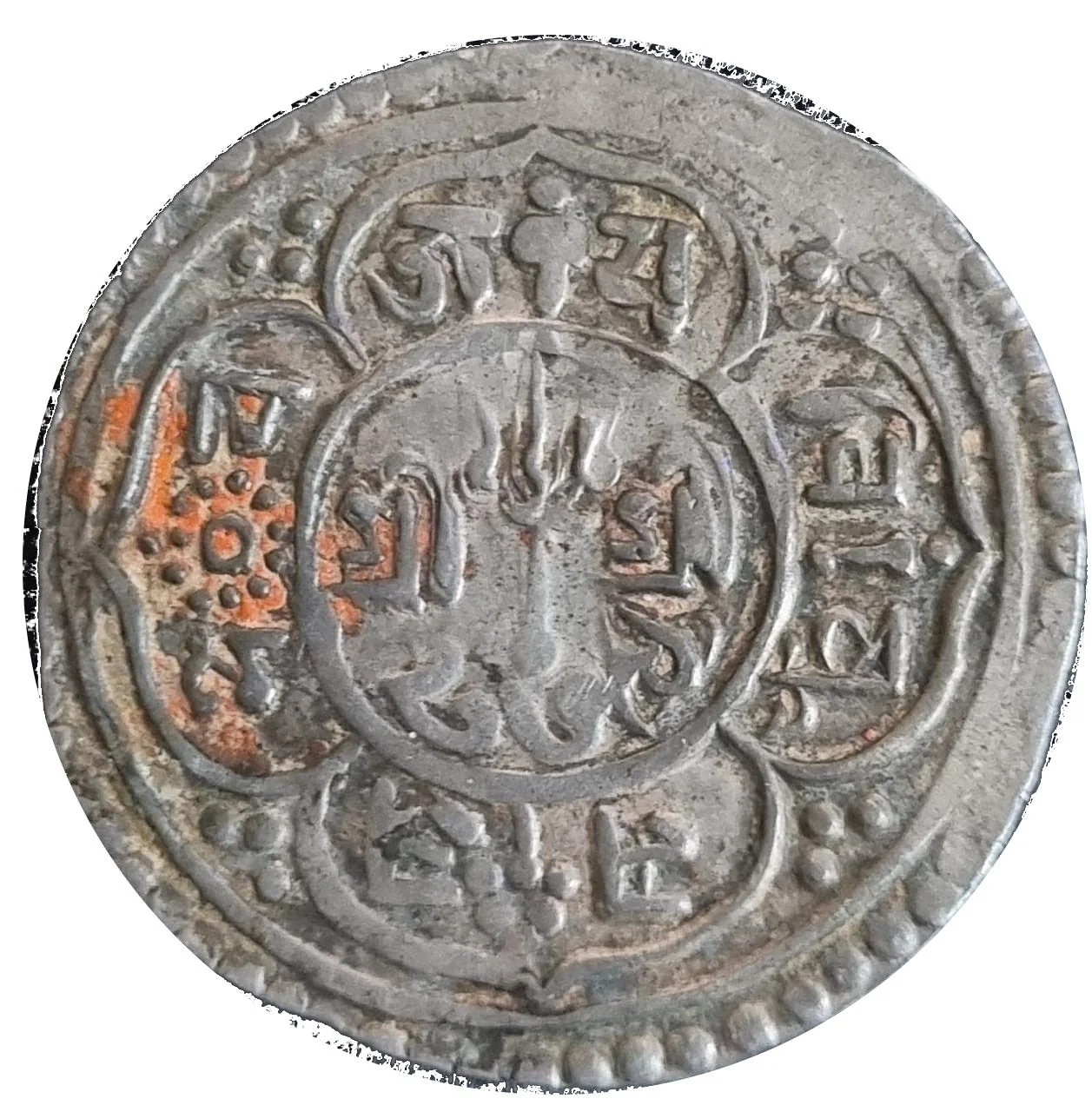
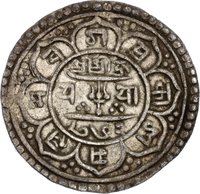
Obverse
Description:
Floral quatrefoil with a central trident and date.
Inscription:
Shri Shri Jay Bishnu malla Dev 849
श्री श्री जय बिष्णु मल्ल देव् ८४९
श्री श्री जय बिष्णु मल्ल देव् ८४९
Script: Ranjana
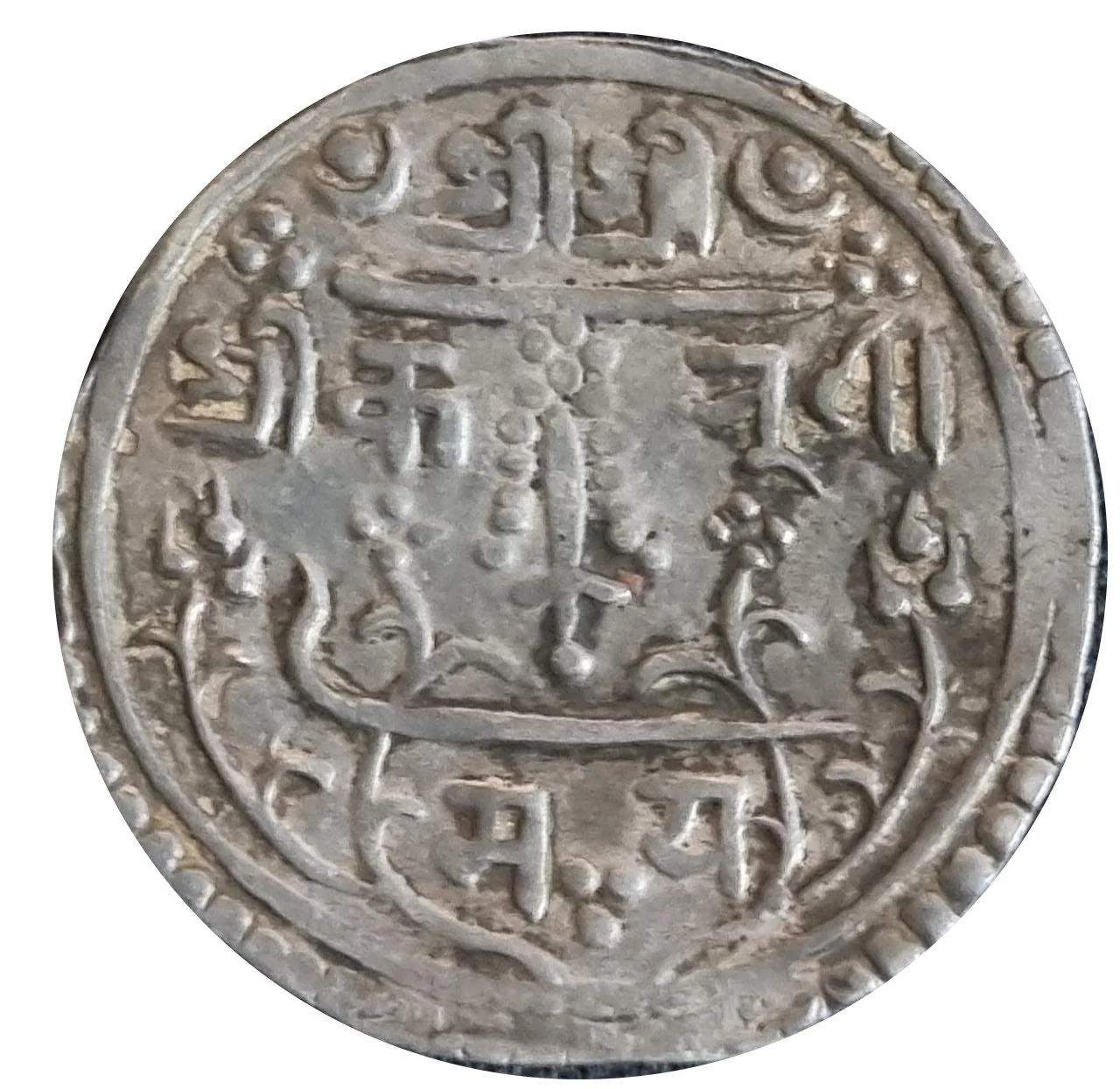
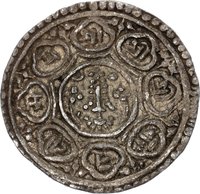
Reverse
Description:
Sword-centered floral design.
Inscription:
श्री श्री श्री क रु णा म य
Edge
Mintings
| Year | Mint Mark | Mintage | Quality | Collection |
|---|---|---|---|---|
| 1729 | — | — |
Historical background
In 1729, the Patan Kingdom (one of the three kingdoms in the Kathmandu Valley, now part of modern Nepal) operated within a complex and fragmented monetary system. The primary circulating currency was the Mohar, a silver coin minted independently by Patan, as well as by its rival neighbors Kathmandu and Bhaktapur. These coins were often similar in weight and purity but bore distinct dynastic symbols and inscriptions, making them not just economic instruments but also political statements of sovereignty. Alongside these local issues, a significant volume of older Malla-period coins, as well as foreign silver rupees from the Mughal Empire and Tibetan tangkas, circulated in trade, reflecting the valley's position on trans-Himalayan trade routes.
The economic backdrop was one of strain and transition. The early 18th century saw the Malla rulers of the three kingdoms engaged in constant rivalry, which extended to their coinage. Debasement (reducing the silver content) was a frequent tactic to finance military expenditures and lavish court lifestyles, leading to fluctuations in the value of the Patan Mohar. This period also saw a gradual tightening of trade due to political instability in the surrounding regions, which affected the inflow of silver bullion necessary for minting. The economy remained largely agrarian, with coinage used primarily for taxation, significant trade, and religious donations, while barter persisted in daily rural life.
By 1729, the Patan Kingdom was under the rule of Yoga Narendra Malla, though the political scene was unstable. His reign was marked by internal intrigue and the growing influence of the rising Gorkha Kingdom to the west. The currency situation, therefore, mirrored a kingdom in precarious balance—maintaining a tradition of independent coinage as a symbol of royal authority, yet increasingly vulnerable to economic pressures and external threat. Within a few decades, this fragile system would be swept away entirely following the Gorkha conquest of the valley in 1768-69, which unified the coinage under a single, new Nepalese rupee.
The economic backdrop was one of strain and transition. The early 18th century saw the Malla rulers of the three kingdoms engaged in constant rivalry, which extended to their coinage. Debasement (reducing the silver content) was a frequent tactic to finance military expenditures and lavish court lifestyles, leading to fluctuations in the value of the Patan Mohar. This period also saw a gradual tightening of trade due to political instability in the surrounding regions, which affected the inflow of silver bullion necessary for minting. The economy remained largely agrarian, with coinage used primarily for taxation, significant trade, and religious donations, while barter persisted in daily rural life.
By 1729, the Patan Kingdom was under the rule of Yoga Narendra Malla, though the political scene was unstable. His reign was marked by internal intrigue and the growing influence of the rising Gorkha Kingdom to the west. The currency situation, therefore, mirrored a kingdom in precarious balance—maintaining a tradition of independent coinage as a symbol of royal authority, yet increasingly vulnerable to economic pressures and external threat. Within a few decades, this fragile system would be swept away entirely following the Gorkha conquest of the valley in 1768-69, which unified the coinage under a single, new Nepalese rupee.
✨ Legendary