

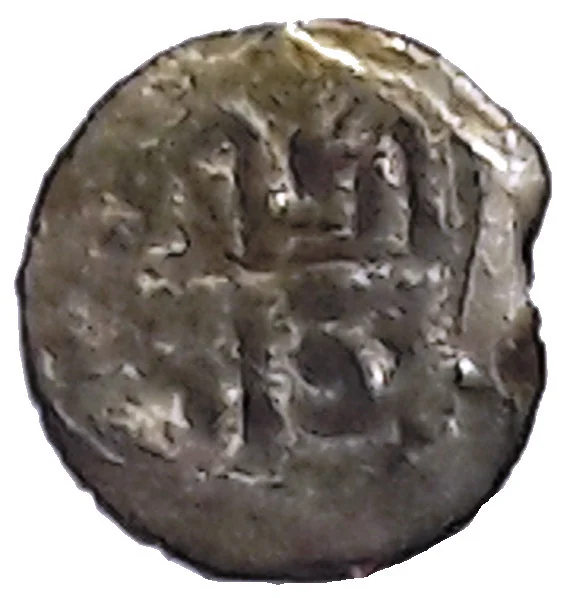
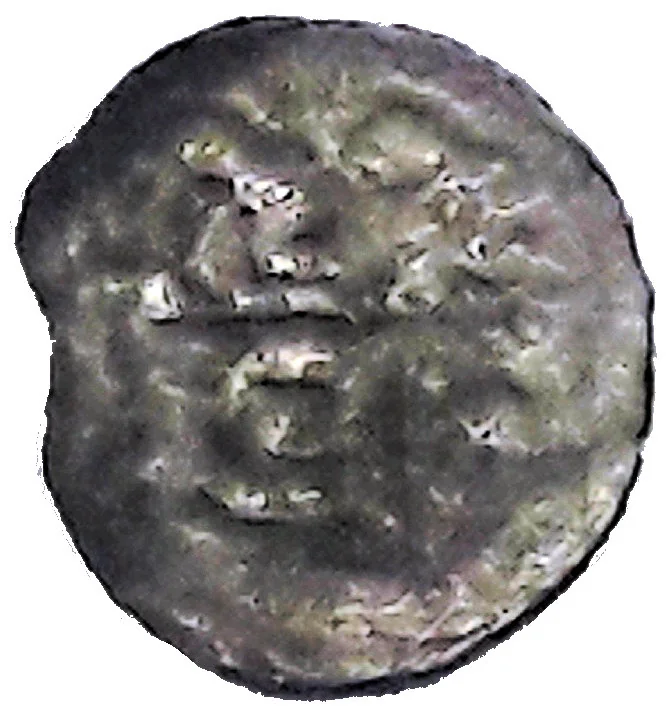
1 Dam – Patan Kingdom
Nepal
Context
Years: 1745–1758
Country: Nepal 
Issuer: Patan Kingdom
Ruler: Jaya Rajya Prakash Malla
Currency:
(1546—1932)
Demonetized: Yes
Material
Diameter: 6 mm
Weight: 0.04 g
Silver weight: 0.04 g
Shape: Irregular round
Composition: Silver
Magnetic: No
References
KM: #Click to copy to clipboard403
Numista: #116425
Value
Bullion value: $0.11
Obverse
Description:
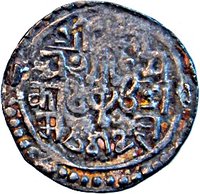
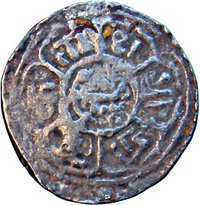
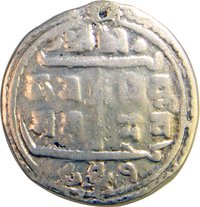
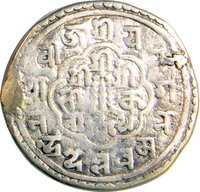
4 uniface figures
Reverse
Edge
Mintings
| Year | Mint Mark | Mintage | Quality | Collection |
|---|---|---|---|---|
| — | — | — |
Historical background
In 1745, the Patan Kingdom (one of the three medieval city-states in the Kathmandu Valley, now part of Nepal) operated within a complex and fragmented monetary system. The kingdom did not mint its own sovereign coinage but was a key participant in a vibrant trans-Himalayan trade network. Consequently, its economy was dominated by a multiplicity of foreign currencies. The most important of these were the silver Mohars of the neighbouring Kantipur (Kathmandu) Kingdom, which served as the de facto standard. Alongside these, coins from the Malla Kingdom of Bhadgaon (Bhaktapur), Tibetan silver tangkas, and even Mughal Indian rupees circulated widely, their values fluctuating based on silver content and trade demands.
This monetary pluralism reflected Patan’s economic reality as a prosperous centre of art, architecture, and craftsmanship, particularly in bronze and precious metals. The city’s artisans and merchants engaged in trade linking Tibet to the south, making the marketplace a nexus of currency exchange. However, the lack of a unified, state-issued currency created inherent instability. Exchange rates between the various coins were mediated by sarrafs (money changers), leading to inconsistencies and potential for exploitation, while the inflow and outflow of specie were subject to the unpredictable rhythms of long-distance trade.
Politically, the year 1745 placed the kingdom in a period of late Malla rule under King Vishnu Malla, a time of relative but fragile autonomy. The monetary fragmentation mirrored the political fragmentation of the valley, with each city-state exercising limited control over the broader economic environment. This systemic weakness would be starkly exposed just over a decade later when the Gorkhali conquest, led by Prithvi Narayan Shah, began in earnest. The unification of Nepal under Gorkha after 1768 would subsequently impose a single, centralized coinage system, thereby ending the eclectic and merchant-driven currency regime that characterized Patan in the mid-18th century.
This monetary pluralism reflected Patan’s economic reality as a prosperous centre of art, architecture, and craftsmanship, particularly in bronze and precious metals. The city’s artisans and merchants engaged in trade linking Tibet to the south, making the marketplace a nexus of currency exchange. However, the lack of a unified, state-issued currency created inherent instability. Exchange rates between the various coins were mediated by sarrafs (money changers), leading to inconsistencies and potential for exploitation, while the inflow and outflow of specie were subject to the unpredictable rhythms of long-distance trade.
Politically, the year 1745 placed the kingdom in a period of late Malla rule under King Vishnu Malla, a time of relative but fragile autonomy. The monetary fragmentation mirrored the political fragmentation of the valley, with each city-state exercising limited control over the broader economic environment. This systemic weakness would be starkly exposed just over a decade later when the Gorkhali conquest, led by Prithvi Narayan Shah, began in earnest. The unification of Nepal under Gorkha after 1768 would subsequently impose a single, centralized coinage system, thereby ending the eclectic and merchant-driven currency regime that characterized Patan in the mid-18th century.

✨ Legendary