

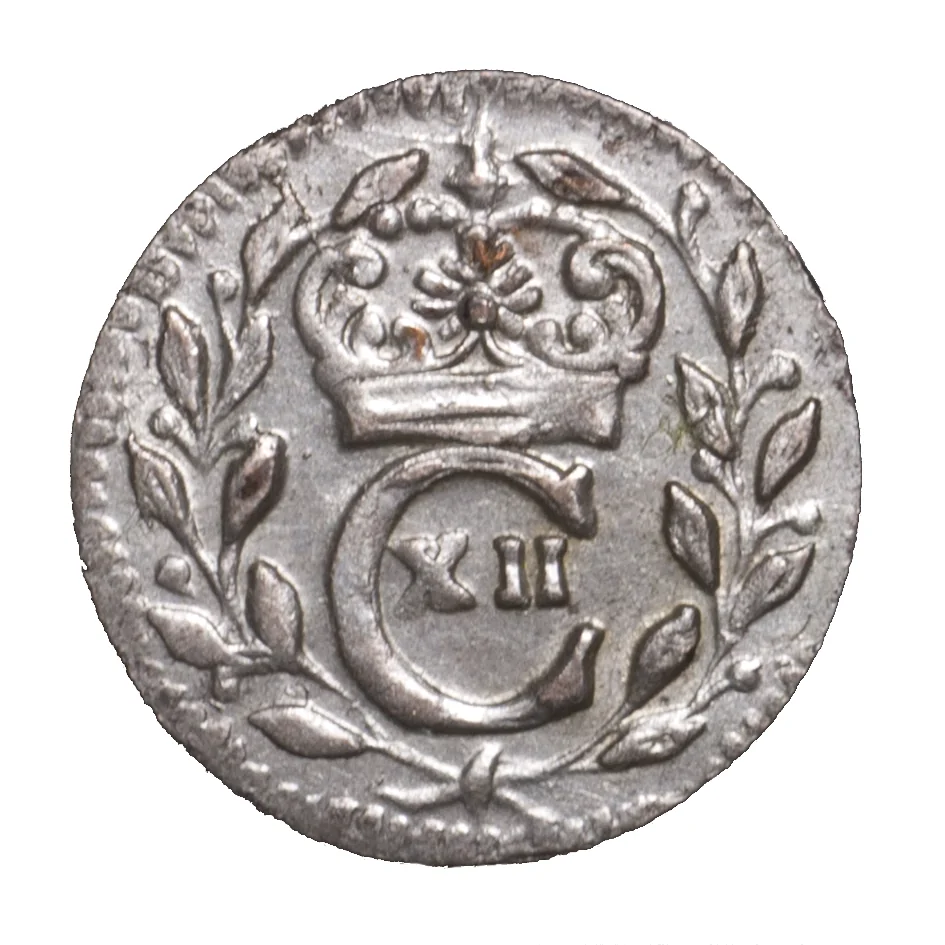
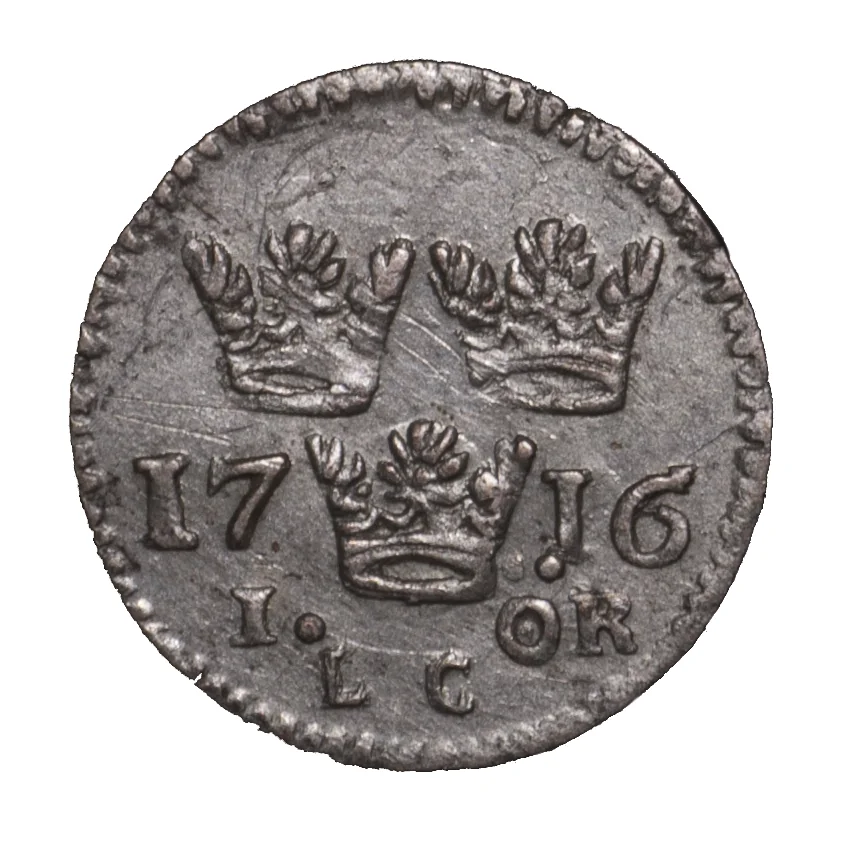
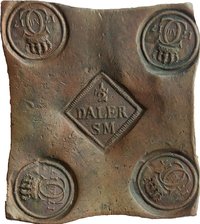
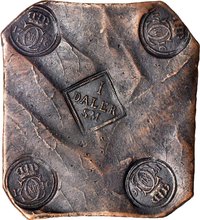
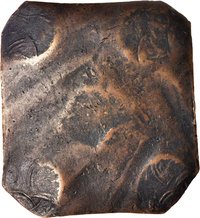
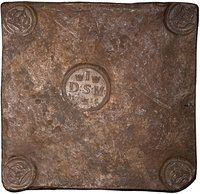
1 Öre – Sweden
Sweden
Context
Years: 1715–1717
Issuer: Sweden 
Ruler: Charles XII
Currency:
(1715—1719)
Demonetized: Yes
Total mintage: 2,104,923
References
KM: #Click to copy to clipboard250b
Numista: #64174
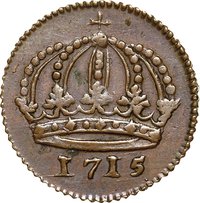
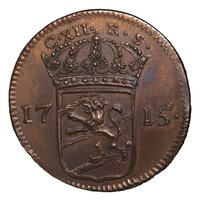
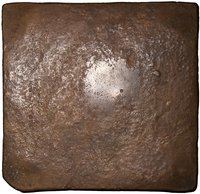
Obverse
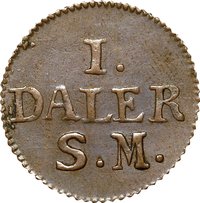
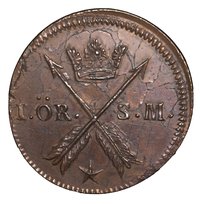
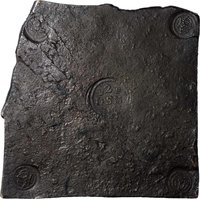
Reverse
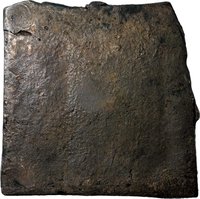
Edge
Mintings
| Year | Mint Mark | Mintage | Quality | Collection |
|---|---|---|---|---|
| 1715 | LC | 404,356 | ||
| 1716 | LC | 687,303 | ||
| 1717 | LC | 1,013,264 |
Historical background
In 1715, Sweden was in the midst of the Great Northern War (1700–1721), a prolonged and costly conflict that had drained the royal treasury. King Charles XII, having returned from exile in the Ottoman Empire, was desperately trying to finance continued military campaigns to defend the crumbling Swedish Empire. The state's primary solution to this fiscal crisis was the heavy debasement of the currency. The Swedish Kopparmynt (copper coinage) and silver coins were repeatedly minted with lower precious metal content, while their face value was artificially maintained.
This policy led to severe inflation and a chaotic monetary system where the intrinsic value of coins fell far below their nominal worth. The public, understandably, began to hoard older, purer coins, leading to Gresham's Law in practice: "bad money drives out good." The economy suffered from a lack of trustworthy currency, which hampered trade and created widespread economic uncertainty. Furthermore, the state attempted to compel acceptance of the debased coins by law, but this only deepened public distrust and market distortions.
Consequently, by 1715, Sweden was grappling with a profound currency crisis that was a direct symptom of its wartime financial exhaustion. The depreciated coinage undermined both domestic economic stability and Sweden's international credit. This situation would eventually force a major monetary reform, but in 1715, the immediate reality was one of inflationary pressure, fiscal desperation, and a loss of confidence in the very medium of exchange, all under the shadow of an increasingly desperate war effort.
This policy led to severe inflation and a chaotic monetary system where the intrinsic value of coins fell far below their nominal worth. The public, understandably, began to hoard older, purer coins, leading to Gresham's Law in practice: "bad money drives out good." The economy suffered from a lack of trustworthy currency, which hampered trade and created widespread economic uncertainty. Furthermore, the state attempted to compel acceptance of the debased coins by law, but this only deepened public distrust and market distortions.
Consequently, by 1715, Sweden was grappling with a profound currency crisis that was a direct symptom of its wartime financial exhaustion. The depreciated coinage undermined both domestic economic stability and Sweden's international credit. This situation would eventually force a major monetary reform, but in 1715, the immediate reality was one of inflationary pressure, fiscal desperation, and a loss of confidence in the very medium of exchange, all under the shadow of an increasingly desperate war effort.
Series: 1715 Sweden circulation coins

💎 Very Rare