

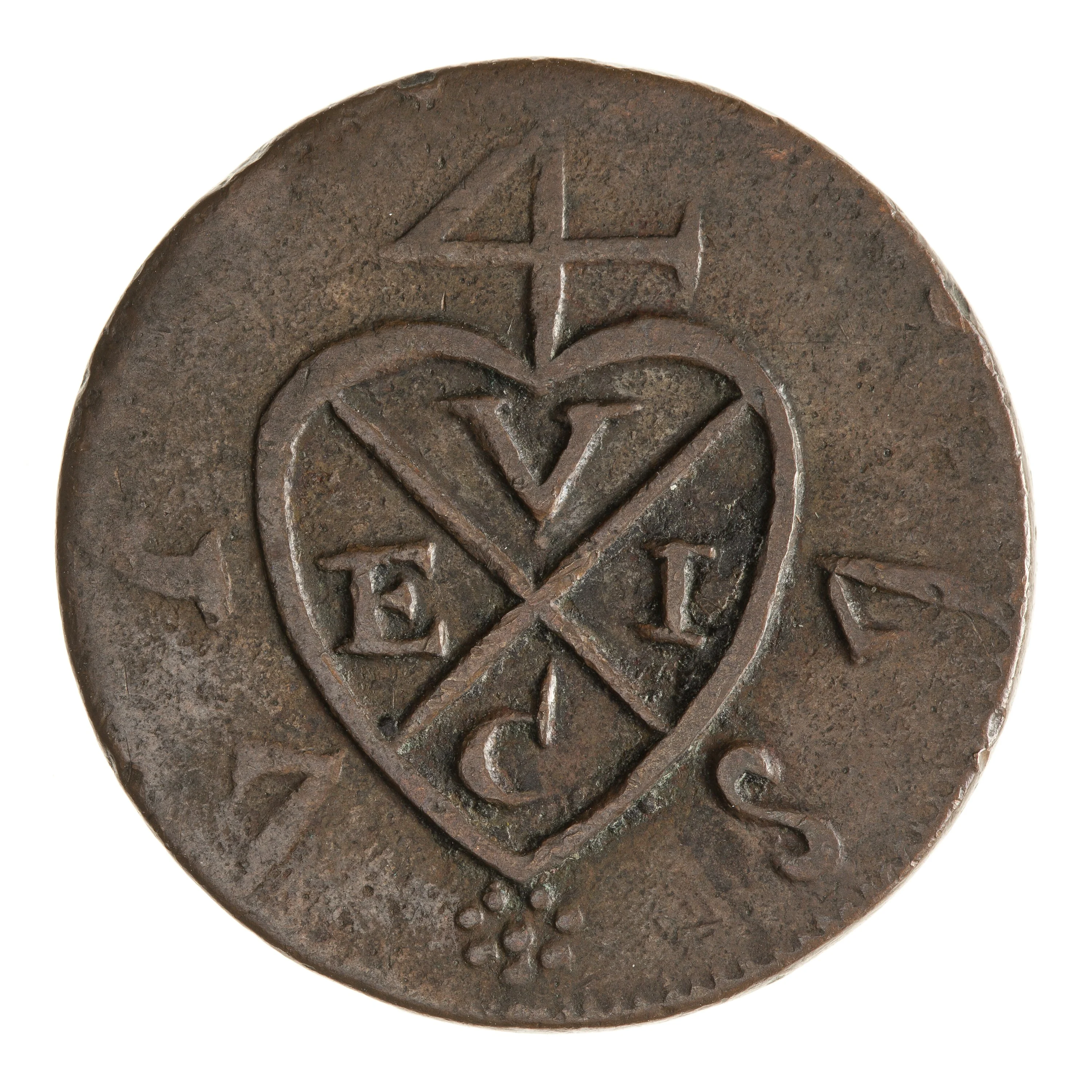
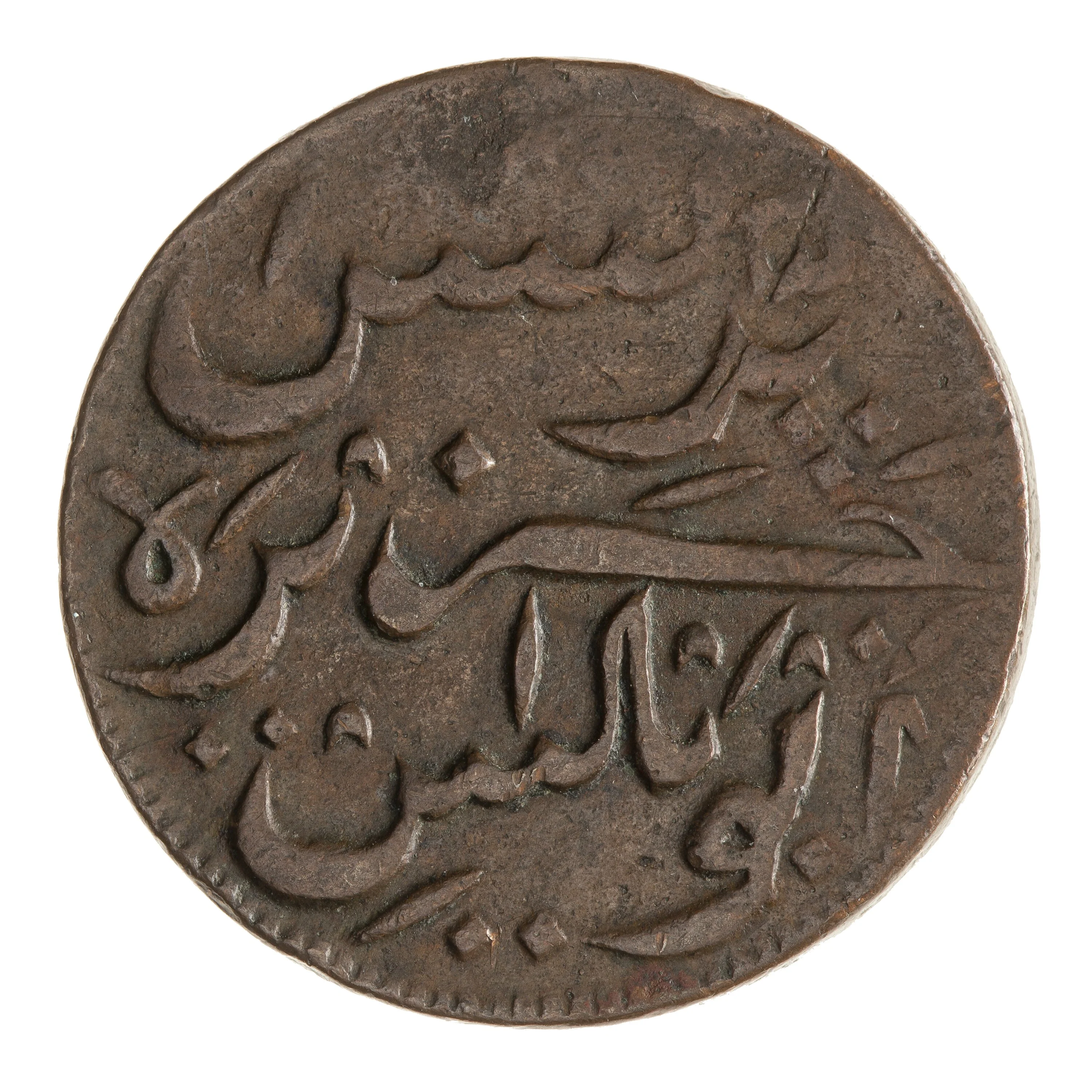
1 Cent – North Borneo
Malaysia
Context
Years: 1904–1941
Country: Malaysia 
Issuer: North Borneo
Period:
(1881—1941)
Currency:
(1882—1941)
Demonetized: Yes
Total mintage: 6,000,000
Material
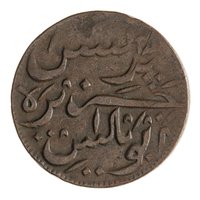
References
KM: #Click to copy to clipboard3
Numista: #11949
Obverse
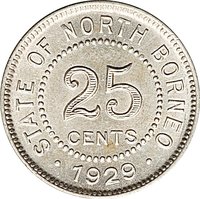
Reverse
Edge
Plain
Categories
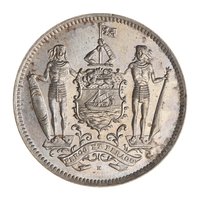
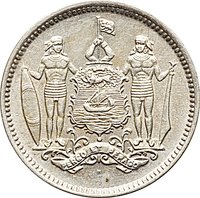
| Symbols> Coat of Arms |
Mints
| Name | Mark |
|---|---|
| Heaton and Sons / The Mint Birmingham | H |
Mintings
Historical background
In 1904, the currency situation in North Borneo (present-day Sabah) was characterized by a complex and somewhat chaotic multiplicity of currencies, reflecting its position as a British protectorate administered by the British North Borneo Chartered Company. The official currency was the British North Borneo dollar, introduced by the Company in 1882. However, its circulation was neither exclusive nor dominant. The Spanish or Mexican silver dollar, a long-established trade coin throughout Southeast Asia, remained in widespread use and was legally recognized at a fixed value of two shillings and four pence sterling. Alongside these, the Indian rupee and Straits Settlements dollar also circulated freely, creating a multi-currency environment where merchants and officials had to navigate varying exchange rates.
This monetary plurality stemmed from North Borneo's deep integration into regional trade networks. The Spanish dollar was the preferred medium for the substantial trade with Hong Kong and the Chinese merchants who were vital to the colony's timber and tobacco economies. The Straits dollar, used in neighbouring Singapore and Labuan, facilitated commerce with the rest of the British Malayan sphere. The Chartered Company's own notes and coins, minted in Birmingham and denominated in cents and dollars, struggled to achieve supremacy. While the Company encouraged their use for official payments and salaries, public trust in them was limited, and they often circulated at a slight discount compared to the older, more familiar silver dollars.
Consequently, the monetary system in 1904 was inefficient and posed practical challenges for administration and commerce. The government had to constantly publish exchange rates, and transactions required careful calculation. This situation would eventually lead to reform. In 1906, following the pattern in the Straits Settlements, North Borneo adopted a gold exchange standard and introduced a new dollar pegged to sterling. This move, aligning it more closely with the broader British imperial financial system, began the process of simplifying and stabilizing the currency, phasing out the older silver dollars that had defined the region's commerce for over a century.
This monetary plurality stemmed from North Borneo's deep integration into regional trade networks. The Spanish dollar was the preferred medium for the substantial trade with Hong Kong and the Chinese merchants who were vital to the colony's timber and tobacco economies. The Straits dollar, used in neighbouring Singapore and Labuan, facilitated commerce with the rest of the British Malayan sphere. The Chartered Company's own notes and coins, minted in Birmingham and denominated in cents and dollars, struggled to achieve supremacy. While the Company encouraged their use for official payments and salaries, public trust in them was limited, and they often circulated at a slight discount compared to the older, more familiar silver dollars.
Consequently, the monetary system in 1904 was inefficient and posed practical challenges for administration and commerce. The government had to constantly publish exchange rates, and transactions required careful calculation. This situation would eventually lead to reform. In 1906, following the pattern in the Straits Settlements, North Borneo adopted a gold exchange standard and introduced a new dollar pegged to sterling. This move, aligning it more closely with the broader British imperial financial system, began the process of simplifying and stabilizing the currency, phasing out the older silver dollars that had defined the region's commerce for over a century.
🌱 Common