

5 Cents – North Borneo
Malaysia
Context
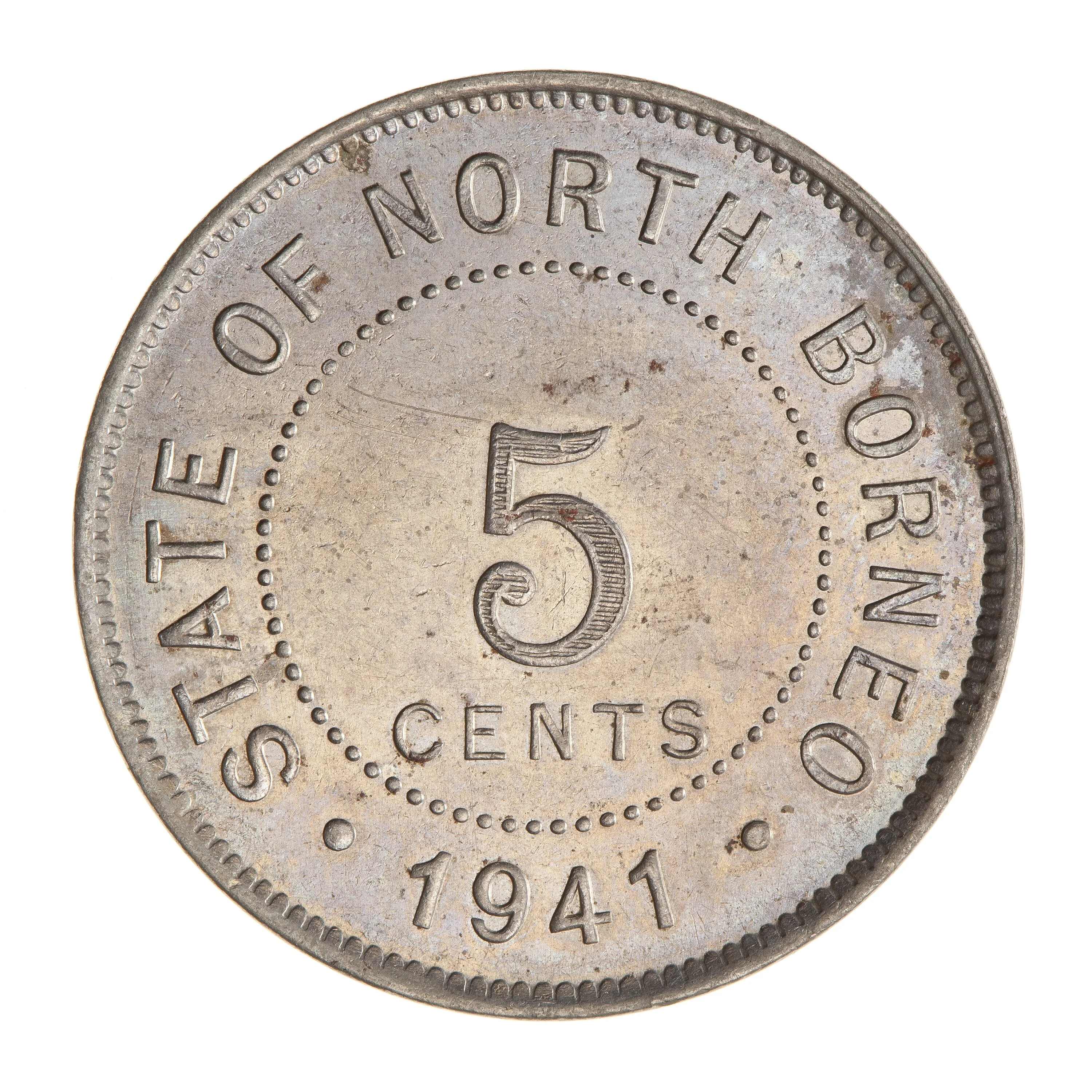
Years: 1903–1941
Country: Malaysia 
Issuer: North Borneo
Period:
(1881—1941)
Currency:
(1882—1941)
Demonetized: Yes
Total mintage: 3,900,000
Material
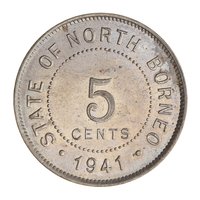
References
KM: #Click to copy to clipboard5
Numista: #11951
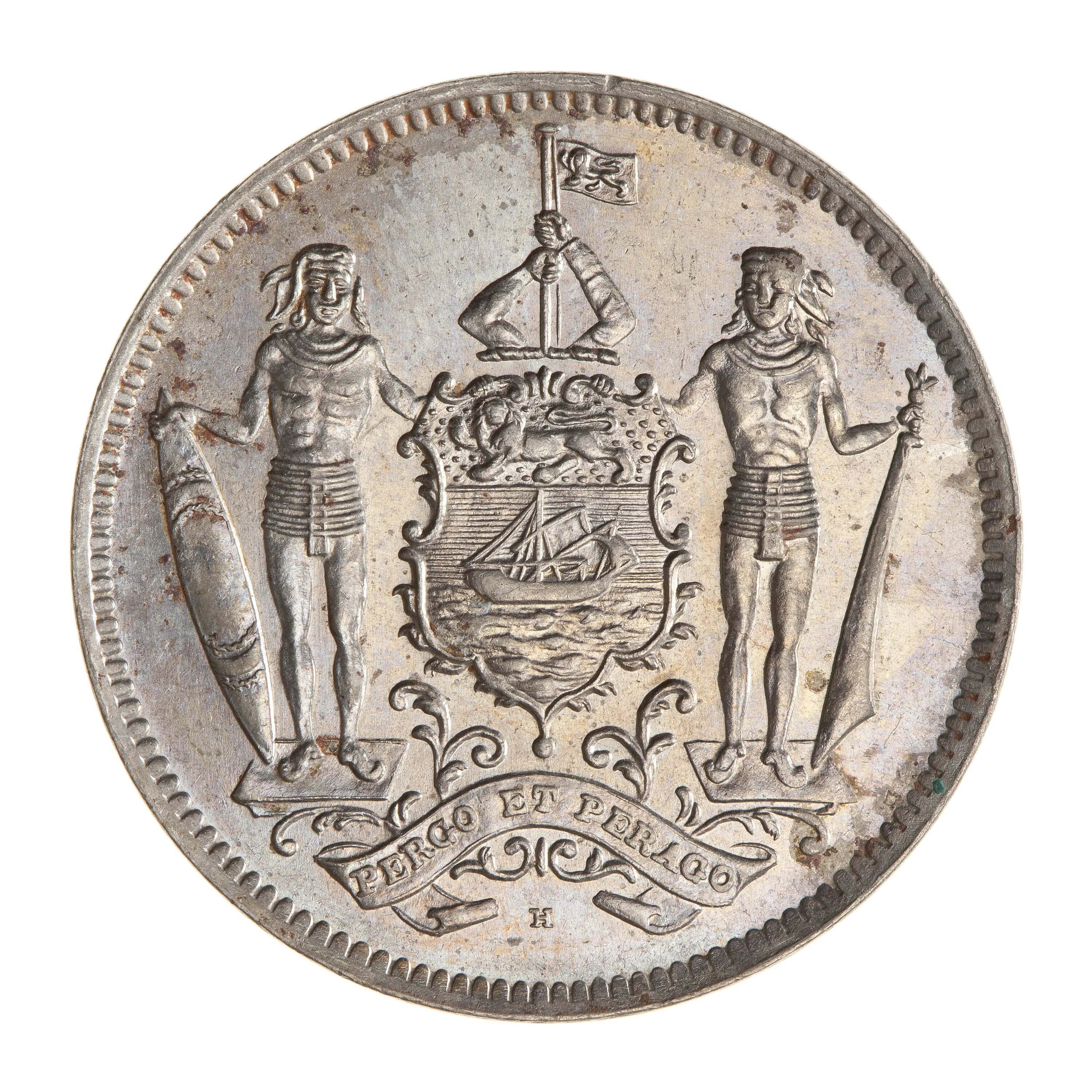
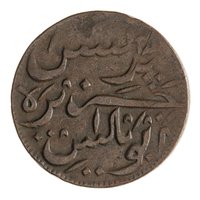
Obverse
Reverse
Edge
Plain
Categories
| Symbols> Coat of Arms |
Mints
| Name | Mark |
|---|---|
| Heaton and Sons / The Mint Birmingham | H |
Mintings
Historical background
In 1903, the currency situation in North Borneo (present-day Sabah) was characterised by a complex and somewhat chaotic multiplicity of currencies, reflecting its position as a British Chartered Company territory within a region of diverse economic influences. The official currency was the British North Borneo dollar, introduced by the British North Borneo Chartered Company in 1882. However, its circulation was neither exclusive nor dominant. Spanish and Mexican silver dollars, the longstanding trade coins of the region, continued to circulate widely alongside it, as did the Straits Settlements dollar from neighbouring British Malaya. This created a practical environment where multiple silver coinages of similar size and intrinsic value were used interchangeably in commerce.
The root of this monetary plurality lay in the entrenched trade patterns of Southeast Asia. The Spanish/Mexican dollar was the historic "trade dollar" of the Far East, trusted for its consistent silver content. The Chartered Company, lacking the sovereign power to demonetise these familiar coins, pragmatically granted them legal tender status alongside its own issue to ensure economic stability and facilitate trade. Consequently, the Company's own coins and notes had to compete for acceptance in a market already saturated with established currencies, hindering the full monetisation of the local economy and the Company's seigniorage profits.
Administratively, this situation posed significant challenges. The coexistence of several coinages required constant valuation and assay to guard against worn or debased coins, complicating both government revenue collection and commercial bookkeeping. The year 1903 fell within a period of transition, as the Company sought to gradually strengthen the position of its own currency. This effort would later be aided by the formal cessation of minting for the Mexican dollar in 1905 and regional moves toward a sterling-exchange standard, but in 1903, North Borneo's currency system remained a vivid reflection of its transitional status between local tradition and colonial monetary control.
The root of this monetary plurality lay in the entrenched trade patterns of Southeast Asia. The Spanish/Mexican dollar was the historic "trade dollar" of the Far East, trusted for its consistent silver content. The Chartered Company, lacking the sovereign power to demonetise these familiar coins, pragmatically granted them legal tender status alongside its own issue to ensure economic stability and facilitate trade. Consequently, the Company's own coins and notes had to compete for acceptance in a market already saturated with established currencies, hindering the full monetisation of the local economy and the Company's seigniorage profits.
Administratively, this situation posed significant challenges. The coexistence of several coinages required constant valuation and assay to guard against worn or debased coins, complicating both government revenue collection and commercial bookkeeping. The year 1903 fell within a period of transition, as the Company sought to gradually strengthen the position of its own currency. This effort would later be aided by the formal cessation of minting for the Mexican dollar in 1905 and regional moves toward a sterling-exchange standard, but in 1903, North Borneo's currency system remained a vivid reflection of its transitional status between local tradition and colonial monetary control.
🌱 Common