

1 Mark – Sweden
Sweden
Context

Material
References
KM: #Click to copy to clipboard13
Numista: #64073
Value
Bullion value: $11.53
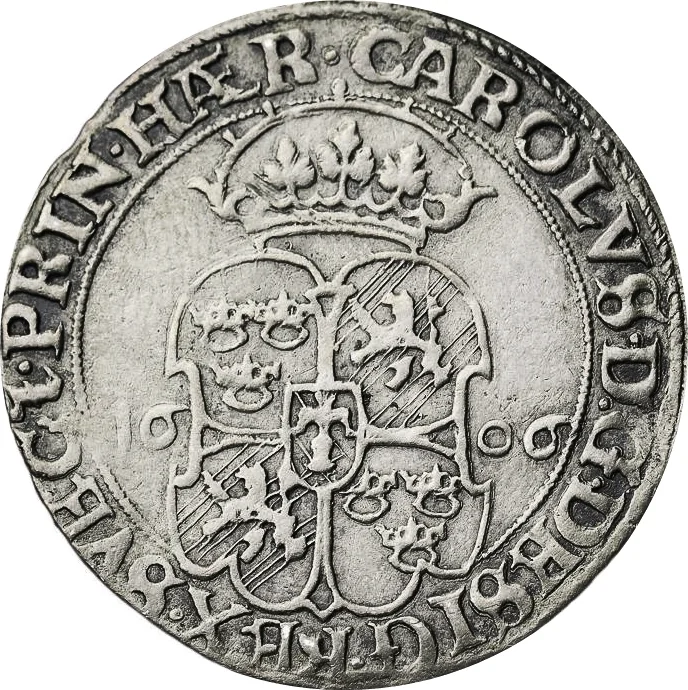
Obverse
Description:
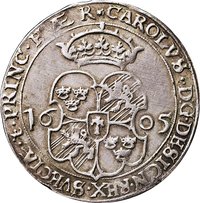
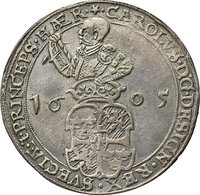
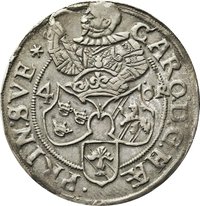
Shield with Sweden’s full royal arms divides the date, enclosed by a circle and legend.
Inscription:
CAROLVS·D:G·DESIG·REX·SVEC·&·PRIN·HÆR ·
16 06
16 06
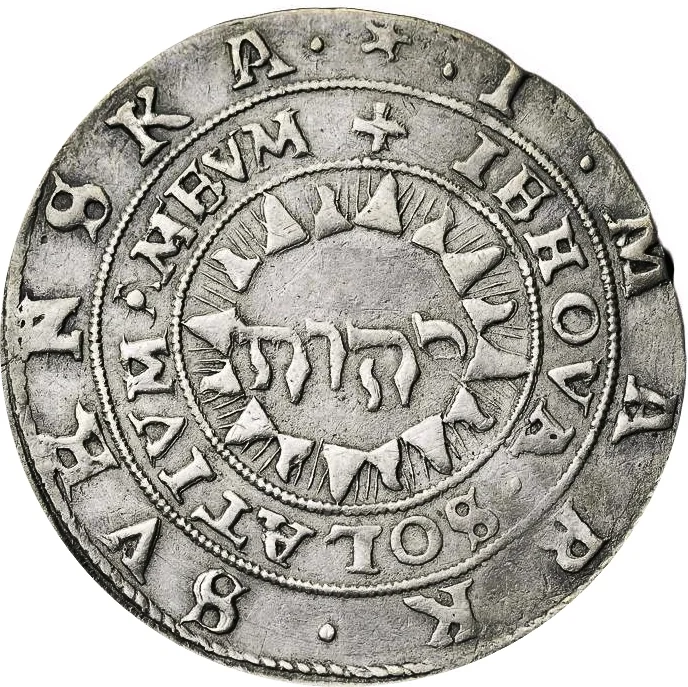
Reverse
Description:
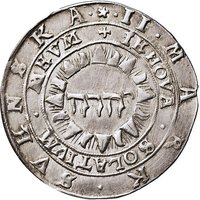
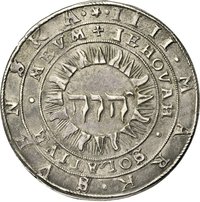
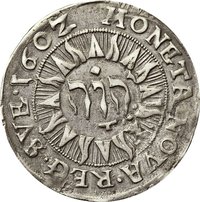
Sun with Hebrew "Jehovah" inside two circles, surrounded by the King's motto and the value in letters.
Inscription:
יהוה
+ IEHOVA · SOLATIVM · MEVM ·
* · I · MARK · SVENSKA ·
+ IEHOVA · SOLATIVM · MEVM ·
* · I · MARK · SVENSKA ·
Edge
Mintings
| Year | Mint Mark | Mintage | Quality | Collection |
|---|---|---|---|---|
| 1604 | — | — | ||
| 1605 | — | — | ||
| 1606 | — | — |
Historical background
In 1604, Sweden was in the early stages of the Vasa dynasty's consolidation of power, grappling with a complex and often chaotic currency situation. The 16th century had been plagued by repeated currency debasements, where kings like Erik XIV and Johan III reduced the silver content in coins to fund costly wars, particularly against Denmark and Poland-Lithuania. This created a system where new, poorer coins circulated alongside older, purer ones, causing widespread confusion, inflation, and a deep loss of public trust in the crown's money. The economy still relied heavily on a mix of physical commodity exchange, foreign coins (like German reichstalers and Dutch ducats), and these unreliable domestic issues.
Recognizing the crisis, King Karl IX, who had just solidified his rule after a civil war with his nephew Sigismund, was determined to restore monetary order. The year 1604 was a pivotal moment of attempted reform. Karl IX initiated a substantial recoinage, calling in the old, debased money and minting new coins with a higher and fixed silver content. The aim was to stabilize the unit of account, the Swedish mark, and reassert royal authority over the monetary system. This was not just an economic policy but a political statement, signaling a new era of stability and control under his reign.
However, the reform of 1604 was only partially successful. While it provided temporary relief, the fundamental pressures of state finance remained. Sweden was a relatively poor nation on the periphery of Europe, yet it harboured great military ambitions. The high cost of maintaining armies and administering a growing realm would continue to strain the treasury. Consequently, the stability sought in 1604 proved fragile, setting a pattern for the 17th century where periods of sound coinage were often followed by new debasements, especially during the intense fiscal demands of the Thirty Years' War under Gustavus Adolphus. Thus, 1604 represents a sincere but ultimately fleeting attempt to solve a chronic problem.
Recognizing the crisis, King Karl IX, who had just solidified his rule after a civil war with his nephew Sigismund, was determined to restore monetary order. The year 1604 was a pivotal moment of attempted reform. Karl IX initiated a substantial recoinage, calling in the old, debased money and minting new coins with a higher and fixed silver content. The aim was to stabilize the unit of account, the Swedish mark, and reassert royal authority over the monetary system. This was not just an economic policy but a political statement, signaling a new era of stability and control under his reign.
However, the reform of 1604 was only partially successful. While it provided temporary relief, the fundamental pressures of state finance remained. Sweden was a relatively poor nation on the periphery of Europe, yet it harboured great military ambitions. The high cost of maintaining armies and administering a growing realm would continue to strain the treasury. Consequently, the stability sought in 1604 proved fragile, setting a pattern for the 17th century where periods of sound coinage were often followed by new debasements, especially during the intense fiscal demands of the Thirty Years' War under Gustavus Adolphus. Thus, 1604 represents a sincere but ultimately fleeting attempt to solve a chronic problem.
✨ Legendary