

½ Penny – Ireland
Ireland
Context
Material
References
KM: #Click to copy to clipboard90.1
Numista: #43173
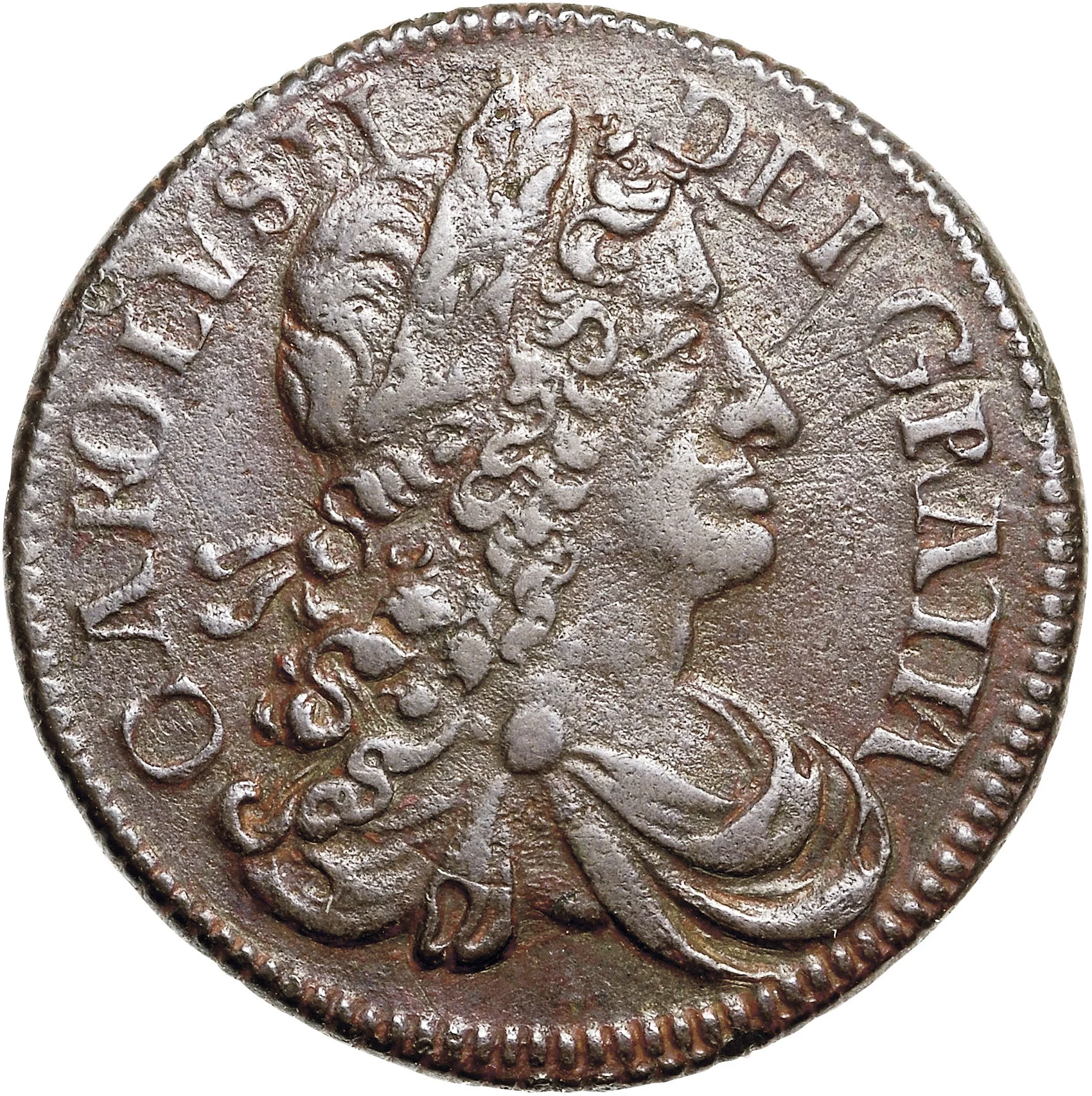
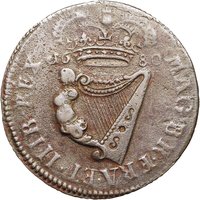
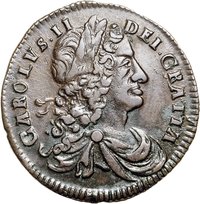
Obverse
Description:
Armstrong & Legg issue. Laureate draped bust right, large letters.
Inscription:
CAROLVS II DEI GRATIA
Script: Latin
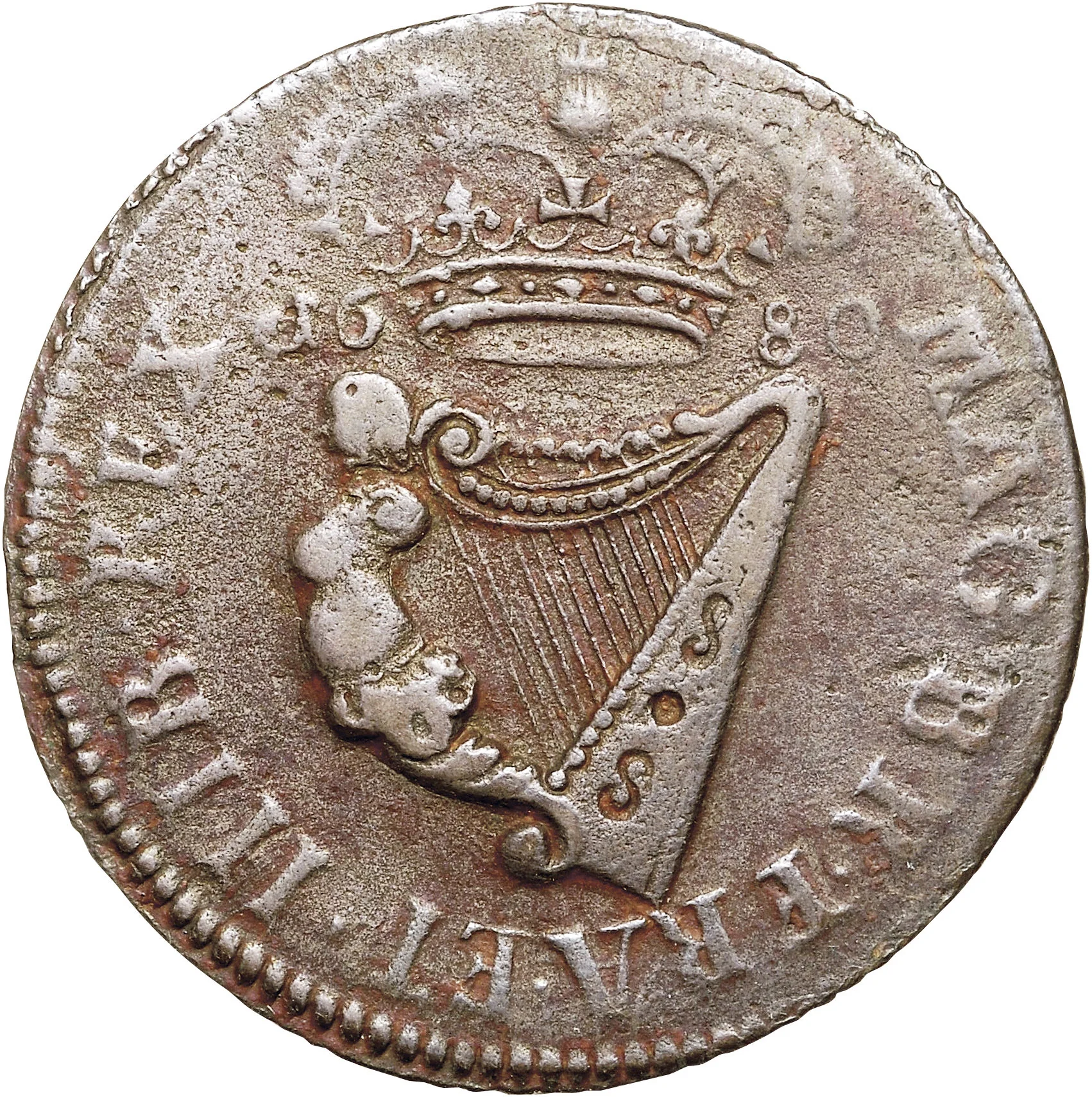
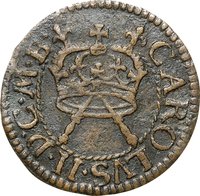
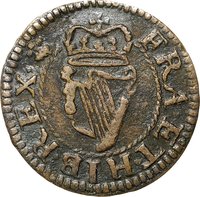
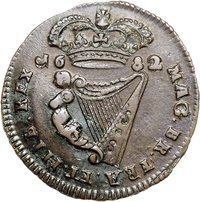
Reverse
Edge
Mintings
| Year | Mint Mark | Mintage | Quality | Collection |
|---|---|---|---|---|
| 1680 | — | — | ||
| 1681 | — | — | ||
| 1682 | — | — |
Historical background
In 1680, Ireland operated under a complex and inadequate monetary system, a legacy of its status as a kingdom under the English Crown. The official currency was nominally aligned with England, using pounds, shillings, and pence, but the reality was a severe shortage of official coinage, particularly small-denomination coins for everyday trade. This scarcity was exacerbated by the fact that much of the available silver coinage was often exported to England to pay rents to absentee landlords and settle trade imbalances, draining the kingdom of its circulating medium.
To fill this void, a chaotic system of substitute currencies and barter prevailed. Foreign coins, especially Spanish pieces of eight and Portuguese johannes, circulated widely and were essential for larger transactions. For smaller exchanges, people relied on "token" coins issued by local merchants, towns, and even individual tradesmen, which promised redemption in real coin. Additionally, in rural areas, the economy remained partially non-monetized, with goods and services often traded directly. This fragmented system was inefficient, prone to fraud, and hindered commercial development.
The underlying economic structure, shaped by the Cromwellian and Restoration land settlements, intensified these monetary problems. The Protestant Ascendancy controlled most of the land, and the export-oriented agricultural economy—sending cattle, wool, and butter to England and the Continent—generated wealth that did not translate into a robust internal coin supply. Consequently, while Ireland was economically active, its monetary system in 1680 was unstable, informal, and a significant constraint on internal trade and economic cohesion, reflecting the broader political and subordinated economic relationship with England.
To fill this void, a chaotic system of substitute currencies and barter prevailed. Foreign coins, especially Spanish pieces of eight and Portuguese johannes, circulated widely and were essential for larger transactions. For smaller exchanges, people relied on "token" coins issued by local merchants, towns, and even individual tradesmen, which promised redemption in real coin. Additionally, in rural areas, the economy remained partially non-monetized, with goods and services often traded directly. This fragmented system was inefficient, prone to fraud, and hindered commercial development.
The underlying economic structure, shaped by the Cromwellian and Restoration land settlements, intensified these monetary problems. The Protestant Ascendancy controlled most of the land, and the export-oriented agricultural economy—sending cattle, wool, and butter to England and the Continent—generated wealth that did not translate into a robust internal coin supply. Consequently, while Ireland was economically active, its monetary system in 1680 was unstable, informal, and a significant constraint on internal trade and economic cohesion, reflecting the broader political and subordinated economic relationship with England.
⭐ Rare