

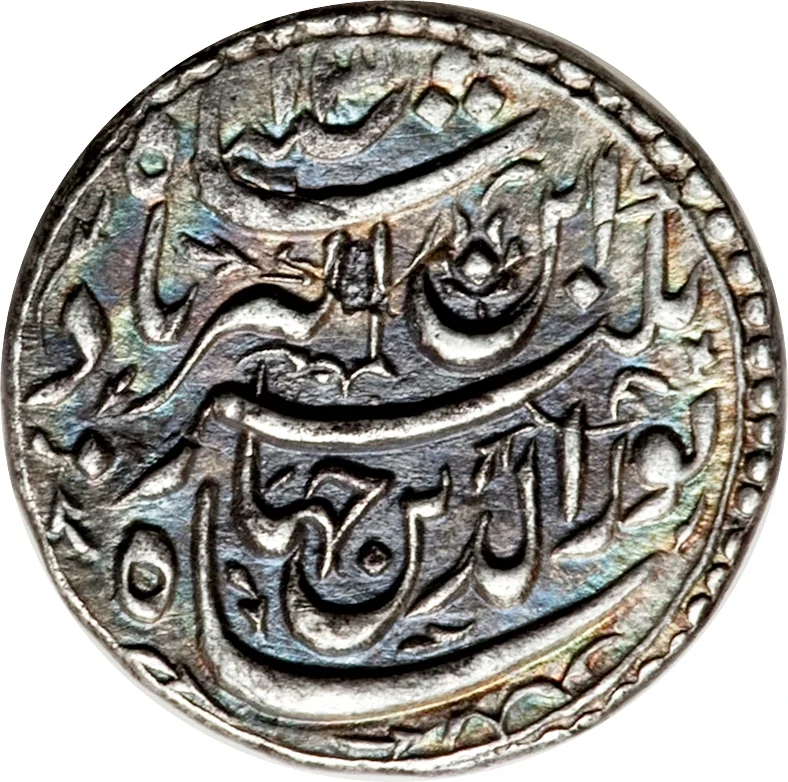
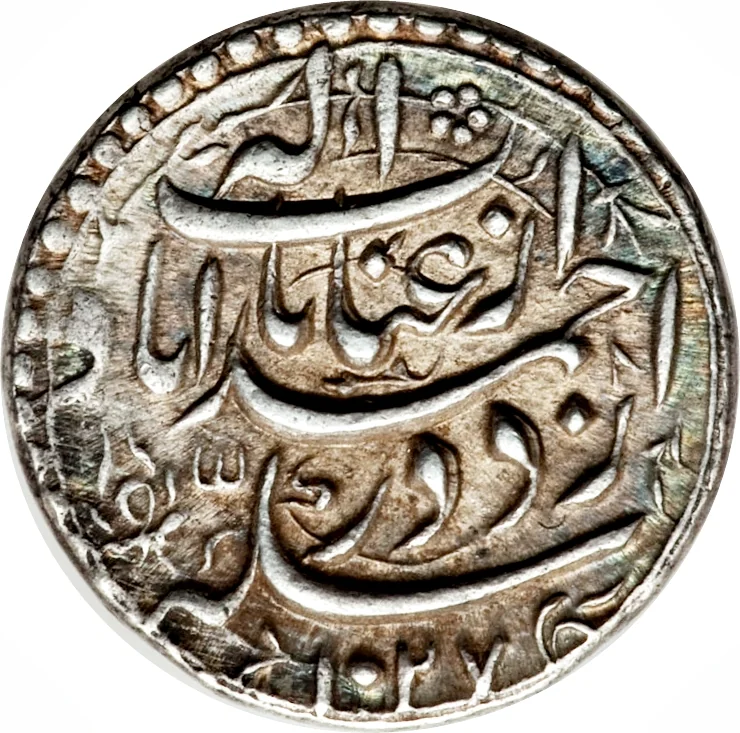
1 Rupee – Mughal Empire
India
Context
Years: 1608–1624
Country: India 
Issuer: Mughal Empire
Ruler: Jahangir I
Currency:
(1540—1842)
Demonetized: Yes
Material
References
KM: #Click to copy to clipboard149.4
Numista: #62188
Value
Bullion value: $33.09
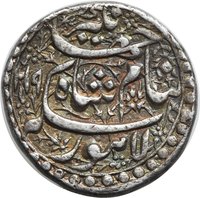
Obverse
Reverse
Edge
Mintings
| Year | Mint Mark | Mintage | Quality | Collection |
|---|---|---|---|---|
| 1608 | — | — | ||
| 1611 | — | — | ||
| 1613 | — | — | ||
| 1618 | — | — | ||
| 1619 | — | — | ||
| 1620 | — | — | ||
| 1621 | — | — | ||
| 1622 | — | — | ||
| 1623 | — | — | ||
| 1624 | — | — |
Historical background
In 1608, the Mughal Empire's currency system under Emperor Jahangir was a sophisticated and highly standardized bi-metallic structure, crucial for administering a vast and economically vibrant realm. The foundation was the silver rupee (often called the rupaiya), the primary coin for large-scale trade and state revenue, and the gold mohur, used for high-value transactions, hoarding, and ceremonial purposes. These coins were renowned for their consistent purity and weight, minted with strict imperial supervision across a network of mints (dar al-zarb), which fostered immense trust in Mughal currency both domestically and in international markets from the Persian Gulf to Southeast Asia.
The daily economic life of the majority, however, revolved around copper dam. This was the essential fractional currency, with 40 dams officially equaling one silver rupee, used for local bazaar transactions, wages, and small-scale taxation. The stability of this system in 1608 was a direct legacy of the fiscal reforms of Emperor Akbar, who had meticulously standardized weights, designs, and minting protocols. Coins bore Persian inscriptions, including the ruler's name and the mint city, serving as tools of imperial propaganda as well as commerce. The widespread acceptance of these coins facilitated a unified economic space, smoothing trade from Bengal to Kabul.
However, this system faced underlying pressures. The empire's expansion and lavish court expenditure created a constant demand for precious metals, particularly silver, which was not mined in significant quantities within India. This made the currency system dependent on a steady influx of bullion, primarily from the New World via European trade, which flowed into the empire in exchange for textiles and spices. Any disruption to this flow could cause scarcity. Furthermore, while the imperial coinage was dominant, older regional currencies and barter still persisted in remote areas, indicating the limits of total monetary unification in such a diverse and extensive empire.
The daily economic life of the majority, however, revolved around copper dam. This was the essential fractional currency, with 40 dams officially equaling one silver rupee, used for local bazaar transactions, wages, and small-scale taxation. The stability of this system in 1608 was a direct legacy of the fiscal reforms of Emperor Akbar, who had meticulously standardized weights, designs, and minting protocols. Coins bore Persian inscriptions, including the ruler's name and the mint city, serving as tools of imperial propaganda as well as commerce. The widespread acceptance of these coins facilitated a unified economic space, smoothing trade from Bengal to Kabul.
However, this system faced underlying pressures. The empire's expansion and lavish court expenditure created a constant demand for precious metals, particularly silver, which was not mined in significant quantities within India. This made the currency system dependent on a steady influx of bullion, primarily from the New World via European trade, which flowed into the empire in exchange for textiles and spices. Any disruption to this flow could cause scarcity. Furthermore, while the imperial coinage was dominant, older regional currencies and barter still persisted in remote areas, indicating the limits of total monetary unification in such a diverse and extensive empire.

💎 Extremely Rare