

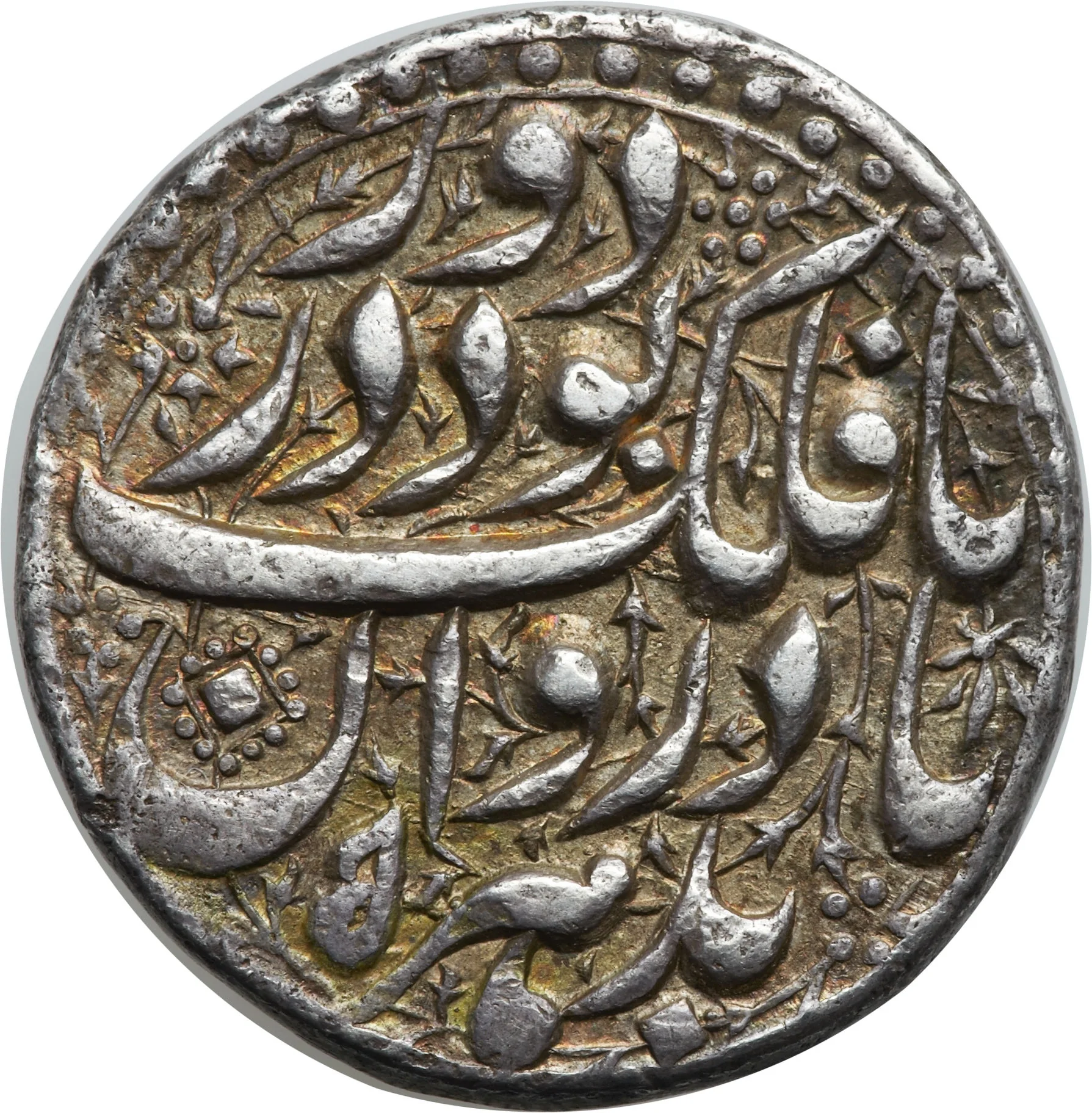
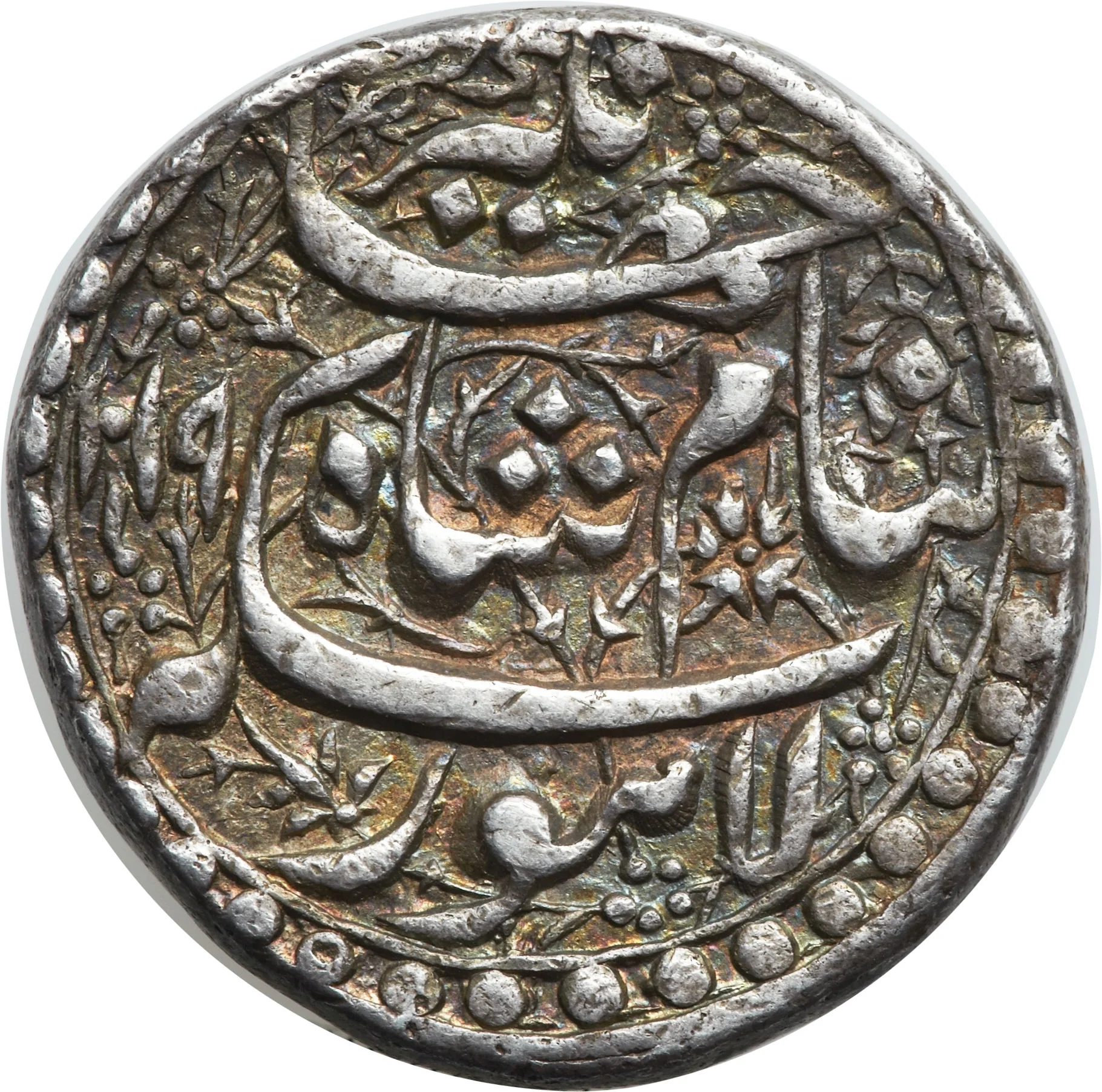
1 Rupee – Mughal Empire
India
Context
Years: 1609–1611
Country: India 
Issuer: Mughal Empire
Ruler: Jahangir I
Currency:
(1540—1842)
Demonetized: Yes
References
KM: #Click to copy to clipboard158.5
Numista: #50463
Value
Bullion value: $41.65
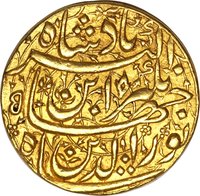
Obverse
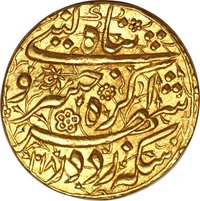
Reverse
Edge
Mintings
| Year | Mint Mark | Mintage | Quality | Collection |
|---|---|---|---|---|
| 1609 | — | — | ||
| 1610 | — | — | ||
| 1611 | — | — |
Historical background
In 1609, the Mughal Empire's currency system under Emperor Jahangir was a robust and highly standardized bimetallic system, inherited and refined from his father, Akbar. The empire operated on a trimetallic basis in practice, with the silver rupee as the primary unit of account and the most important coin for large-scale trade and state revenue. It was supplemented by the gold mohur, used for hoarding, high-value transactions, and gifts, and the copper dam, the everyday currency for local markets and petty trade. The state maintained strict control over mints (dar-ul-zarb), ensuring coins had high metallic purity and uniform weight, which fostered immense confidence in Mughal currency across South Asia and in international markets.
This monetary stability was a direct pillar of the empire's economic strength, facilitating both an immense land revenue system (collected largely in cash) and flourishing commerce. The standardized rupee allowed for efficient taxation and payment to the vast military and administrative machinery. Furthermore, the period saw increasing integration into the global economy, with Mughal rupees becoming a preferred medium for European trading companies like the English East India Company, which had just established its first factory at Surat in 1608. The influx of American and Japanese silver into India via trade balanced exports of textiles and spices, ensuring a steady supply of bullion for coinage.
However, 1609 fell within a period of subtle transition. While the system was at its peak, Jahangir's personal interest in numismatics soon led to experimental and commemorative coin issues, such as those featuring zodiac signs. More significantly, the steady arrival of European traders, who primarily paid for goods in silver, was beginning to deepen the empire's integration into a global silver circuit. This reliance on imported bullion would later become a vulnerability, but in 1609, it simply underscored the rupee's dominance and the empire's position as a colossal economic engine with a currency trusted from the ports of Gujarat to the markets of Samarkand.
This monetary stability was a direct pillar of the empire's economic strength, facilitating both an immense land revenue system (collected largely in cash) and flourishing commerce. The standardized rupee allowed for efficient taxation and payment to the vast military and administrative machinery. Furthermore, the period saw increasing integration into the global economy, with Mughal rupees becoming a preferred medium for European trading companies like the English East India Company, which had just established its first factory at Surat in 1608. The influx of American and Japanese silver into India via trade balanced exports of textiles and spices, ensuring a steady supply of bullion for coinage.
However, 1609 fell within a period of subtle transition. While the system was at its peak, Jahangir's personal interest in numismatics soon led to experimental and commemorative coin issues, such as those featuring zodiac signs. More significantly, the steady arrival of European traders, who primarily paid for goods in silver, was beginning to deepen the empire's integration into a global silver circuit. This reliance on imported bullion would later become a vulnerability, but in 1609, it simply underscored the rupee's dominance and the empire's position as a colossal economic engine with a currency trusted from the ports of Gujarat to the markets of Samarkand.
✨ Legendary