

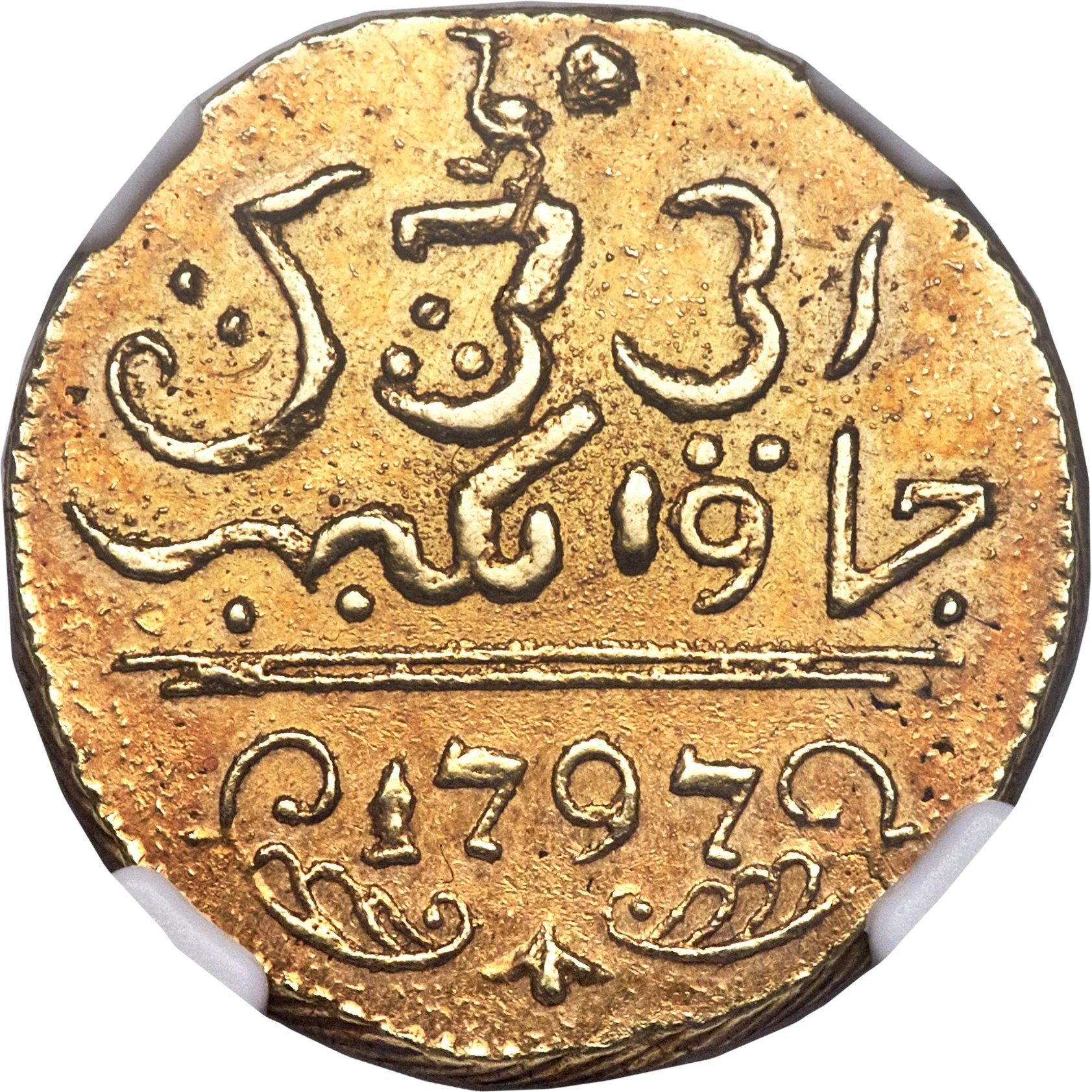
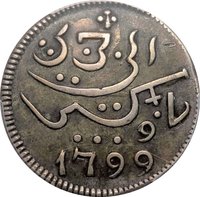
Obverse
Description:
Crude Arabic script, Gregorian date, mint mark.
Inscription:
إلى جزيرة
جوى الكبير
1797
جوى الكبير
1797
Script: Arabic
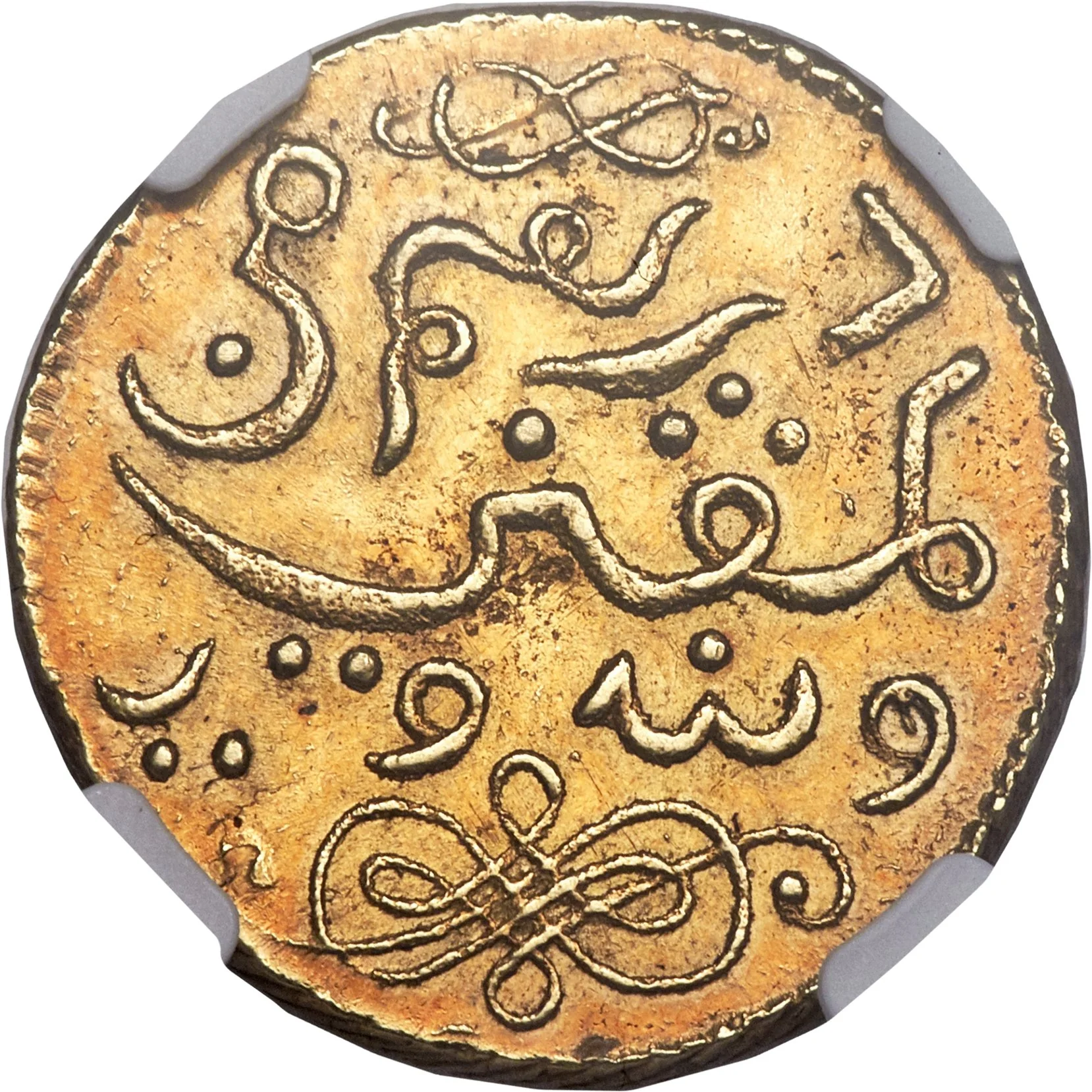
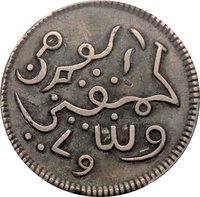
Reverse
Description:
Three lines of rough Arabic script.
Inscription:
درهام مين
كومباني
ولنداوي
كومباني
ولنداوي
Script: Arabic
Edge
Reeded
Mints
| Name | Mark |
|---|---|
| Batavia | — |
Mintings
| Year | Mint Mark | Mintage | Quality | Collection |
|---|---|---|---|---|
| 1783 | — | 3,822 | ||
| 1784 | — | 10,169 | ||
| 1796 | — | — | ||
| 1797 | — | — |
Historical background
In 1783, the currency situation in Java was characterised by a complex and often chaotic multiplicity of monetary systems, a direct legacy of its colonial history and vibrant trade. The island operated under a tri-metallic system where gold, silver, and copper coins of various origins circulated simultaneously. The most prestigious units were the Dutch silver rijksdaalder and the gold ducat, issued by the Vereenigde Oost-Indische Compagnie (VOC). However, these coexisted with a plethora of other coins: Spanish American silver reales (pieces of eight), Japanese koban, Chinese copper cash, and locally produced duit coins. This proliferation created significant challenges for commerce, as merchants and officials constantly had to calculate exchange rates and assess the often-debased metal content of countless coin types.
The root of the monetary disorder lay in the VOC's fiscal policies. Chronically short of specie (coined money) to finance its operations and trade, the Company repeatedly resorted to debasing the copper duit, the most common coin in everyday use. By reducing its silver content and weight, the VOC could mint more coins from the same amount of metal, generating short-term revenue but triggering inflation and a loss of public trust. Furthermore, to attract precious Spanish reals, the VOC set their official value artificially high, leading to Gresham's Law in practice: "bad" debased coins drove "good" full-weight silver coins out of circulation, as they were either hoarded or exported by traders seeking better value elsewhere.
Consequently, the economy suffered from severe instability and uncertainty. Prices were volatile, and the common Javanese population, conducting daily transactions in copper duiten, bore the brunt of the inflation. The chaotic system also hampered the VOC's own administration and tax collection, as it struggled to establish a reliable standard of value. By 1783, this monetary crisis was a symptomatic and contributing factor to the wider decline of the VOC, which would face bankruptcy just seventeen years later, underscoring how the state of the currency was inextricably linked to the political and economic health of the colony itself.
The root of the monetary disorder lay in the VOC's fiscal policies. Chronically short of specie (coined money) to finance its operations and trade, the Company repeatedly resorted to debasing the copper duit, the most common coin in everyday use. By reducing its silver content and weight, the VOC could mint more coins from the same amount of metal, generating short-term revenue but triggering inflation and a loss of public trust. Furthermore, to attract precious Spanish reals, the VOC set their official value artificially high, leading to Gresham's Law in practice: "bad" debased coins drove "good" full-weight silver coins out of circulation, as they were either hoarded or exported by traders seeking better value elsewhere.
Consequently, the economy suffered from severe instability and uncertainty. Prices were volatile, and the common Javanese population, conducting daily transactions in copper duiten, bore the brunt of the inflation. The chaotic system also hampered the VOC's own administration and tax collection, as it struggled to establish a reliable standard of value. By 1783, this monetary crisis was a symptomatic and contributing factor to the wider decline of the VOC, which would face bankruptcy just seventeen years later, underscoring how the state of the currency was inextricably linked to the political and economic health of the colony itself.

✨ Legendary