

Switzerland

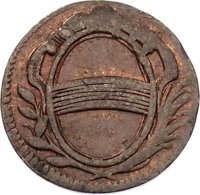
Obverse
Description:
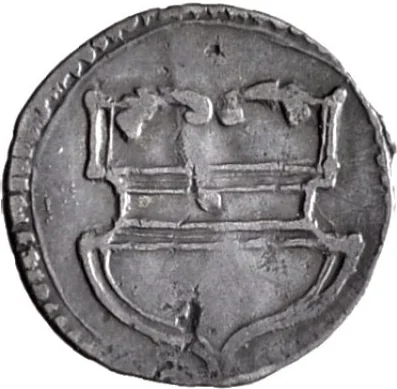
Shield with crossed arms, central dot, and two top branches.
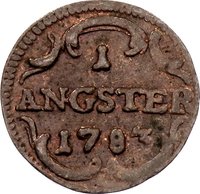
Reverse
Edge
Mintings
| Year | Mint Mark | Mintage | Quality | Collection |
|---|---|---|---|---|
| 1746 | — | — | ||
| 1747 | — | — | ||
| 1748 | — | — | ||
| 1750 | — | — | ||
| 1751 | — | — | ||
| 1752 | — | — | ||
| 1756 | — | — | ||
| 1757 | — | — | ||
| 1761 | — | — | ||
| 1762 | — | — | ||
| 1764 | — | — | ||
| 1766 | — | — | ||
| 1767 | — | — |
Historical background
In 1746, Zug, as a member of the Old Swiss Confederacy, operated within a complex and fragmented monetary landscape. The canton did not mint its own coins but relied heavily on a circulation of foreign currencies. The most important of these was the Batzen, a silver coin originally from Bern, with 4 Kreuzer to a Batzen and 16 Batzen to a Gulden (or Florin). However, the daily reality was one of monetary confusion, with coins from neighbouring Swiss cantons (like Zurich's and Lucerne's), various South German states, French Livres, and Italian Lire all circulating simultaneously. This created a constant need for exchange and valuation, making trade and accounting a cumbersome process.
The primary challenge was the varying and often debased quality of these coins. Different issuers reduced the silver content of their coins to finance local expenditures, a practice known as "coinage deterioration." This meant that a Batzen from one region might have less intrinsic silver value than a Batzen from another, even if they were nominally worth the same. For a small, trade-oriented canton like Zug, this instability was a significant economic hindrance, leading to uncertainty in contracts, prices, and tax collection. The local authorities issued official exchange rate tables (Münztafeln) to try to standardise values, but these were frequently updated, reflecting the ongoing fluctuation.
This unsatisfactory situation was part of the broader impetus for monetary reform that would culminate in the Helvetic Republic of 1798, which first attempted a unified Swiss currency. In 1746, however, Zug's economy navigated this patchwork system through the expertise of local merchants and money changers. The currency situation underscored the Confederacy's political decentralisation, where economic coordination between cantons was limited, leaving local markets to manage the practical burdens of a disjointed monetary system.
The primary challenge was the varying and often debased quality of these coins. Different issuers reduced the silver content of their coins to finance local expenditures, a practice known as "coinage deterioration." This meant that a Batzen from one region might have less intrinsic silver value than a Batzen from another, even if they were nominally worth the same. For a small, trade-oriented canton like Zug, this instability was a significant economic hindrance, leading to uncertainty in contracts, prices, and tax collection. The local authorities issued official exchange rate tables (Münztafeln) to try to standardise values, but these were frequently updated, reflecting the ongoing fluctuation.
This unsatisfactory situation was part of the broader impetus for monetary reform that would culminate in the Helvetic Republic of 1798, which first attempted a unified Swiss currency. In 1746, however, Zug's economy navigated this patchwork system through the expertise of local merchants and money changers. The currency situation underscored the Confederacy's political decentralisation, where economic coordination between cantons was limited, leaving local markets to manage the practical burdens of a disjointed monetary system.
✨ Legendary