

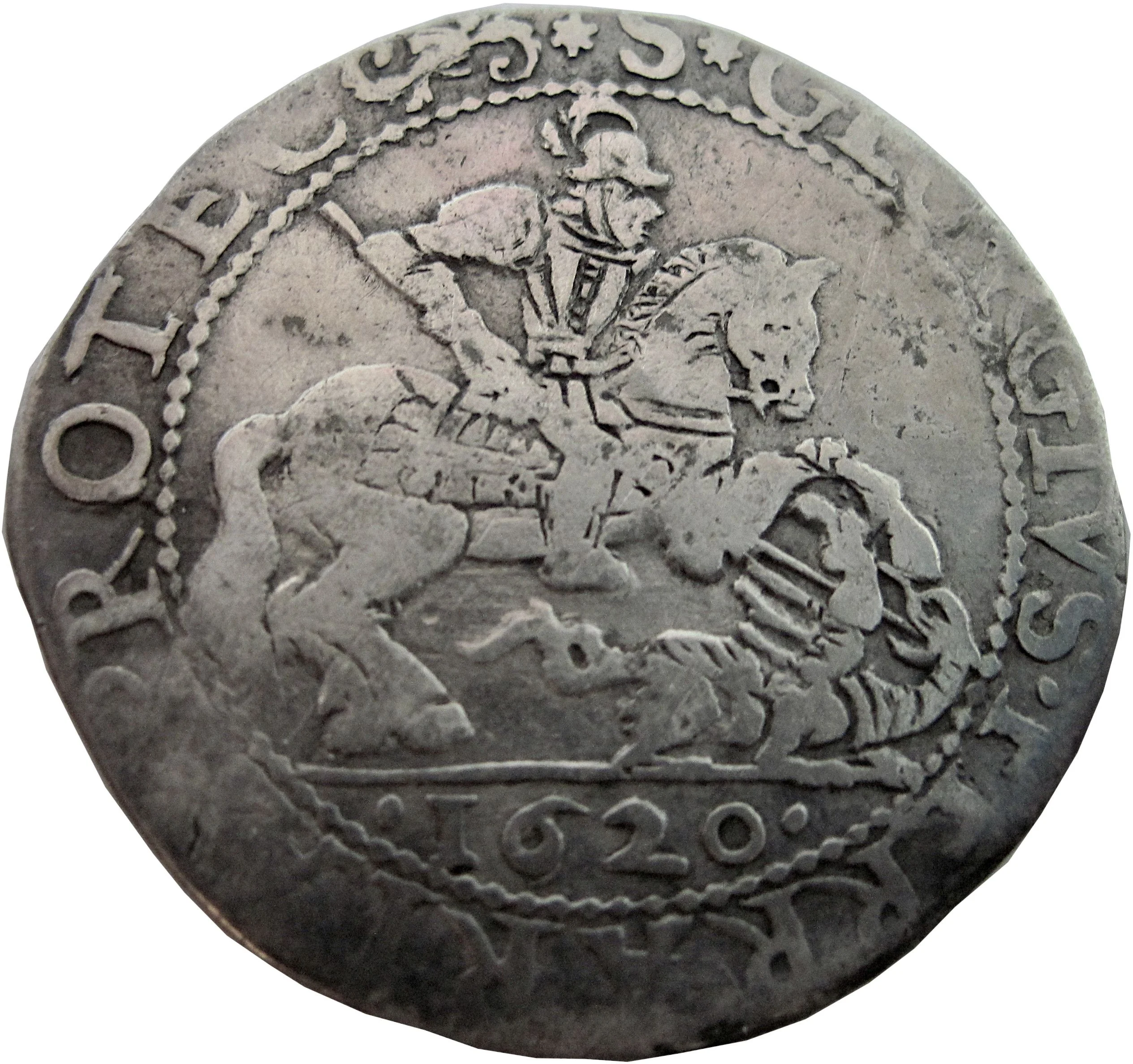

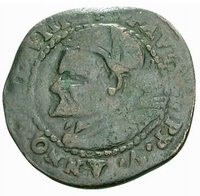
Obverse
Description:
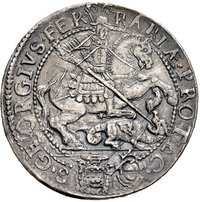
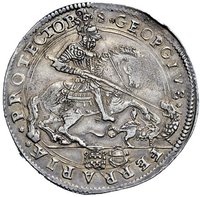
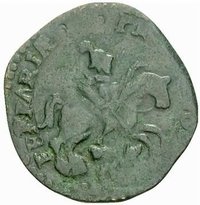
St. George slaying the dragon, date beneath.
Inscription:
GEORGIVS·FERRARIÆ·PROTECTOR·S·
·1620·
·1620·
Script: Latin
Reverse
Edge
Mints
| Name | Mark |
|---|---|
| Ferrara | — |
Mintings
| Year | Mint Mark | Mintage | Quality | Collection |
|---|---|---|---|---|
| 1619 | — | — | ||
| 1620 | — | — | ||
| 1621 | — | — |
Historical background
In 1619, Ferrara existed in a state of monetary complexity and transition, shaped by its political status within the Papal States. Since the devolution of the Duchy of Ferrara to the Papacy in 1598, the city had lost its independent minting authority. Consequently, the local economy operated with a mixture of circulating coins, primarily those issued by the Papal Mint in Rome, alongside a persistent flow of foreign currencies from neighboring Italian states like Venice (ducats), Florence (florins), and Milan. This created a constant challenge of exchange rates and valuation, as the intrinsic silver or gold content of these coins varied.
The primary unit of account was the lira, divided into 20 soldi or 240 denari, but this was a notional value used for bookkeeping and contracts. Actual physical currency consisted of silver scudi and giulii from the Papal States, alongside smaller copper baiocchi and quattrini for everyday transactions. A significant problem was the chronic shortage of small-denomination coinage, which stifled local trade and market activity. Furthermore, the debasement of coinage by various Italian states and the influx of low-quality foreign copper coins led to frequent ordinances from the papal legate attempting to fix exchange rates and prohibit certain currencies, with limited success.
Thus, the currency situation in 1619 Ferrara was one of fragmented circulation and monetary instability. The city’s economy was constrained by its lack of sovereign minting power, forced to navigate a marketplace flooded with diverse and fluctuating foreign coins while grappling with a crippling lack of reliable small change. This environment created fertile ground for money changers (bancherotti) and exacerbated tensions between merchants, consumers, and the papal authorities struggling to impose order from Rome.
The primary unit of account was the lira, divided into 20 soldi or 240 denari, but this was a notional value used for bookkeeping and contracts. Actual physical currency consisted of silver scudi and giulii from the Papal States, alongside smaller copper baiocchi and quattrini for everyday transactions. A significant problem was the chronic shortage of small-denomination coinage, which stifled local trade and market activity. Furthermore, the debasement of coinage by various Italian states and the influx of low-quality foreign copper coins led to frequent ordinances from the papal legate attempting to fix exchange rates and prohibit certain currencies, with limited success.
Thus, the currency situation in 1619 Ferrara was one of fragmented circulation and monetary instability. The city’s economy was constrained by its lack of sovereign minting power, forced to navigate a marketplace flooded with diverse and fluctuating foreign coins while grappling with a crippling lack of reliable small change. This environment created fertile ground for money changers (bancherotti) and exacerbated tensions between merchants, consumers, and the papal authorities struggling to impose order from Rome.
✨ Legendary