

4 gold ecus – Comtat Venaissin
Add to wishlist
Vatican City
Context
Years: 1637–1644
Country: Vatican City
Issuer: Comtat Venaissin
Ruler: Urban VIII
Currency:
Demonetized: Yes
Material
References
KM: #
Numista: #117926
Value
Bullion value: $2149.10
Obverse
Description:
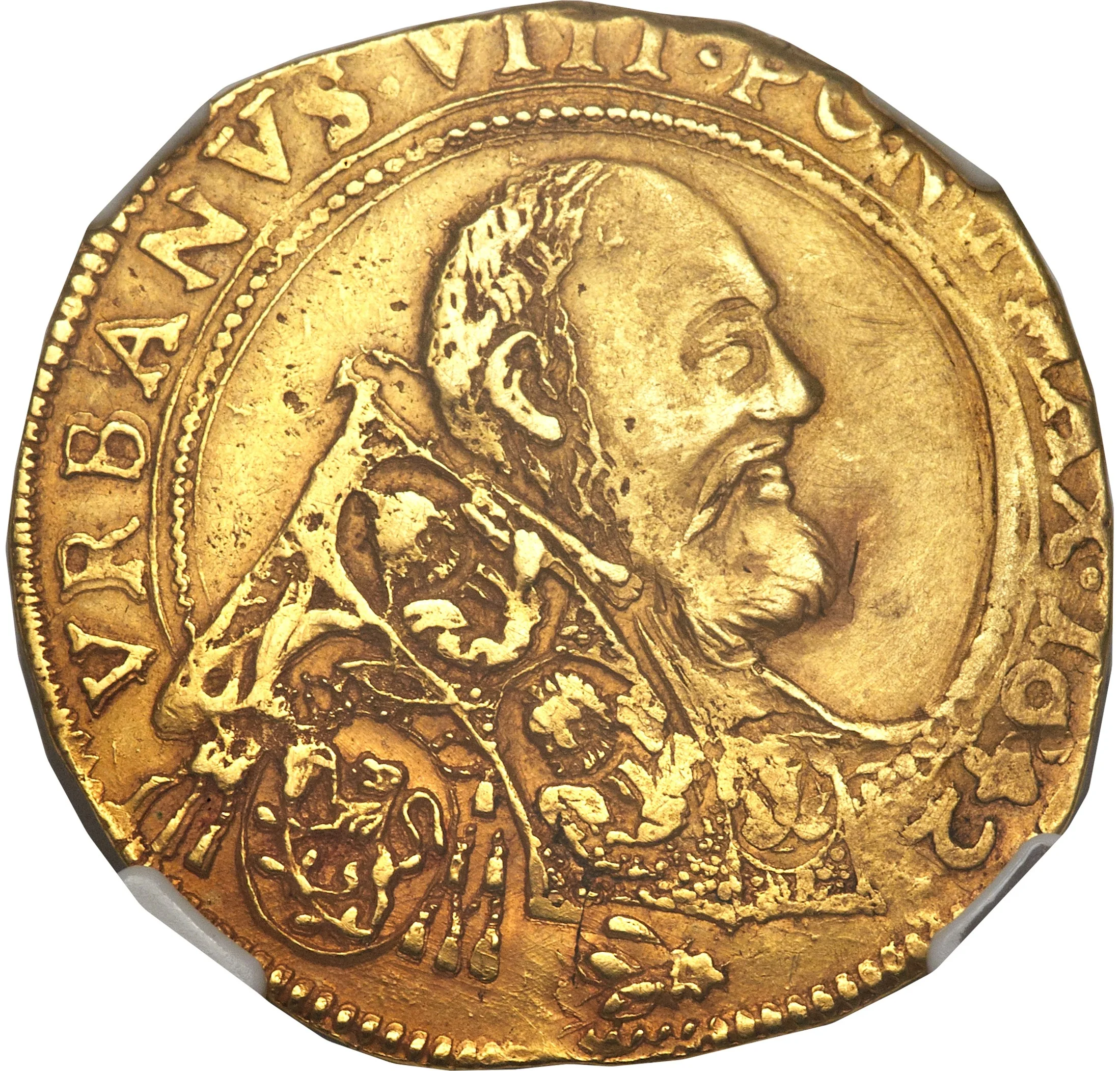
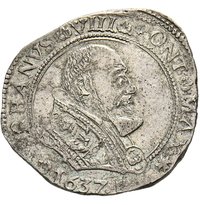
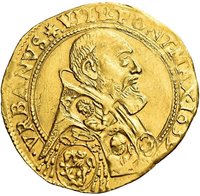
Right-facing bust in beaded circle. Below, small Sforza shield and bee.
Inscription:
VRBANVS·VIII·PONT·MAX·1642
Script: Latin
Reverse
Description:
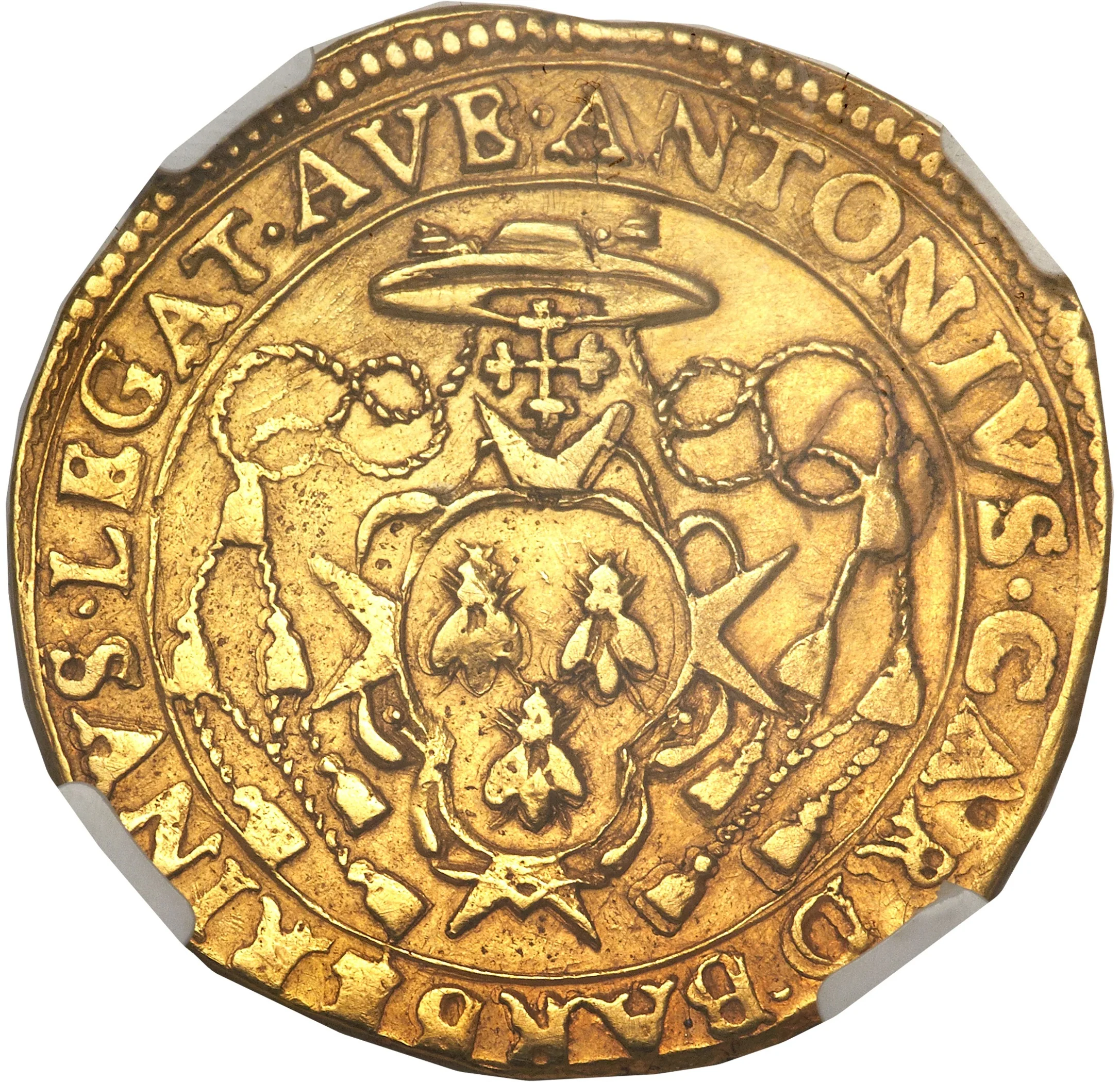
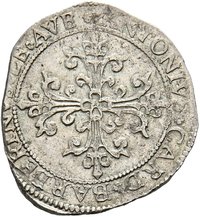
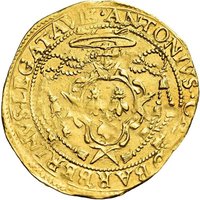
Ornate arms with a Maltese cross, beneath a cardinal's hat.
Inscription:
ANTONIVS CARD BARBERINVS·LEGAT·AVE·
Script: Latin
Edge
Mints
| Name | Mark |
|---|---|
| Avignon | — |
Mintings
| Year | Mint Mark | Mintage | Quality | Collection |
|---|---|---|---|---|
| 1637 | — | — | ||
| 1638 | — | — | ||
| 1639 | — | — | ||
| 1640 | — | — | ||
| 1641 | — | — | ||
| 1642 | — | — | ||
| 1643 | — | — | ||
| 1644 | — | — |
Historical background
In 1637, the Comtat Venaissin, a Papal territory enclaved within the Kingdom of France, operated under a complex and often chaotic monetary system. As a possession of the Holy See, its official currency was the Papal scudo and its subdivisions. However, its geographical position and economic ties meant that a multitude of foreign coins, primarily French livres, écus, and deniers, but also Spanish reales and coins from other Italian states, circulated freely and were essential for daily trade. This created a persistent environment of bimetallic fluctuation and exchange rate uncertainty, as the value of these coins relative to each other was subject to constant market pressures and official proclamations.
The monetary situation was further strained by the wider European context of the Thirty Years' War (1618-1648) and France's direct involvement against Habsburg powers. While the Comtat was officially neutral, it was deeply affected by the economic and military policies of its powerful neighbor. The French crown, frequently in need of specie to fund its war efforts, often manipulated currency values and restricted the flow of precious metals. This led to recurring shortages of sound coinage within the Comtat, encouraging the circulation of debased and counterfeit coins, which eroded trust in the monetary system and provoked price inflation for essential goods.
Local authorities in Avignon and Carpentras responded with a stream of ordinances, attempting to fix exchange rates and mandate the acceptance of certain coins at specified values. These edicts, however, were largely reactive and often ineffective. They could not control the market forces driven by regional trade or the monetary policies of neighboring states. Consequently, the currency situation in 1637 was characterized by a fragile duality: an official Papal standard existing alongside a de facto multi-currency marketplace, all set against a backdrop of wartime economic pressure that fostered instability, confusion, and frequent grievance among merchants and the populace.
The monetary situation was further strained by the wider European context of the Thirty Years' War (1618-1648) and France's direct involvement against Habsburg powers. While the Comtat was officially neutral, it was deeply affected by the economic and military policies of its powerful neighbor. The French crown, frequently in need of specie to fund its war efforts, often manipulated currency values and restricted the flow of precious metals. This led to recurring shortages of sound coinage within the Comtat, encouraging the circulation of debased and counterfeit coins, which eroded trust in the monetary system and provoked price inflation for essential goods.
Local authorities in Avignon and Carpentras responded with a stream of ordinances, attempting to fix exchange rates and mandate the acceptance of certain coins at specified values. These edicts, however, were largely reactive and often ineffective. They could not control the market forces driven by regional trade or the monetary policies of neighboring states. Consequently, the currency situation in 1637 was characterized by a fragile duality: an official Papal standard existing alongside a de facto multi-currency marketplace, all set against a backdrop of wartime economic pressure that fostered instability, confusion, and frequent grievance among merchants and the populace.
✨ Legendary