

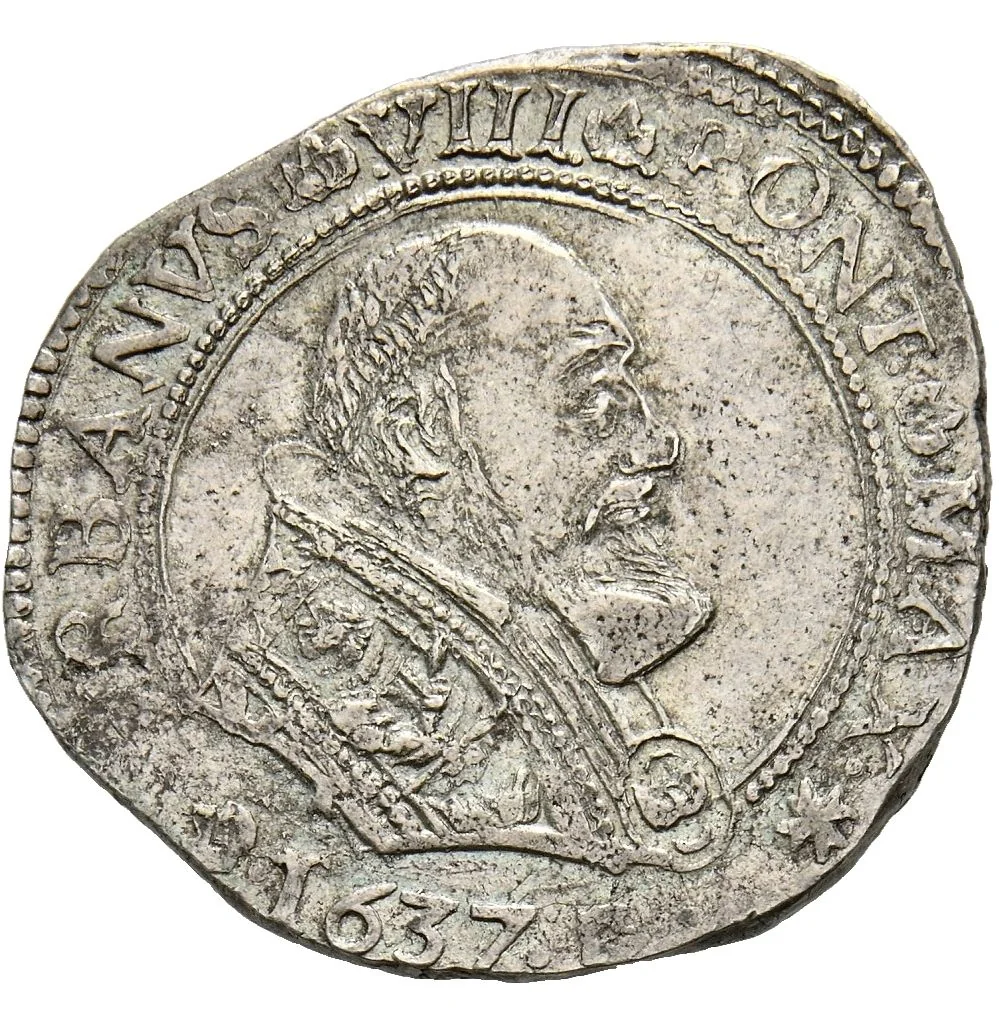
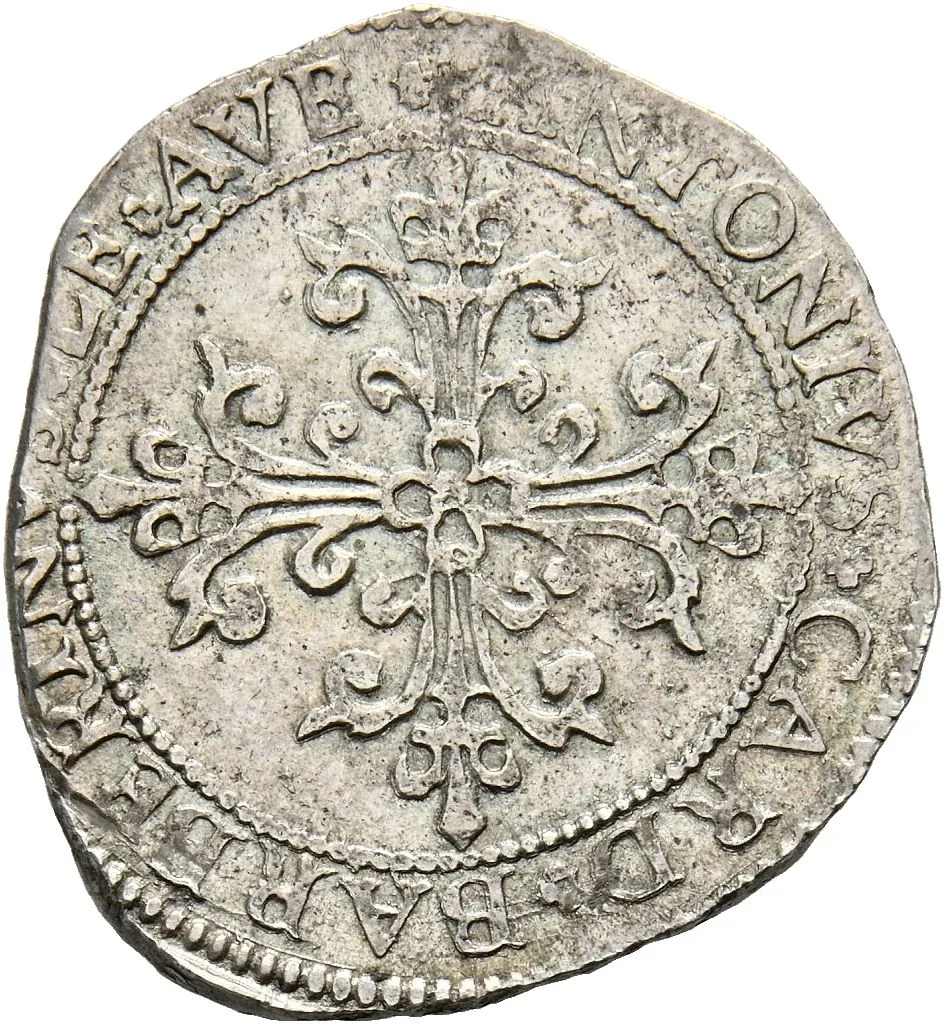
½ Franc – Comtat Venaissin
Vatican City
Context
Years: 1636–1642
Country: Vatican City 
Issuer: Comtat Venaissin
Ruler: Urban VIII
Currency:
Demonetized: Yes
Material
References
KM: #Click to copy to clipboard57
Numista: #300479
Value
Bullion value: $18.62
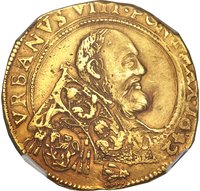
Obverse
Description:
Bust right. Cope with Saint Peter.
Inscription:
VRBANVS VIII PONT MAX
1637
1637
Script: Latin
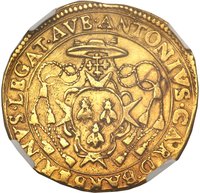
Reverse
Edge
Mints
| Name | Mark |
|---|---|
| Avignon | — |
Mintings
| Year | Mint Mark | Mintage | Quality | Collection |
|---|---|---|---|---|
| 1636 | — | — | ||
| 1637 | — | — | ||
| 1638 | — | — | ||
| 1639 | — | — | ||
| 1640 | — | — | ||
| 1641 | — | — | ||
| 1642 | — | — |
Historical background
In 1636, the currency situation in the Comtat Venaissin—a Papal territory enclaved within the Kingdom of France—was characterized by a complex and often chaotic monetary duality. Officially, the region operated under the Papal monetary system, with the Roman scudo and giulio as the standard coins. However, due to its geographic and economic entanglement with France, a vast quantity of French coinage, particularly the livre tournois, écus, and deniers, circulated daily. This created a persistent environment of bimetallism where two official systems competed, requiring constant official tariffs (exchange rates) to be set between Papal and French units, which were prone to fluctuation and manipulation.
The primary challenge stemmed from the Comtat's economic reality as a small, trade-dependent region. Its merchants conducted the bulk of their business with neighboring French provinces like Provence and Dauphiné, making French currency the practical medium for most commercial transactions. This led to frequent shortages of small-denomination coins for everyday market use, while the valuation of larger silver and gold coins from various states (France, Papal, Spanish, Savoyard) shifted with international metallic flows and political pressures. Local authorities in Avignon and Carpentras repeatedly issued ordinances to fix exchange rates and combat the clipping and counterfeiting of coins, which were rampant problems that eroded public trust.
Furthermore, the year 1636 fell within the intense period of the Thirty Years' War and France's direct war with Spain (from 1635), which placed severe strain on the monetary stability of all European regions. While the Comtat, as a neutral Papal state, was spared direct military conflict, it suffered from inflationary pressures and speculative currency flows common to wartime economies. The French monarchy, under financial duress, frequently altered the value of its own coinage, causing immediate and disruptive ripple effects just across the border in the Comtat. Thus, the monetary landscape was one of administrative struggle to maintain order against powerful market forces and geopolitical currents far beyond local control.
The primary challenge stemmed from the Comtat's economic reality as a small, trade-dependent region. Its merchants conducted the bulk of their business with neighboring French provinces like Provence and Dauphiné, making French currency the practical medium for most commercial transactions. This led to frequent shortages of small-denomination coins for everyday market use, while the valuation of larger silver and gold coins from various states (France, Papal, Spanish, Savoyard) shifted with international metallic flows and political pressures. Local authorities in Avignon and Carpentras repeatedly issued ordinances to fix exchange rates and combat the clipping and counterfeiting of coins, which were rampant problems that eroded public trust.
Furthermore, the year 1636 fell within the intense period of the Thirty Years' War and France's direct war with Spain (from 1635), which placed severe strain on the monetary stability of all European regions. While the Comtat, as a neutral Papal state, was spared direct military conflict, it suffered from inflationary pressures and speculative currency flows common to wartime economies. The French monarchy, under financial duress, frequently altered the value of its own coinage, causing immediate and disruptive ripple effects just across the border in the Comtat. Thus, the monetary landscape was one of administrative struggle to maintain order against powerful market forces and geopolitical currents far beyond local control.
✨ Legendary