

2 Gold Ecu – Comtat Venaissin
Vatican City
Context
Years: 1639–1640
Country: Vatican City 
Issuer: Comtat Venaissin
Ruler: Urban VIII
Currency:
Demonetized: Yes
Material
Diameter: 29 mm
Weight: 6.59 g
Gold weight: 6.50 g
Shape: Irregular round
Composition: 98.6% Gold
Magnetic: No
References
KM: #Click to copy to clipboard59
Numista: #365922
Value
Bullion value: $1083.12
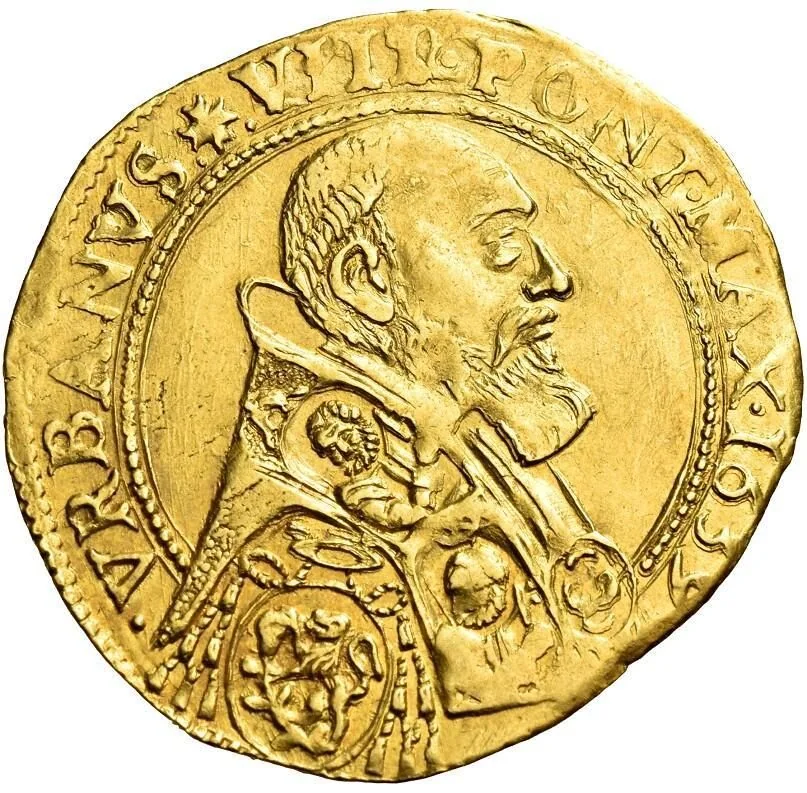
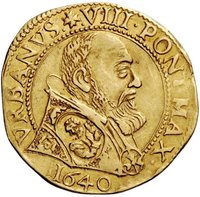
Obverse
Description:
Bust right; Sforza shield below.
Inscription:
VRBANVS · * · VIII · PONT · MAX · 1639
Script: Latin
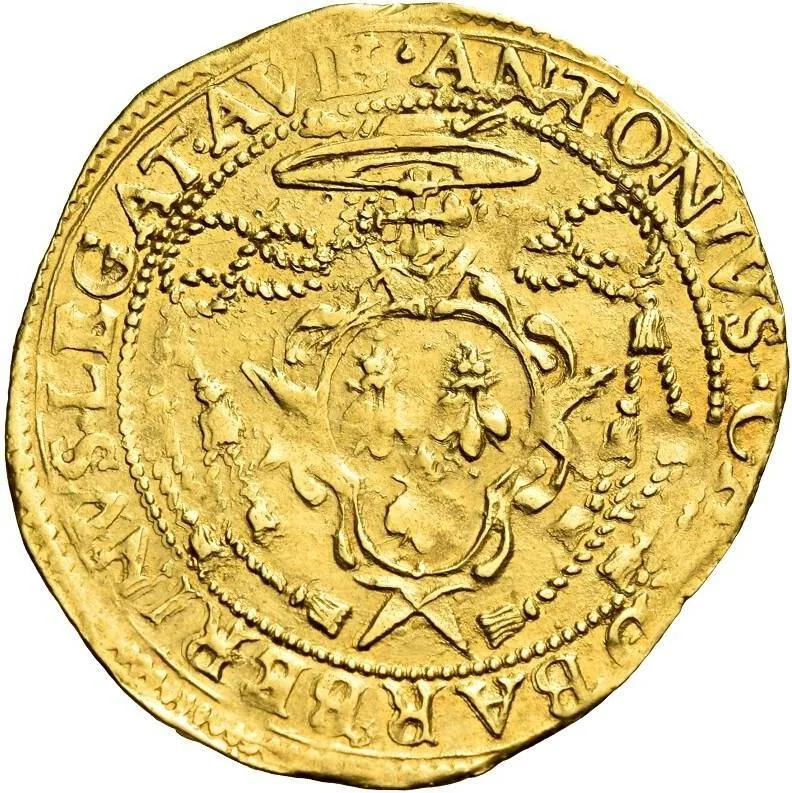
Reverse
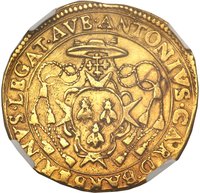
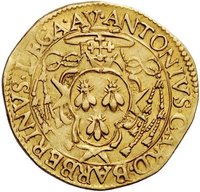
Description:
Cardinal's hat above ornate Legate arms.
Inscription:
ANTONIVS · CARD · BARBERINVS · LEGAT · AVE ·
Script: Latin
Edge
Mints
| Name | Mark |
|---|---|
| Avignon | — |
Mintings
| Year | Mint Mark | Mintage | Quality | Collection |
|---|---|---|---|---|
| 1639 | — | — | ||
| 1640 | — | — |
Historical background
In 1639, the currency situation in the Comtat Venaissin, a Papal territory enclaved within France, was characterized by a complex and often unstable monetary duality. The region officially operated on a bimetallic system based on the Papal écu (gold) and liard (copper), with values set by the vice-legate in Avignon. However, due to its geographical and economic integration with the Kingdom of France, French coinage—particularly the livre tournois, sol, and various silver écus—circulated widely and was essential for daily trade. This created a constant tension between official papal ordinances and the practical necessity of accepting and valuing foreign specie.
The period was one of significant monetary turbulence across Europe, driven by the Thirty Years' War and widespread currency debasements. France, under Louis XIII and Cardinal Richelieu, had repeatedly manipulated its coinage to fund military campaigns, leading to inflation and a flood of undervalued or suspect coins. These destabilized French currencies inevitably spilled into the Comtat, undermining local monetary authority. The papal administration faced the persistent challenge of issuing corrective tariffs and exchange rates to define the value of countless circulating French, Spanish, and Italian coins against the official papal standard, a process that was often reactive and struggled to keep pace with market realities.
Consequently, merchants and inhabitants of the Comtat Venaissin navigated a precarious financial environment. They had to be acutely aware of frequent proclamations adjusting exchange rates while also guarding against clipped, counterfeit, or overvalued coins. This monetary confusion risked discouraging commerce and creating arbitrary losses for those holding the wrong currency. Ultimately, the situation in 1639 highlighted the enclave's vulnerability to the fiscal policies of its powerful neighbor and the difficulty of maintaining sovereign monetary control within a fragmented and war-torn European economic landscape.
The period was one of significant monetary turbulence across Europe, driven by the Thirty Years' War and widespread currency debasements. France, under Louis XIII and Cardinal Richelieu, had repeatedly manipulated its coinage to fund military campaigns, leading to inflation and a flood of undervalued or suspect coins. These destabilized French currencies inevitably spilled into the Comtat, undermining local monetary authority. The papal administration faced the persistent challenge of issuing corrective tariffs and exchange rates to define the value of countless circulating French, Spanish, and Italian coins against the official papal standard, a process that was often reactive and struggled to keep pace with market realities.
Consequently, merchants and inhabitants of the Comtat Venaissin navigated a precarious financial environment. They had to be acutely aware of frequent proclamations adjusting exchange rates while also guarding against clipped, counterfeit, or overvalued coins. This monetary confusion risked discouraging commerce and creating arbitrary losses for those holding the wrong currency. Ultimately, the situation in 1639 highlighted the enclave's vulnerability to the fiscal policies of its powerful neighbor and the difficulty of maintaining sovereign monetary control within a fragmented and war-torn European economic landscape.
✨ Legendary