

½ speciedaler – Norway
Add to wishlist
Norway
Obverse
Description:
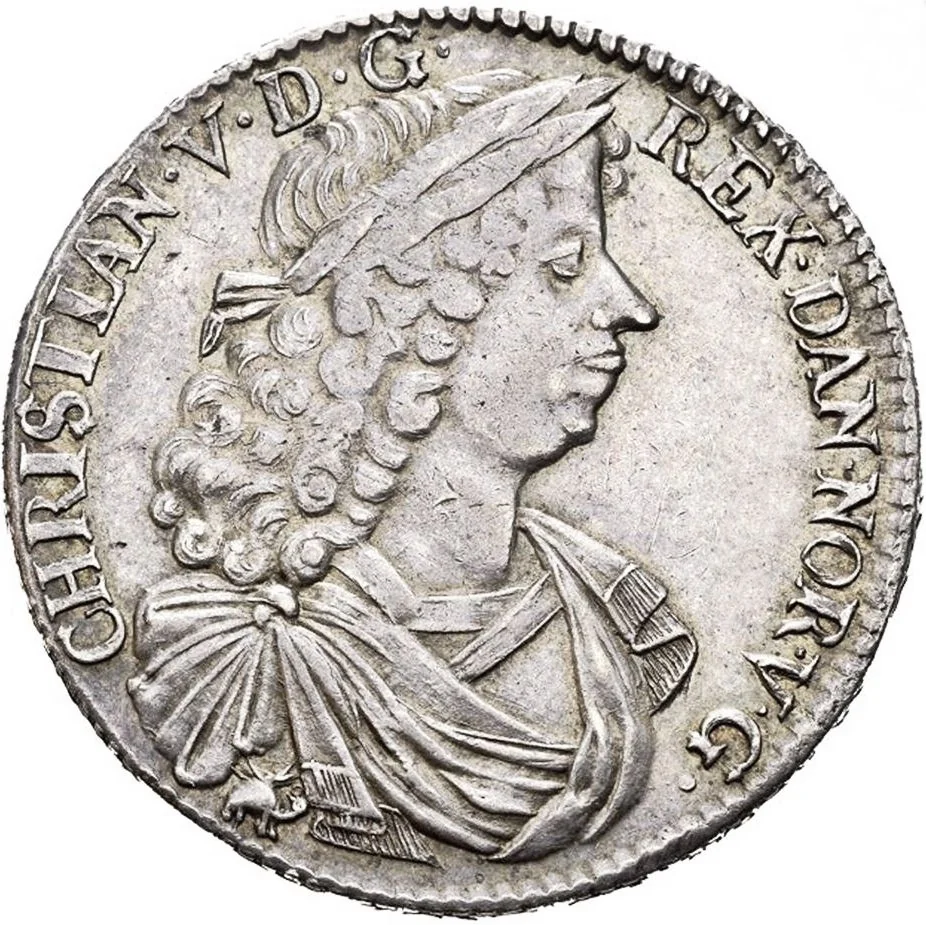
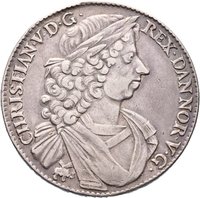
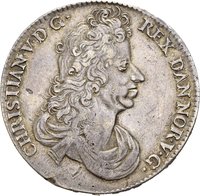
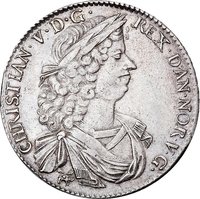
King Christian V’s draped right-facing bust with long hair, elephant insignia below, surrounded by inscription and a beaded rim.
Inscription:
CHRISTIAN·V·D·G· REX·DAN·NOR·V·G·
Script: Latin
Engraver: Caspar Barth
Reverse
Description:
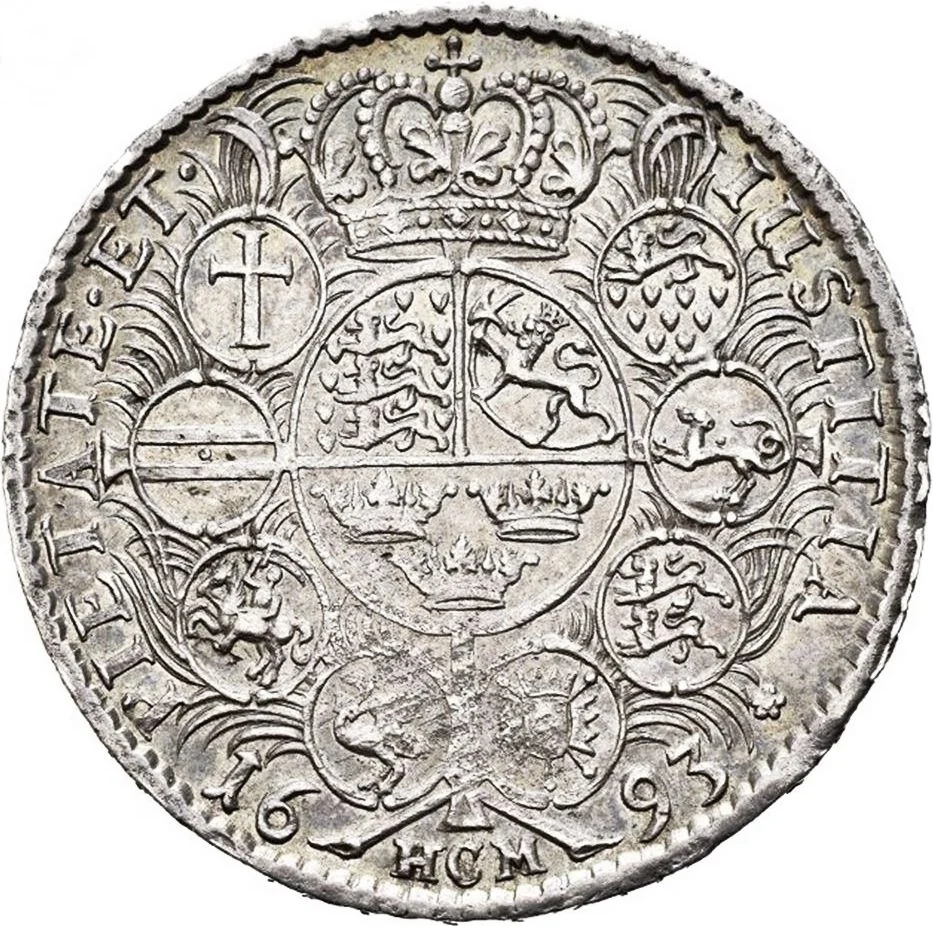
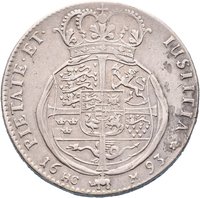
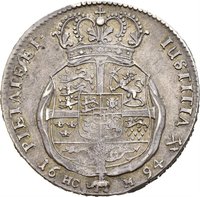
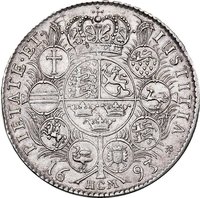
Shield with a cross, topped by a crown. The central shield features the Danish, Norwegian, and Swedish coats of arms (three lions, a lion with an axe, and three crowns). These are encircled by the arms of eight provinces on laurels: Goths, Wends, Schlesvig, Holstein, Stormarn, Ditmarsken, Oldenborg, and Delmenhorst. A dated inscription with the mintmaster's initials is at the bottom, all within a beaded rim.
Inscription:
PIETATE·ET· IUSTITIA ✿
16 HCM 93
16 HCM 93
Script: Latin
Engraver: Caspar Barth
Edge
Inscription. Crossed hammers mintmark after it.
Legend:
SAADAN NORDENS SKAT GUD GIEMTE TIL KONG CHRISTIAN DEND FEMTE ⚒
Mints
| Name | Mark |
|---|---|
| Norwegian Mint | — |
Mintings
| Year | Mint Mark | Mintage | Quality | Collection |
|---|---|---|---|---|
| 1693 | — | — |
Historical background
In 1693, Norway found itself in a precarious monetary crisis, a direct consequence of its political union with Denmark. As part of the Danish-Norwegian dual monarchy, Norway did not control its own currency; monetary policy was dictated from Copenhagen. To finance costly wars, particularly the Nine Years' War against Sweden, the Danish crown had resorted to repeatedly debasing the currency since the 1670s. This involved reducing the silver content in coins while ordering them to be accepted at their old, higher face value, a practice that flooded the kingdom with increasingly worthless money.
The situation reached a critical point in the early 1690s. Public trust in the currency collapsed, leading to rampant inflation and a breakdown in trade. Merchants and the public began to hoard older, purer silver coins, while refusing the new debased ones, or demanded exorbitant premiums for basic goods if paid with the official currency. This effective rejection of state money created a chaotic dual-system where the intrinsic metal value of a coin mattered more than its stamped denomination, crippling everyday commerce and state finances alike.
Recognizing the disaster, the Danish crown attempted a drastic reform. In 1695, King Christian V introduced a new currency system based on the rigsdaler, but the preparatory turmoil and failed policies were fully felt in 1693. The year thus represents the peak of a deep crisis, characterized by severe inflation, loss of confidence in the monetary system, and economic distress for the Norwegian population, all stemming from wartime fiscal pressures and the destabilizing practice of currency debasement.
The situation reached a critical point in the early 1690s. Public trust in the currency collapsed, leading to rampant inflation and a breakdown in trade. Merchants and the public began to hoard older, purer silver coins, while refusing the new debased ones, or demanded exorbitant premiums for basic goods if paid with the official currency. This effective rejection of state money created a chaotic dual-system where the intrinsic metal value of a coin mattered more than its stamped denomination, crippling everyday commerce and state finances alike.
Recognizing the disaster, the Danish crown attempted a drastic reform. In 1695, King Christian V introduced a new currency system based on the rigsdaler, but the preparatory turmoil and failed policies were fully felt in 1693. The year thus represents the peak of a deep crisis, characterized by severe inflation, loss of confidence in the monetary system, and economic distress for the Norwegian population, all stemming from wartime fiscal pressures and the destabilizing practice of currency debasement.
✨ Legendary