

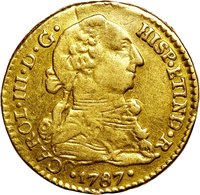
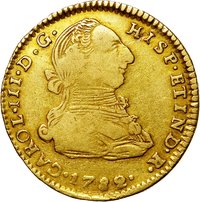
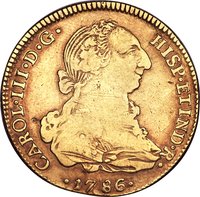
Obverse
Description:
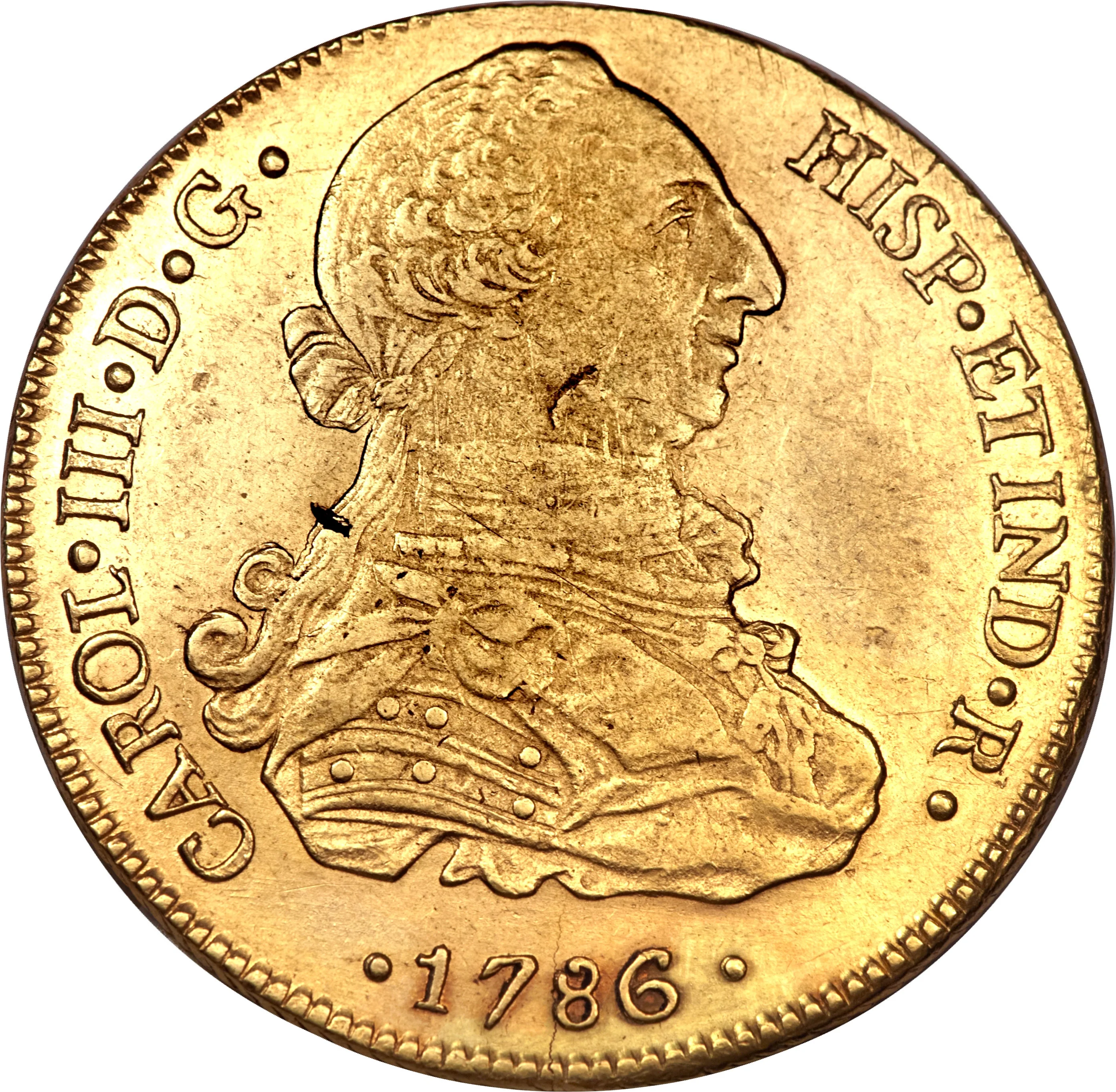
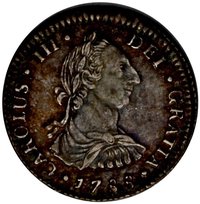
Carlos III bust right, date below.
Inscription:
CAROL III D G HISP ET IND R
Script: Latin
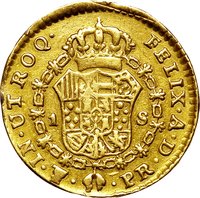
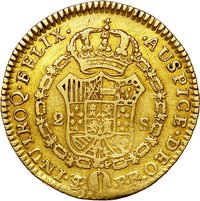
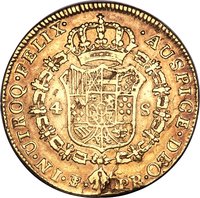
Reverse
Description:
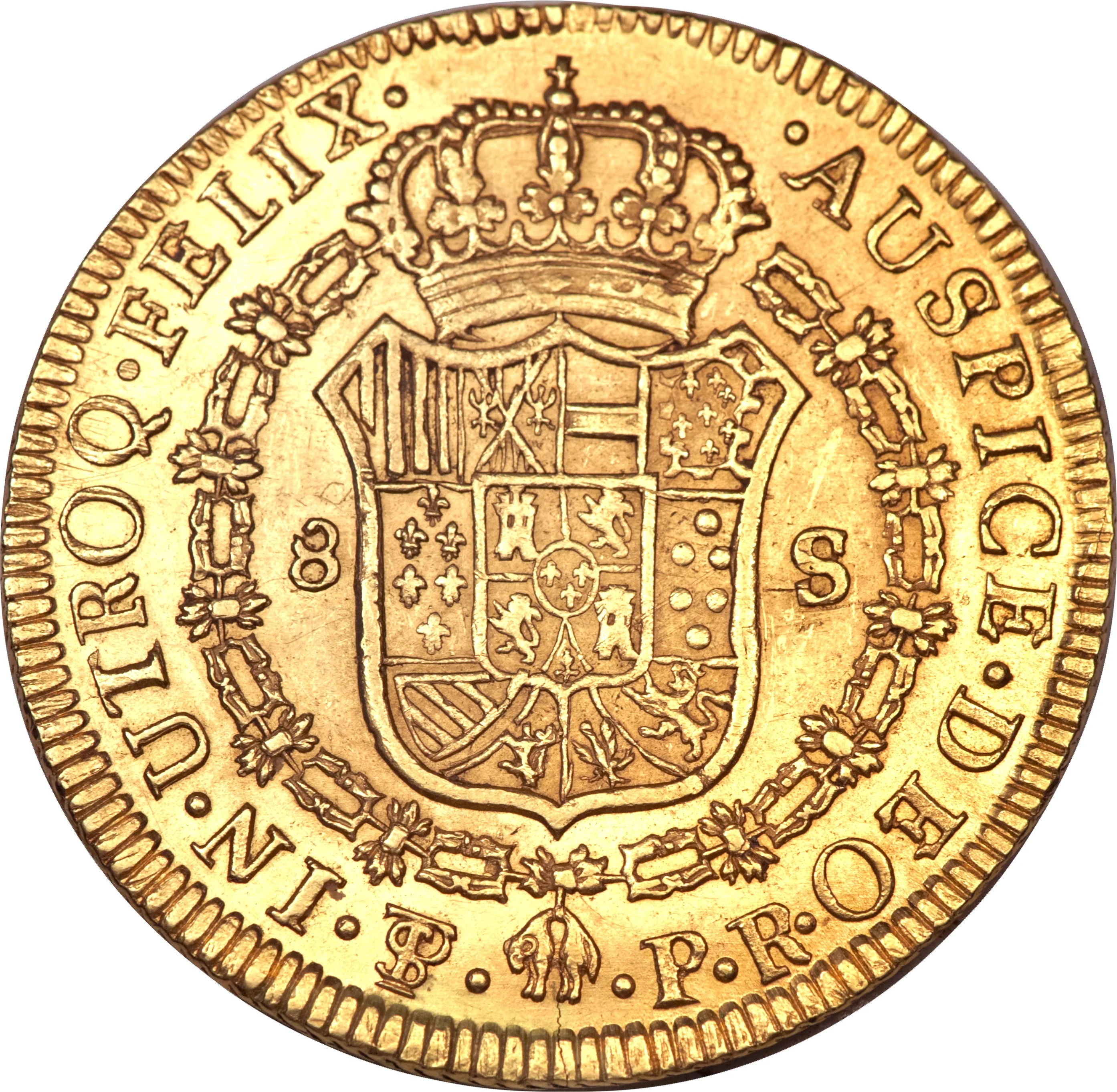
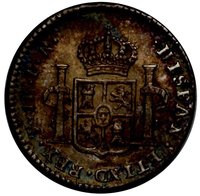
Arms crowned and flanked by the Golden Fleece collar.
Inscription:
IN UTROQ FELIX AUSPICE DEO
PTS P R
PTS P R
Script: Latin
Edge
Mints
| Name | Mark |
|---|---|
| Potosi | — |
Mintings
| Year | Mint Mark | Mintage | Quality | Collection |
|---|---|---|---|---|
| 1778 | PR | — | ||
| 1779 | PR | — | ||
| 1780 | PR | — | ||
| 1781 | PR | — | ||
| 1782 | PR | — | ||
| 1783 | PR | — | ||
| 1784 | PR | — | ||
| 1785 | PR | — | ||
| 1786 | PR | — | ||
| 1787 | PR | — | ||
| 1788 | — | — |
Historical background
In 1778, Bolivia, then known as the Audiencia of Charcas within the Spanish Viceroyalty of the Río de la Plata, operated within a complex and strained monetary system. The primary currency was the Spanish silver real, with the famous "piece of eight" (8 reales) being a standard coin, much of it minted from the vast silver extracted from the Cerro Rico of Potosí. However, the system was chronically plagued by a severe shortage of circulating specie (physical coinage). This was due to several factors: heavy taxation and the mandatory remittance of silver to Spain, the outflow of coinage to pay for imported European goods, and the hoarding of silver by a wealthy elite and the Church. The result was an economy where hard currency was scarce for everyday transactions, particularly outside major mining and administrative centers.
To cope with this scarcity, a parallel system of credit and substitute currencies flourished. In local markets and for smaller transactions, goods were often bartered. More formally, the Spanish colonial administration and merchants relied heavily on libranzas (drafts or bills of exchange) and credit notes. Furthermore, due to the persistent shortage of official coinage, the colonial government periodically authorized the use of moneda macuquina – crude, irregularly cut and stamped cobs that were easier to produce at the Potosí mint. These cobs, while official, were often of inconsistent weight and purity, leading to discounting and confusion in commerce.
This monetary environment existed on the brink of significant change. The Bourbon Reforms, aimed at tightening imperial control and increasing revenue, were actively being implemented. These included stricter oversight of the Potosí mint and tax collection. The inherent tensions within this system—between colonial extraction and local economic needs, between official currency and makeshift substitutes—contributed to the growing unrest that would culminate in the indigenous and criollo uprisings of the early 1780s, most notably the siege of La Paz by Túpac Katari. Thus, the currency situation of 1778 was not merely an economic issue but a key symptom of the colonial pressures that would soon provoke widespread rebellion.
To cope with this scarcity, a parallel system of credit and substitute currencies flourished. In local markets and for smaller transactions, goods were often bartered. More formally, the Spanish colonial administration and merchants relied heavily on libranzas (drafts or bills of exchange) and credit notes. Furthermore, due to the persistent shortage of official coinage, the colonial government periodically authorized the use of moneda macuquina – crude, irregularly cut and stamped cobs that were easier to produce at the Potosí mint. These cobs, while official, were often of inconsistent weight and purity, leading to discounting and confusion in commerce.
This monetary environment existed on the brink of significant change. The Bourbon Reforms, aimed at tightening imperial control and increasing revenue, were actively being implemented. These included stricter oversight of the Potosí mint and tax collection. The inherent tensions within this system—between colonial extraction and local economic needs, between official currency and makeshift substitutes—contributed to the growing unrest that would culminate in the indigenous and criollo uprisings of the early 1780s, most notably the siege of La Paz by Túpac Katari. Thus, the currency situation of 1778 was not merely an economic issue but a key symptom of the colonial pressures that would soon provoke widespread rebellion.
Series: 1778 Bolivia circulation coins
✨ Legendary