

1 Ashrafi – Hotak dynasty
Iran
Context
Material
References
KM: #Click to copy to clipboard329
Numista: #61775
Value
Bullion value: $561.04
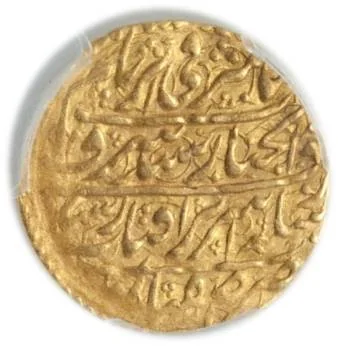
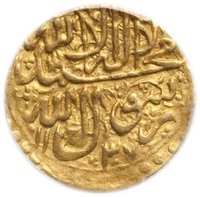
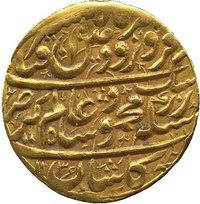
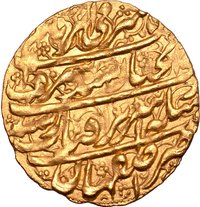
Obverse
Description:
Isfahan mint.
Inscription:
ضرب اصفهان
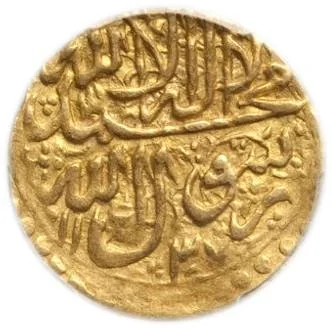
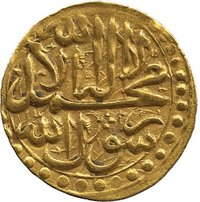
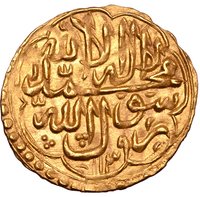
Reverse
Inscription:
لا اله الا الله
محمد رسول الله
۱۱۳۷
محمد رسول الله
۱۱۳۷
Edge
Plain
Mints
| Name | Mark |
|---|---|
| Isfahan | — |
Mintings
| Year | Mint Mark | Mintage | Quality | Collection |
|---|---|---|---|---|
| 1725 | — | — | ||
| 1726 | — | — | ||
| 1727 | — | — | ||
| 1728 | — | — | ||
| 1729 | — | — | ||
| 1730 | — | — |
Historical background
By 1725, the Hotak dynasty, having seized power from the declining Safavid Empire just four years prior, inherited a severe monetary crisis. The Safavid state’s final decades were marked by rampant currency debasement, where the silver content of the primary coin, the abbasi, was drastically reduced to fund military failures and court extravagance. Consequently, the Hotaks took control of a realm with a profoundly destabilized currency, characterized by wildly fluctuating values, a loss of public trust, and severe inflation that crippled both trade and the treasury.
The Hotak rulers, particularly Mahmud Hotak (r. 1722-1725) and his successor Ashraf Khan (r. 1725-1729), faced immense pressure to stabilize the economy but were constrained by continuous warfare and a fragile hold on power. Their primary focus was on military expenditure to suppress Safavid loyalist revolts and fight the encroaching Ottoman and Russian empires, not on systematic fiscal reform. While they minted new coins, often bearing their names and Shi’a inscriptions to assert legitimacy, these issues were inconsistent and likely continued the practice of debasement to finance immediate needs, providing no lasting solution.
Therefore, the currency situation in 1725 was one of unresolved turmoil. The dynasty lacked the stability, administrative capacity, and long-term vision to restore a sound monetary system. The ongoing political and military chaos prevented any meaningful recoinage or standardization, leaving the economy to function on a fragile and unreliable currency. This financial weakness further undermined Hotak authority, contributing to their rapid collapse just four years later when Nader Shah Afshar toppled the dynasty and eventually implemented a major currency reform.
The Hotak rulers, particularly Mahmud Hotak (r. 1722-1725) and his successor Ashraf Khan (r. 1725-1729), faced immense pressure to stabilize the economy but were constrained by continuous warfare and a fragile hold on power. Their primary focus was on military expenditure to suppress Safavid loyalist revolts and fight the encroaching Ottoman and Russian empires, not on systematic fiscal reform. While they minted new coins, often bearing their names and Shi’a inscriptions to assert legitimacy, these issues were inconsistent and likely continued the practice of debasement to finance immediate needs, providing no lasting solution.
Therefore, the currency situation in 1725 was one of unresolved turmoil. The dynasty lacked the stability, administrative capacity, and long-term vision to restore a sound monetary system. The ongoing political and military chaos prevented any meaningful recoinage or standardization, leaving the economy to function on a fragile and unreliable currency. This financial weakness further undermined Hotak authority, contributing to their rapid collapse just four years later when Nader Shah Afshar toppled the dynasty and eventually implemented a major currency reform.
✨ Legendary