

1 Mithqal – Hotak dynasty
Iran
Context
Year: 1727
Islamic (Hijri) Year: 1139
Country: Iran 
Issuer: Hotak dynasty
Currency:
(1501—1798)
Demonetization: 1729
Material
Diameter: 22 mm
Weight: 3.48 g
Gold weight: 3.48 g
Thickness: 0.4 mm
Shape: Irregular round
Composition: Gold
Magnetic: No
Alignment: Coin alignment
flip
References
KM: #Click to copy to clipboard335.1
Numista: #195598
Value
Bullion value: $579.56
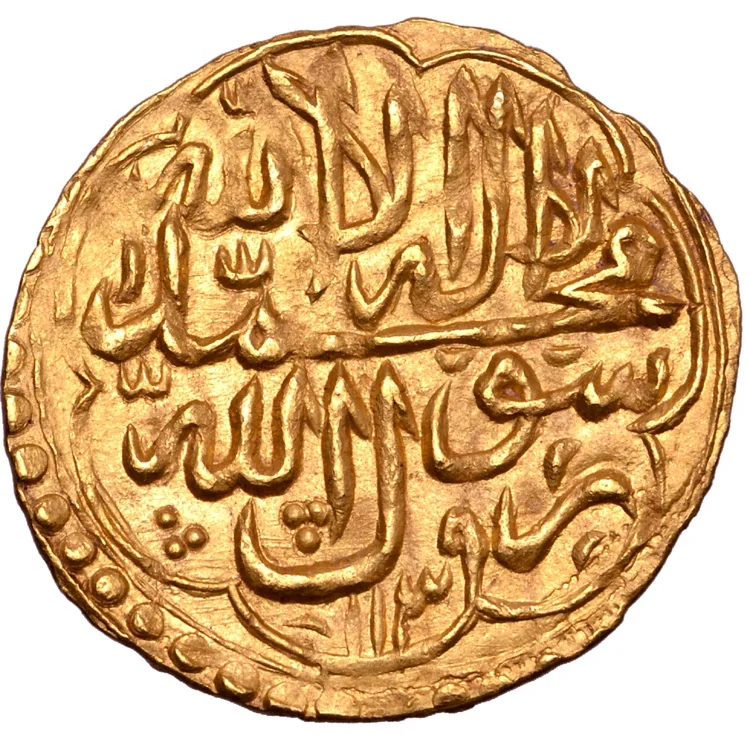
Obverse
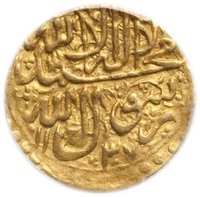
Inscription:
لا اله الا الله
محـــمّد رسول الله
۱۱۳۹
محـــمّد رسول الله
۱۱۳۹
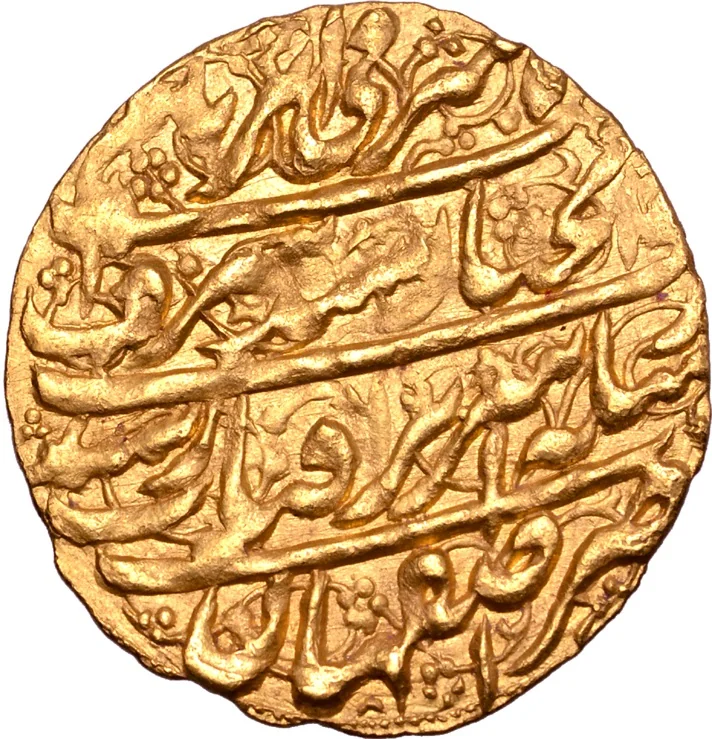
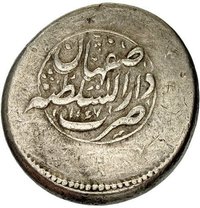
Reverse
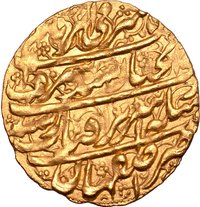
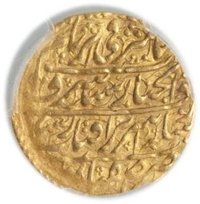
Inscription:
باشرفی اثر نام انجناب رسید
شرف ز سکه اشرف بر افتاب رسید
ضرب اصفهان
شرف ز سکه اشرف بر افتاب رسید
ضرب اصفهان
Edge
Plain
Mints
| Name | Mark |
|---|---|
| Isfahan | اصفهان |
Mintings
| Year | Mint Mark | Mintage | Quality | Collection |
|---|---|---|---|---|
| 1727 | — | — |
Historical background
The Hotak dynasty, ruling Afghanistan from 1722 to 1729, inherited a currency system in severe disarray following the collapse of the Safavid Empire. The dynasty's founder, Mirwais Hotak, had initiated a rebellion against Persian rule, and his son Mahmud Hotak's conquest of Isfahan in 1722 brought the empire's vast but plundered treasury under Afghan control. By 1727, Mahmud and his successor Ashraf Khan were attempting to govern a fractured realm, stretching from Kandahar to central Persia, which was economically drained by years of war, rebellion, and instability. The Safavid monetary system, once reliable, had been disrupted, leading to shortages of circulating coinage and a loss of public confidence in the currency's value.
In response, the Hotak rulers, particularly Ashraf Khan (r. 1725-1729), undertook a concerted effort to re-establish monetary authority and legitimacy. They continued minting coins in the name of the Safavid Shah Sultan Husayn (whom they had overthrown) for several years to ensure acceptance, but by 1727 were increasingly issuing coins in their own name. These silver rupees and copper fulus were minted at key centers like Isfahan, Kandahar, and Herat, bearing Shia inscriptions to appease the Persian populace and Sunni declarations to solidify their Afghan power base. This dual religious and political messaging on the coinage was a direct reflection of the dynasty's precarious position, trying to consolidate control over a religiously and ethnically divided empire.
Despite these efforts, the Hotak monetary project was ultimately undermined by the dynasty's brief and tumultuous reign. Continuous internal strife, challenges from the Ottoman Empire, and the rising threat of Nader Shah Afshar prevented any long-term economic stabilization. The currency of 1727, therefore, represents a transient attempt at imperial legitimacy during a period of intense transition. By 1729, the Hotaks were defeated by Nader Shah, who would subsequently reform the currency system entirely, rendering the Hotak coinage a short-lived numismatic legacy of a failed imperial consolidation.
In response, the Hotak rulers, particularly Ashraf Khan (r. 1725-1729), undertook a concerted effort to re-establish monetary authority and legitimacy. They continued minting coins in the name of the Safavid Shah Sultan Husayn (whom they had overthrown) for several years to ensure acceptance, but by 1727 were increasingly issuing coins in their own name. These silver rupees and copper fulus were minted at key centers like Isfahan, Kandahar, and Herat, bearing Shia inscriptions to appease the Persian populace and Sunni declarations to solidify their Afghan power base. This dual religious and political messaging on the coinage was a direct reflection of the dynasty's precarious position, trying to consolidate control over a religiously and ethnically divided empire.
Despite these efforts, the Hotak monetary project was ultimately undermined by the dynasty's brief and tumultuous reign. Continuous internal strife, challenges from the Ottoman Empire, and the rising threat of Nader Shah Afshar prevented any long-term economic stabilization. The currency of 1727, therefore, represents a transient attempt at imperial legitimacy during a period of intense transition. By 1729, the Hotaks were defeated by Nader Shah, who would subsequently reform the currency system entirely, rendering the Hotak coinage a short-lived numismatic legacy of a failed imperial consolidation.
✨ Legendary