

1 Ashrafi – Hotak dynasty
Iran
Context
Year: 1724
Islamic (Hijri) Year: 1136
Country: Iran 
Issuer: Hotak dynasty
Currency:
(1501—1798)
Demonetization: 1724
Material
References
KM: #Click to copy to clipboard325.5
Numista: #61777
Value
Bullion value: $575.22
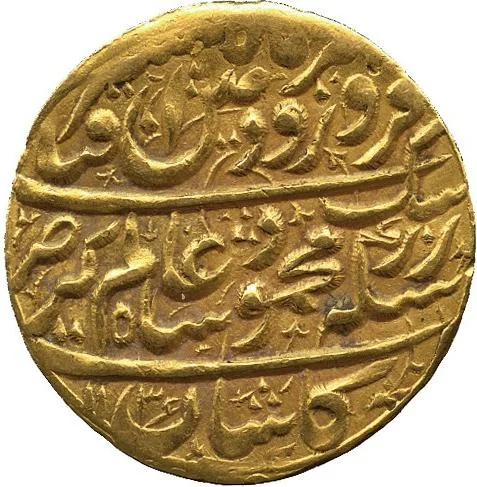
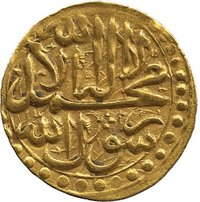
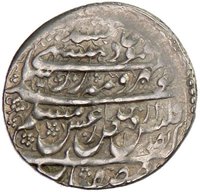
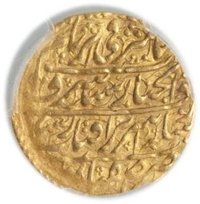
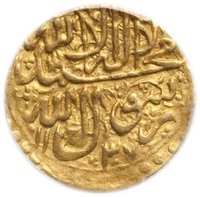
Obverse
Description:
Kashan mint.
Inscription:
ضرب کاشان
۱۱۳۶
۱۱۳۶
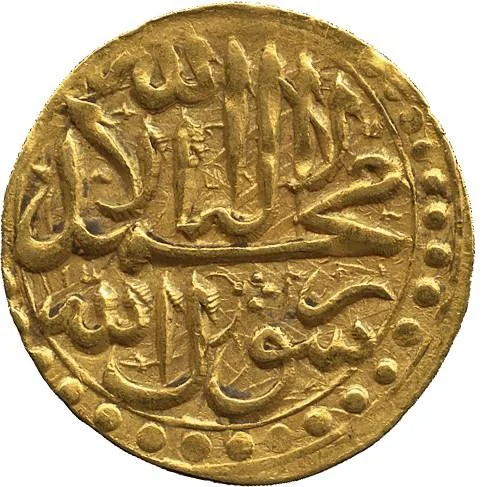
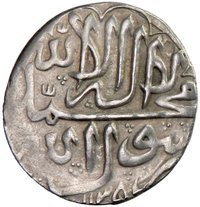
Reverse
Inscription:
لا اله الا الله
محمد رسول الله
محمد رسول الله
Edge
Plain
Mints
| Name | Mark |
|---|---|
| Kashan | — |
Mintings
| Year | Mint Mark | Mintage | Quality | Collection |
|---|---|---|---|---|
| 1724 | — | — |
Historical background
The Hotak dynasty, ruling from 1722 to 1729, inherited a currency system in severe disarray following the collapse of the Safavid Empire. By 1724, the Afghan conquerors under Mahmud Hotak controlled the former Safavid heartland, including the capital Isfahan, but faced immense economic challenges. The treasury was depleted from years of war and rebellion, and the sophisticated Safavid monetary system—based on the silver abbasi and gold toman—had been disrupted by the cessation of mining operations, the hoarding of specie, and the looting of royal mints. The new rulers lacked both the administrative expertise and the stable silver reserves to systematically restore a trusted national coinage.
In practice, the currency situation in 1724 was characterized by fragmentation and instability. While the Hotaks continued to strike coins in the name of the Safavid Shah Sultan Husayn (whom they had deposed) to maintain a facade of legitimacy and economic continuity, their control was tenuous. Provincial governors and military commanders often issued their own crude, low-weight coins to pay troops, leading to a proliferation of currencies of varying purity. This, combined with the widespread use of older, clipped, and debased Safavid coins still in circulation, created a chaotic monetary environment where trust in the intrinsic value of coinage was low, hindering trade and taxation.
Consequently, the economy in Hotak territories regressed towards more basic forms of exchange. Barter became increasingly common for local transactions, while long-distance trade relied heavily on the exchange of foreign silver coins, such as Ottoman and Mughal rupees, which held more reliable value. The dynasty’s primary focus remained on military consolidation rather than economic reform, meaning they could not implement a unified monetary policy. Therefore, the currency situation in 1724 was one of inherited crisis, ad-hoc management, and de facto decentralization, reflecting the fragile and transient nature of Hotak rule itself.
In practice, the currency situation in 1724 was characterized by fragmentation and instability. While the Hotaks continued to strike coins in the name of the Safavid Shah Sultan Husayn (whom they had deposed) to maintain a facade of legitimacy and economic continuity, their control was tenuous. Provincial governors and military commanders often issued their own crude, low-weight coins to pay troops, leading to a proliferation of currencies of varying purity. This, combined with the widespread use of older, clipped, and debased Safavid coins still in circulation, created a chaotic monetary environment where trust in the intrinsic value of coinage was low, hindering trade and taxation.
Consequently, the economy in Hotak territories regressed towards more basic forms of exchange. Barter became increasingly common for local transactions, while long-distance trade relied heavily on the exchange of foreign silver coins, such as Ottoman and Mughal rupees, which held more reliable value. The dynasty’s primary focus remained on military consolidation rather than economic reform, meaning they could not implement a unified monetary policy. Therefore, the currency situation in 1724 was one of inherited crisis, ad-hoc management, and de facto decentralization, reflecting the fragile and transient nature of Hotak rule itself.
✨ Legendary