

16 ore – Sweden
Add to wishlist
Sweden
Context
Years: 1773–1774
Issuer: Sweden
Ruler: Gustav III
Currency:
(1719—1798)
Subdivision: 16 ore = ⅙ Riksdaler
Demonetized: Yes
Total mintage: 151,842
Material
References
KM: #
Numista: #61651
Value
Bullion value: $10.74
Obverse
Description:
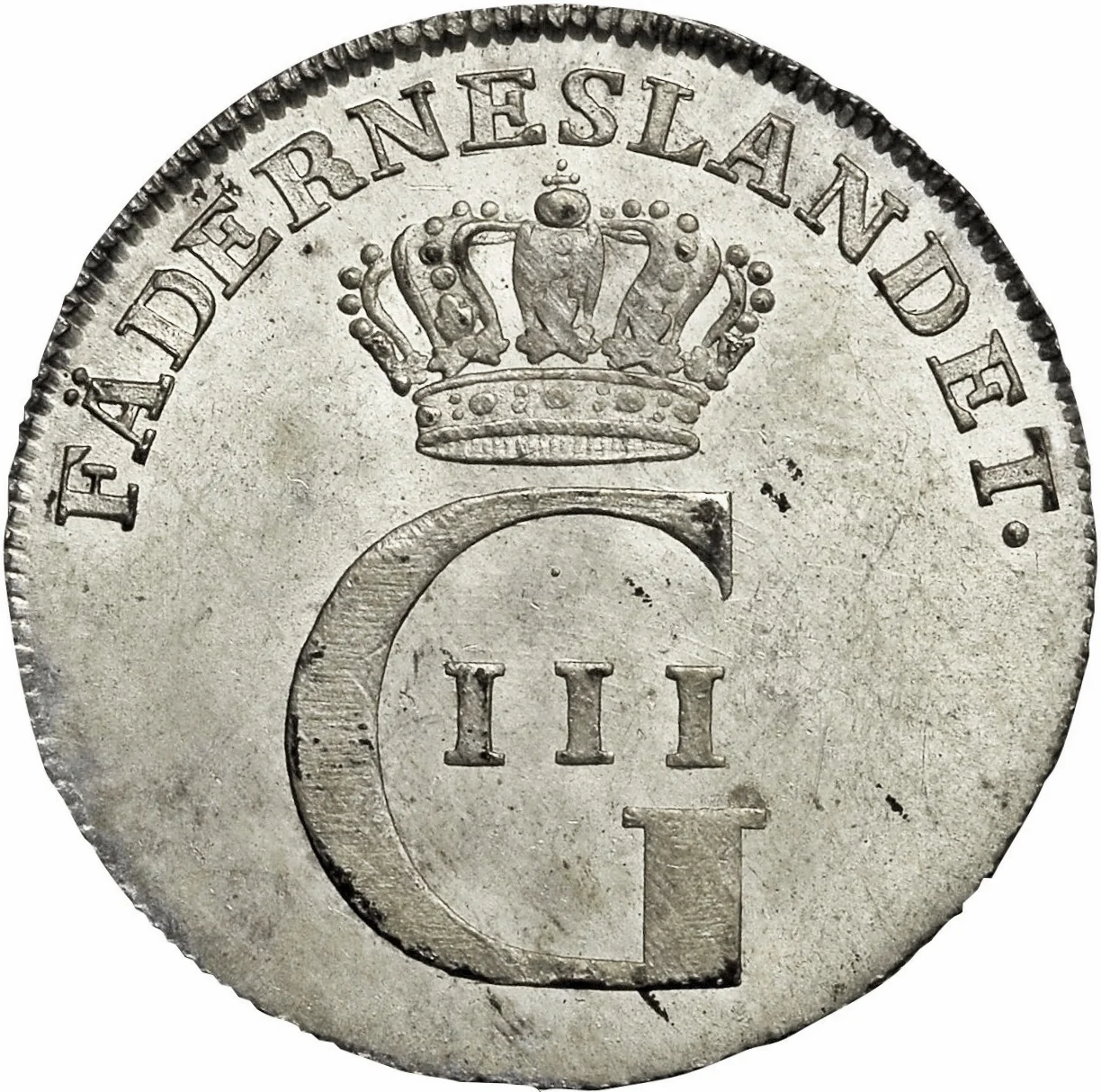
King Gustav III's crowned monogram with his motto above.
Inscription:
FADERNESLANDET·
GIII
GIII
Script: Latin
Reverse
Description:
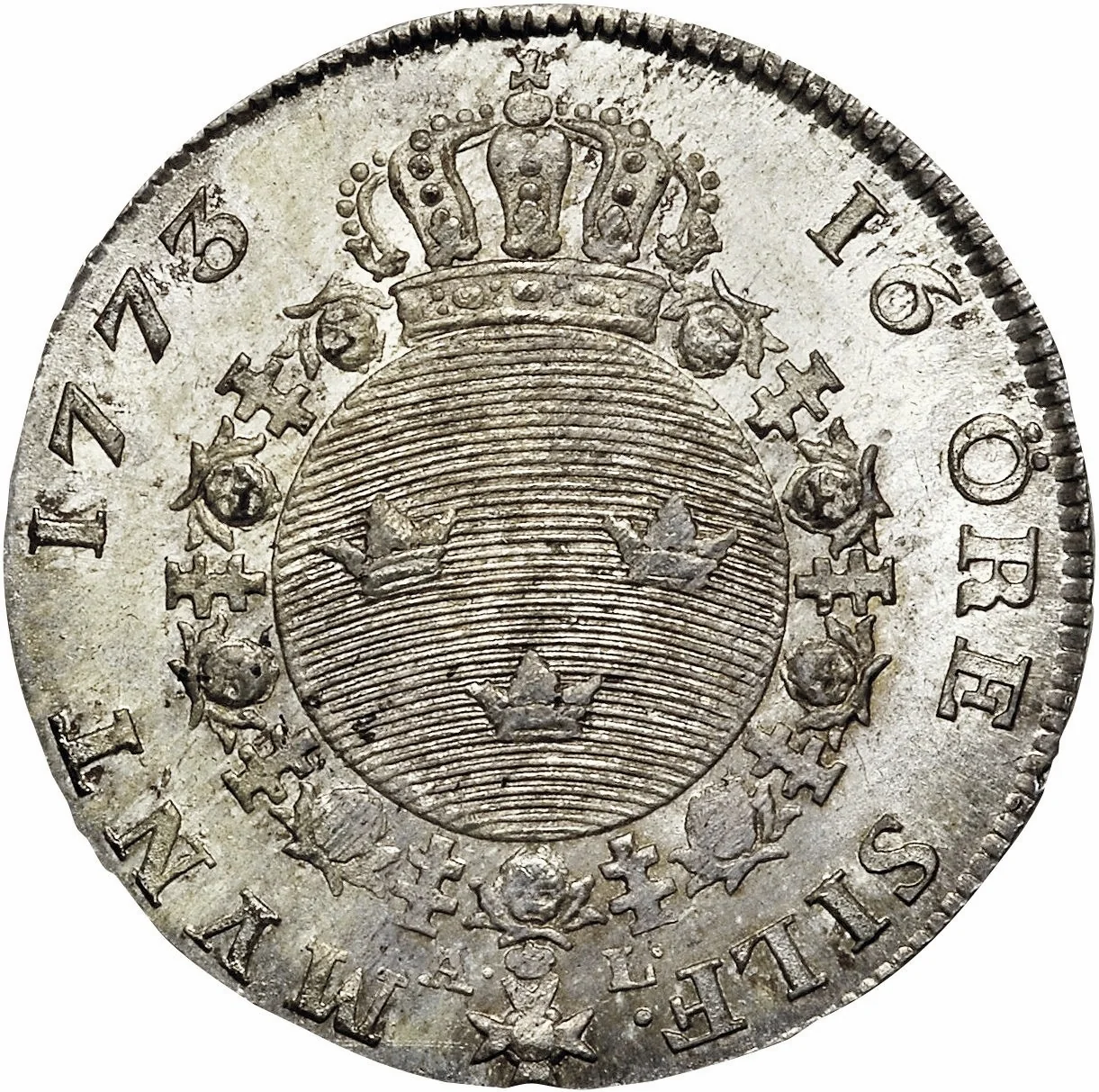
Crowned orb bearing Sweden’s Three Crowns within the Seraphim Order chain. The pendant chain divides the mintmark below. Value and date encircle the rim.
Inscription:
16 ÖRE SILF. MYNT 1773
A.L.
A.L.
Script: Latin
Edge
Diagonal milling
Categories
| Symbols> Coat of Arms |
Mintings
| Year | Mint Mark | Mintage | Quality | Collection |
|---|---|---|---|---|
| 1773 | AL | — | ||
| 1774 | OL | 151,842 |
Historical background
In 1773, Sweden was navigating a complex and precarious monetary situation, largely a legacy of the preceding "Age of Liberty" (1718-1772). During this period, the Riksdag (parliament) held significant power, and successive governments had financed wars and deficits not through taxation but by issuing vast quantities of copper and silver coinage with a mandated face value far exceeding their intrinsic metal worth. This practice, combined with the use of a cumbersome copper plate money system, had created a dual-currency reality with an unstable exchange rate between the two metals, leading to chronic inflation, public mistrust, and economic inefficiency.
The immediate backdrop to 1773 was the coup d'état of King Gustav III in 1772, which restored royal authority. The new king inherited a dire financial crisis marked by a severely debased currency and a heavy national debt. One of his first priorities was monetary reform to stabilize the economy and consolidate his power. In 1776, he would introduce the Riksgälds notes, an early form of government paper money, but in 1773 the state was still grappling with the immediate aftermath of the old system. The copper-based currency, in particular, was so physically heavy and discredited that it hampered both domestic commerce and international trade.
Therefore, the currency situation in 1773 was one of transition and mounting pressure. The old, discredited coinage remained in circulation, eroding economic confidence, while the government under Gustav III was actively formulating a radical solution. The year stands as a pivotal moment just before the launch of a bold—and ultimately risky—experiment with a fiat-based paper currency, setting the stage for future monetary challenges in the late 18th century.
The immediate backdrop to 1773 was the coup d'état of King Gustav III in 1772, which restored royal authority. The new king inherited a dire financial crisis marked by a severely debased currency and a heavy national debt. One of his first priorities was monetary reform to stabilize the economy and consolidate his power. In 1776, he would introduce the Riksgälds notes, an early form of government paper money, but in 1773 the state was still grappling with the immediate aftermath of the old system. The copper-based currency, in particular, was so physically heavy and discredited that it hampered both domestic commerce and international trade.
Therefore, the currency situation in 1773 was one of transition and mounting pressure. The old, discredited coinage remained in circulation, eroding economic confidence, while the government under Gustav III was actively formulating a radical solution. The year stands as a pivotal moment just before the launch of a bold—and ultimately risky—experiment with a fiat-based paper currency, setting the stage for future monetary challenges in the late 18th century.
💎 Extremely Rare