

3 silver dalers – Sweden
Add to wishlist
Sweden
Context
Years: 1775–1777
Issuer: Sweden
Ruler: Gustav III
Currency:
(1719—1798)
Demonetized: Yes
Total mintage: 634,599
Material
References
KM: #
Numista: #22418
Value
Bullion value: $65.11
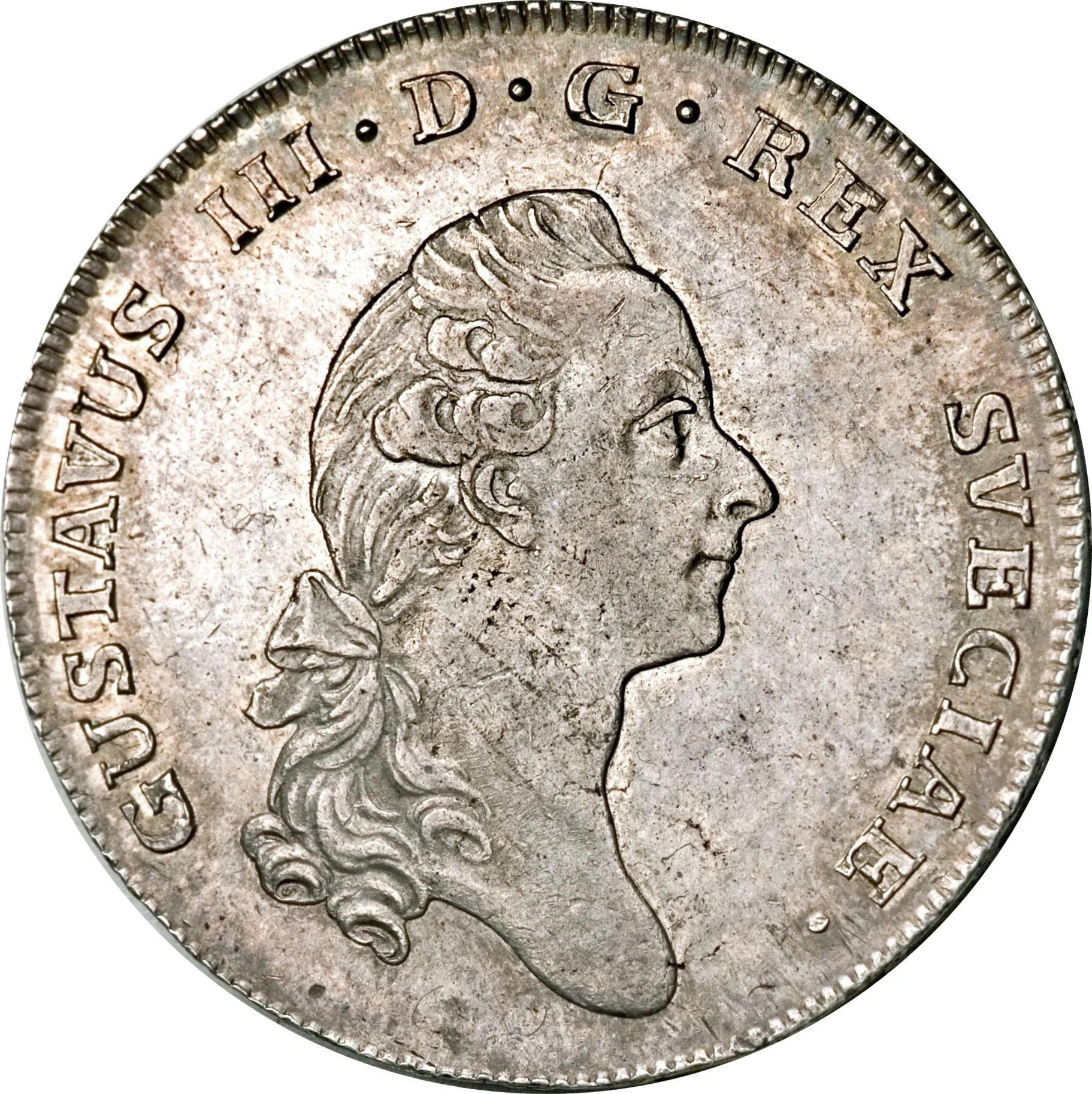
Obverse
Description:
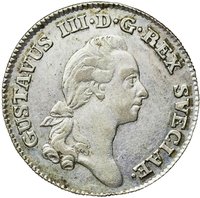
Bust of Gustav III facing right, encircled by legend.
Inscription:
GUSTAVUS III · D · G · REX SVECIAE·
Script: Latin
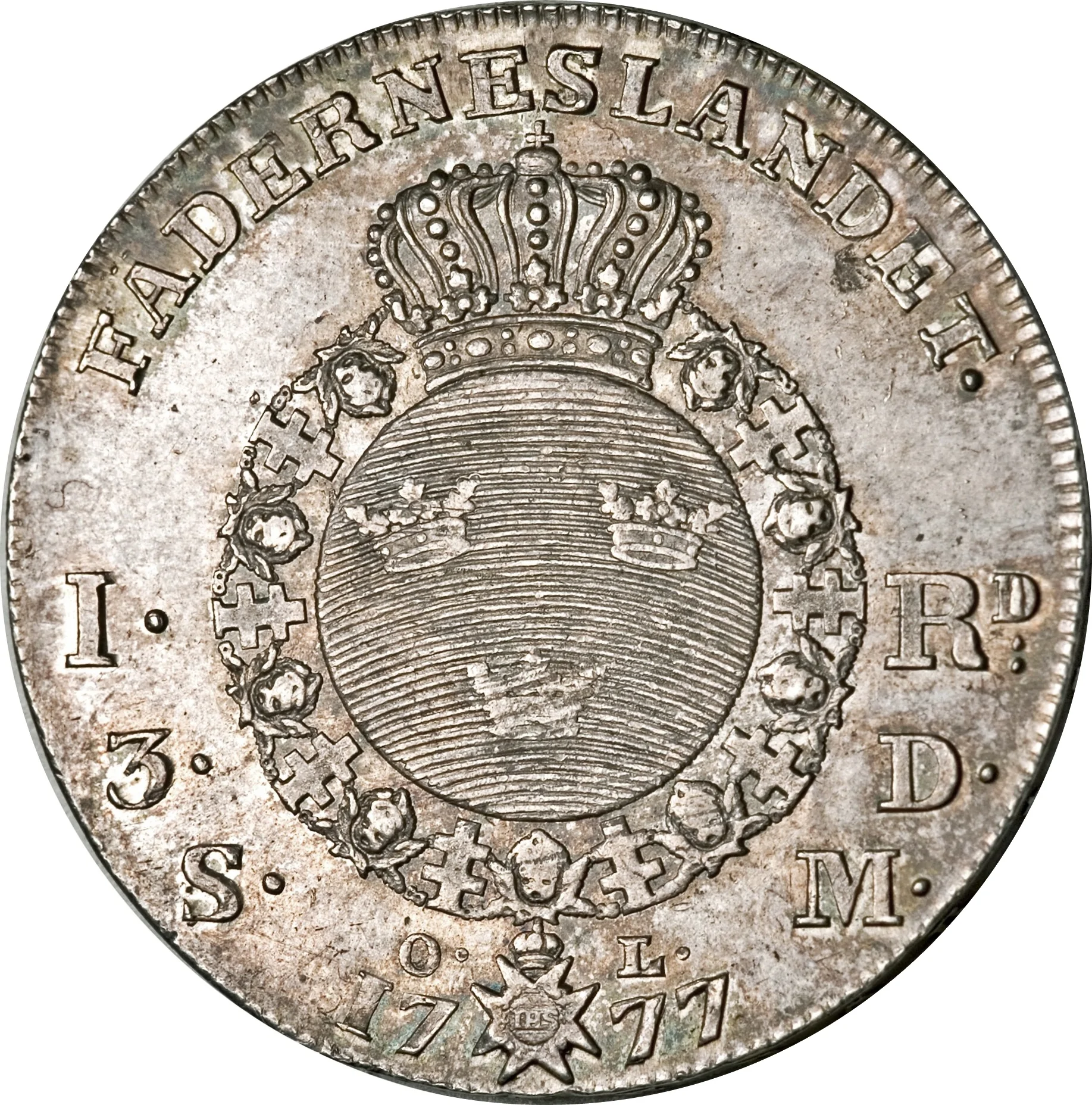
Reverse
Description:
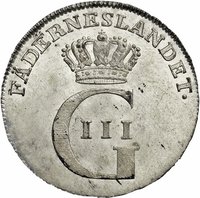
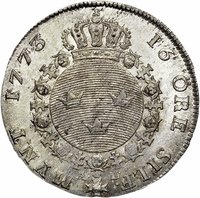
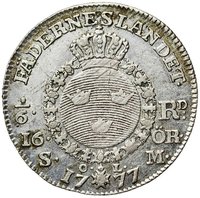
A crowned, lined orb features the Three Crowns within the Seraphim Order chain. The chain's pendant separates the date and mintmark below, with the value on both sides of the orb. The King's motto appears above the crown.
Inscription:
FÄDERNES LANDET·
1· RD.
3· D·
S· M·
O· L·
17 77
1· RD.
3· D·
S· M·
O· L·
17 77
Script: Latin
Edge
Plain with lettering
Legend:
⋆ MANIBUS ⋆ ⋆ NE ⋆ LAEDAR ⋆ AVARIS ⋆
Categories
| Symbols> Coat of Arms |
Mints
| Name | Mark |
|---|---|
| Stockholm | — |
Mintings
| Year | Mint Mark | Mintage | Quality | Collection |
|---|---|---|---|---|
| 1775 | OL | 346,079 | ||
| 1776 | OL | — | ||
| 1777 | OL | 288,520 |
Historical background
In 1775, Sweden was navigating a complex and precarious monetary landscape under the reign of King Gustav III. The nation was still grappling with the severe economic and political consequences of the "Age of Liberty," a period of parliamentary rule that had ended with Gustav's coup in 1772. A defining feature of this era was the excessive issuance of paper money, known as riksdaler riksgälds, by the Riksdag of the Estates to finance wars and state expenditures, notably during the costly Seven Years' War. By 1775, this had led to a significant devaluation; the paper currency traded at a substantial discount against the silver riksdaler specie, creating a problematic dual-currency system that undermined public confidence and hampered trade.
The situation presented Gustav III with a critical challenge. A stable currency was essential for his ambitions to strengthen royal authority and modernize the state, but a sudden recall or drastic reform of the devalued paper money risked triggering widespread bankruptcies and social unrest. The economy was already strained, and the mercantile class, in particular, held large amounts of the depreciating notes. Therefore, in 1775, the king and his advisors were likely in a phase of careful assessment and planning, weighing various proposals to restore monetary order without destabilizing the fragile economic recovery.
Consequently, the currency situation in 1775 was one of tense equilibrium. The government maintained the circulation of the discredited paper money out of necessity while secretly laying the groundwork for future reform. This preparation would culminate in the major monetary ordinance of 1776, which introduced a new silver-based riksdaler as the unit of account and began the slow process of retiring the old paper notes. Thus, 1775 represents a pivotal year of deliberation, standing between the inflationary excesses of the past and the structured, if ultimately only partially successful, reforms of Gustav III's reign.
The situation presented Gustav III with a critical challenge. A stable currency was essential for his ambitions to strengthen royal authority and modernize the state, but a sudden recall or drastic reform of the devalued paper money risked triggering widespread bankruptcies and social unrest. The economy was already strained, and the mercantile class, in particular, held large amounts of the depreciating notes. Therefore, in 1775, the king and his advisors were likely in a phase of careful assessment and planning, weighing various proposals to restore monetary order without destabilizing the fragile economic recovery.
Consequently, the currency situation in 1775 was one of tense equilibrium. The government maintained the circulation of the discredited paper money out of necessity while secretly laying the groundwork for future reform. This preparation would culminate in the major monetary ordinance of 1776, which introduced a new silver-based riksdaler as the unit of account and began the slow process of retiring the old paper notes. Thus, 1775 represents a pivotal year of deliberation, standing between the inflationary excesses of the past and the structured, if ultimately only partially successful, reforms of Gustav III's reign.
⭐ Rare