

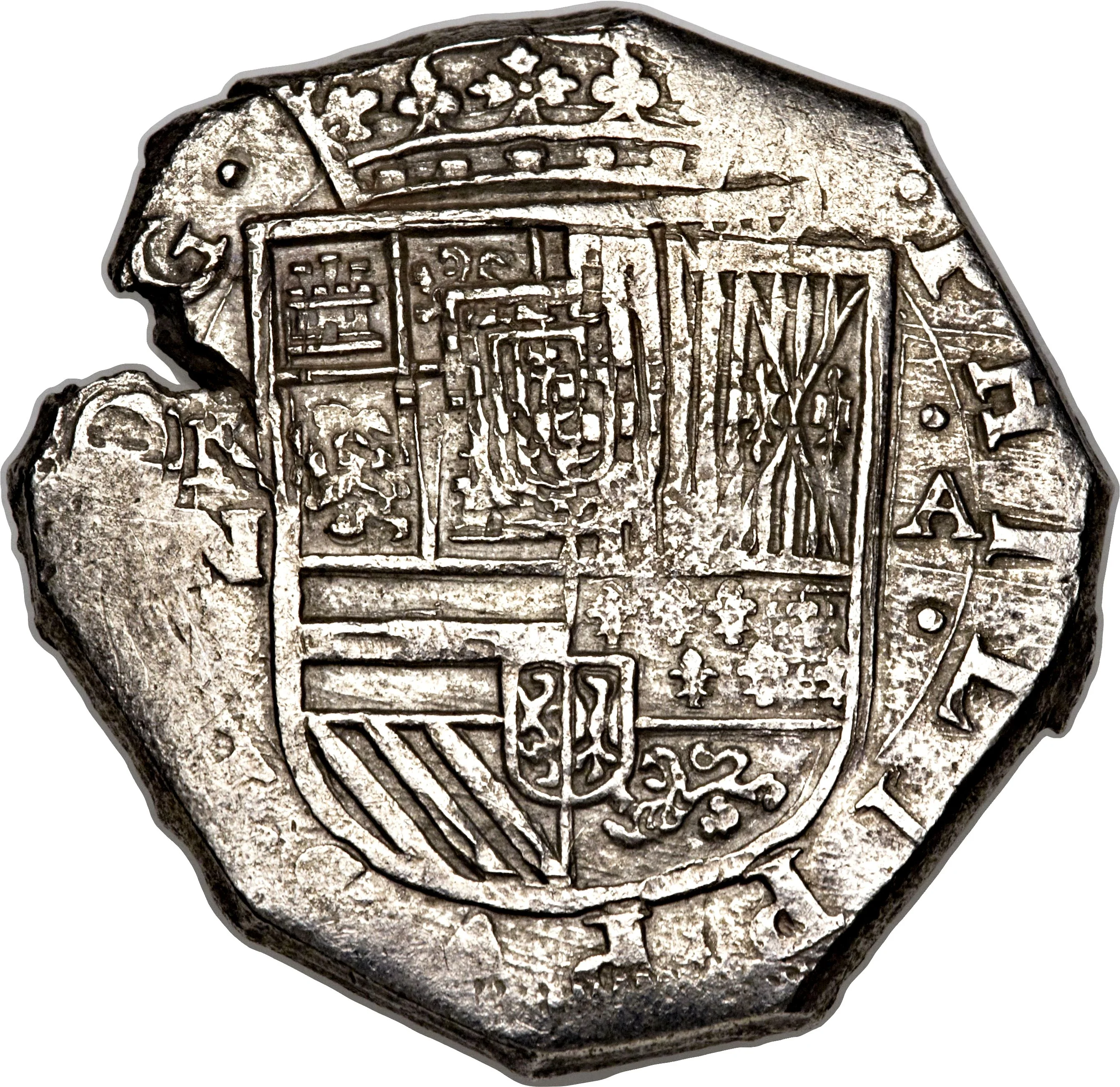
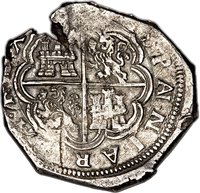
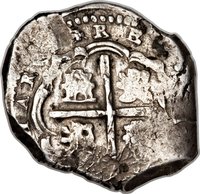
Obverse
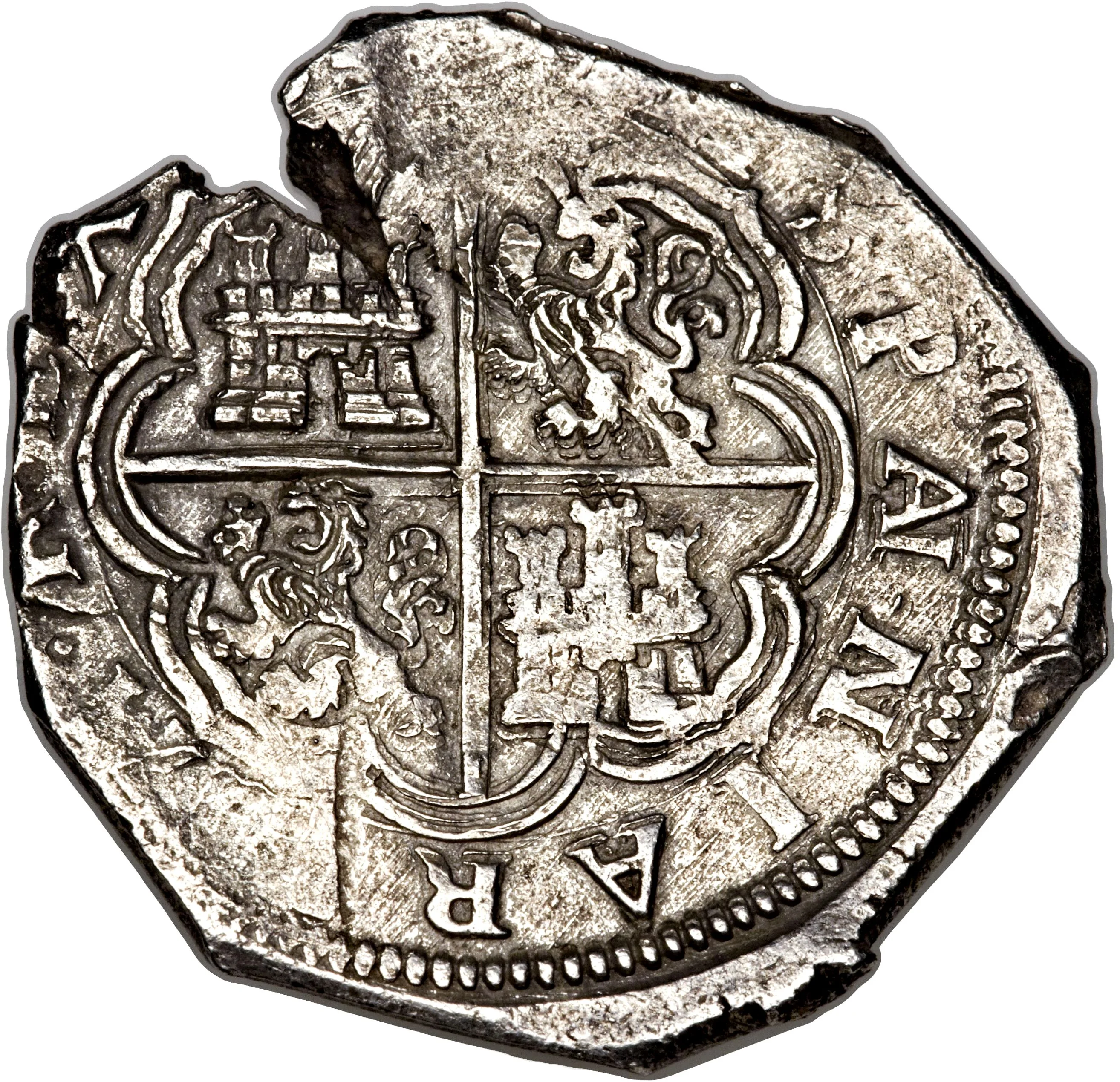
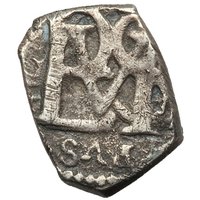
Reverse
Edge
Categories
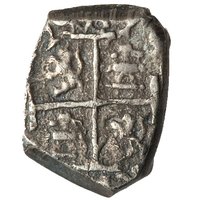
| Symbol> Cross |
| Animal> Feline |
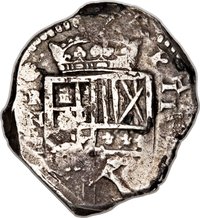
| Building> Castle or fortification |
| Symbol> Crown |
| Symbols> Coat of Arms |
Mints
| Name | Mark |
|---|---|
| Casa de Moneda de Colombia | C |
| Bogota Mint | NR A |
| Casa de Moneda de Colombia | NR E |
| Bogota Mint | NR P |
| Bogota Mint | RN |
| Bogota Mint | S |
Mintings
Historical background
In 1621, the currency situation in the Kingdom of New Granada (modern-day Colombia) was characterized by severe scarcity and administrative chaos. The Spanish Crown, facing its own financial crises, had long struggled to supply sufficient coinage to its American colonies. The primary official currency was silver reales, minted in Peru or Spain, but their arrival was irregular and insufficient for local economic activity. This chronic shortage led to a widespread reliance on a confusing array of substitute currencies, including gold dust (measured in pesos de oro), crude silver ingots, and even cacao beans in smaller transactions, creating a fragmented and inefficient monetary system.
The situation was exacerbated by the Crown's establishment of a regional mint, the Casa de Moneda de Santafé, in 1620. However, in 1621, this mint was not yet fully operational and would not begin significant production until 1627. Its intended purpose was to standardize currency by coining gold escudos from the abundant local gold deposits, but its immediate absence meant the scarcity persisted. Furthermore, rampant clipping and debasement of existing coins, along with the circulation of counterfeit reales, eroded public trust in any metallic currency that did enter the market.
Consequently, the local economy in 1621 functioned on a precarious mix of barter, unstable commodity money, and whatever official coinage trickled in from trade or royal shipments. This monetary disarray stifled commerce, complicated tax collection for the colonial administration, and created significant price volatility. The year thus represents a low point in colonial monetary stability, caught between the failure of the old system and the yet-unrealized promise of the newly authorized mint that aimed to bring order to the colony's finances.
The situation was exacerbated by the Crown's establishment of a regional mint, the Casa de Moneda de Santafé, in 1620. However, in 1621, this mint was not yet fully operational and would not begin significant production until 1627. Its intended purpose was to standardize currency by coining gold escudos from the abundant local gold deposits, but its immediate absence meant the scarcity persisted. Furthermore, rampant clipping and debasement of existing coins, along with the circulation of counterfeit reales, eroded public trust in any metallic currency that did enter the market.
Consequently, the local economy in 1621 functioned on a precarious mix of barter, unstable commodity money, and whatever official coinage trickled in from trade or royal shipments. This monetary disarray stifled commerce, complicated tax collection for the colonial administration, and created significant price volatility. The year thus represents a low point in colonial monetary stability, caught between the failure of the old system and the yet-unrealized promise of the newly authorized mint that aimed to bring order to the colony's finances.
✨ Legendary